How Andrew Sold His 100 Units Test Batch (And Made PROFIT)
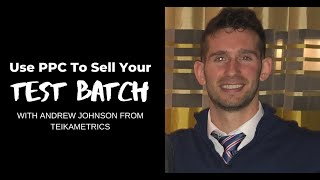
Andrew Johnson sold 100 inflatable chairs on Amazon from his test batch and turned a profit. He walks through sourcing, advertising strategy, and how he used Take a Metrics software to optimize sponsored ads. The conversation covers real challenges of launching a private label product.
Hey everyone. Very warm welcome to this video. So today I have Andrew Johnson with me from Taker Metrics. And Andrew is an Amazon seller himself and he has got a brand on Amazon.com I believe, and also he works for a company who helps Amazon sellers optimize their sponsored ads campaigns on Amazon. So if you are looking to sell on Amazon at some point and you know, if you want to launch private label products, then it's inevitable you will be advertising. Right. It's just, it's so essential as part of your strategy nowadays. It's becoming more and more important. So if you can get those advertising costs down and your sales up, up, it can only ever be a good thing. So it's really, I'm really happy that you joined me today, Andrew. How are things going for you?
Yeah, no thanks, Ali. Things are great. You know, I really appreciate you having me on the video today. So, yeah, more than happy to talk to you about just Amazon advertising, you know, like how really some of the, you know, the, how you need to really use that to gain momentum and build traffic for your products as well as my experience with building a brand on Amazon and, and of course take a Metrics.
Awesome.
Cool.
So, yeah, like we talked about earlier, I really think people will be interested in the product that you've launched, how you've launched it, how things went. So tell me, tell me, how did you launch your product? How did that start and why did you decide to launch a product on Amazon?
Yep.
So started our CEO at Take A Metrics, Alistair McLean Foreman, he was looking for one of his employees to start or create a brand on Amazon. Right. It is that we wanted to really understand exactly what it's like to be in an Amazon seller shoes really, you know, get a feel for what it's like, what kind of like the, the plight of what, you know, a seller has to go through as well as also testing out our service and just really making sure that we're able to kind of, you know, I guess you could say, eat our own dog food. Right. Make sure it's actually really going to work for, for us the same way that we anticipate or expect it to work for our sellers. So that's kind of how it started. I ended up deciding to, I volunteered. During doing a lot of research, I decided I wanted to start a inflatable chair brand. I thought that was kind of like an interesting idea, kind of like a fun product. The idea is you have this chair that you kind of open the mouth of the chair and you can either swing it around or hold it to the wind. You kind of clasp it and then it's fully inflated within 10 seconds. That's kind of like a fun product for the beach, for camping, anything like that. So that's kind of really how it originated for me to start selling on Amazon.
This is so cool. So I think I've seen something like that advertised on Instagram. Like, is this quite a popular niche at the moment?
There's definitely a lot of things out there. I think what's pretty popular is like a lounger. So it's like the similar technology where you open it, you hold the wind or swing it around and then you. It's like a. Almost like a hot dog bun shaped thing. It's like pretty. It's definitely a popular thing, but not as popular as like a chair. Um, so what I'm trying to do is kind of focus more on the chair aspect. I think there's definitely, you know, some, some advantages of having like a chair as opposed to more of a lounger. That's kind of where my product is relatively unique. Um, that's kind of where, where I've focused on for my, my first product.
That's so cool. Yeah, I remember, I think I've seen the loungers, like a big pink thing like you say it looks like a hot dog. And yeah, so I think I saw on an Instagram ad and yeah, it was very popular. Lots of people wanted to buy it, so that's cool. So you went to a niche where there's lots of demand, but you've offered something slightly different. And yeah, like you. As I know already, it's going well. We'll talk about more that in a second, but I wanted to go into more detail. So did your boss fund the product? Did he say like, here's some money or how did that work?
Yep.
So I ended up funding kind of the research because I went to. What I ended up doing was I went to a lot of. To Alibaba, you know, great place to find manufacturers. I ended up doing a lot of research, talking to three or four guys, having samples sent to me and I kind of ended up picking the guy I thought had the best products. We made some variations on it, so it was really kind of like a fun process. I kind of thought of that myself. Ended up, I think all said and done is about $500, so not too bad. And for the actual ordering of the product. Yeah, like my. Our CEO is kind of helping with kind of the investments or the funding of that. Ended up being, I think the first order was something around like 2500 or something like that. So that's kind of what it took to get the first batch in and ready to go on Amazon.
That's so cool. That's really cool. That's actually a cool project for a company to do that's offering a service is actually just to make sure it works when they try and do it themselves. So I think that's a really cool, a really cool idea. So you went for the inflatable chair. So how many units did you order with this first. First order?
We did just 100 to start.
Okay, so 100 units. And what was the. I don't know if you can remember these details, but do you remember what the cost per unit was for those, those hundred?
Yeah, it was, I think it was around like 20, maybe somewhere in the low 20s for cost per unit. And then I was selling, I'm selling for around like 40. So it's like, it's not, I'm not like when you're launching a product, you don't really anticipate much margin because there's also. You're paying a lot in advertising fees too. So. And I'm okay with that. That's kind of where we were at the start.
Cool. So you bought it for something, 20 something, sold it for 40. And is that, that's including the cost of the shipping, right? The 20 something dollars?
Yeah.
So it's cost of landed goods. So yeah, that's, that's a, it's a higher priced product because a lot of people sell stuff for $15, $10, you know, so it's certainly at the upper end. And are these things quite big? Is it like an oversized product?
So actually when it comes like this little, a little bag and it weighs less than £2. So when it's not inflated, it's pretty small. But of course when you inflate it, yeah, it's like a big chair. So it gets, it does get pretty big.
Right. So I was imagining it being, you know, even not inflate, I was imagining it being maybe 50cm wide. So. So is it small? So it's not technically oversized then? It's actually a smaller box, is it?
Yeah. So it's not, of course it's not like a little like, you know, like vitamin capsule or something like that, but it's definitely like, it's not too big.
Oh, that's cool.
Awesome.
I'm actually quite surprised how light it is. So you ordered 100 units. So talk me through the launch process. Then So I assume you ordered this by air so you could do air freight for these.
I did. Sea freight actually. Ended up being a lot cheaper because it's already, you know, there wasn't a ton of margin there to begin with. I wanted to make sure it was really, you know, kind of just getting as much margin as possible. So I did it by C. The biggest actually difficulty I had through the entire process was launching on Amazon itself. I had a really tough time for whatever reason, creating a Seller Central account. I do have a very common name. Maybe that's what the problem was. I never really can 100% figure it out, but we had a lot of difficulty kind of getting myself started on Amazon, Seller Central and opening an account. So that'd be kind of one of my biggest things I always recommend is just making sure that you can get that Seller Central account fully open. Make sure you're reading all the rules, crossing all your T's, dotting all your I's, because it's possible I may have missed something or did something incorrectly and it was very difficult. We'd end up back on Seller Central.
Yeah, they like most cases, setting up the account is so smooth, but the odd person just has real trouble and I don't know what it is. I think it's maybe since they've been more stringent with their checks and making sure there's no fraud and all these things. The verification process, yeah, it's been a bit, sometimes it's been a bit of a nightmare recently. I always say to people, like, if you want to sell on Amazon, set up the account now, like set up soon rather than later because then if you're going to have a problem and it's going to take like a couple of weeks, we want to start it now. So even if you only want to sell in like two months time, it's done and it's set up. So yeah, I'm glad you got through that. So you got the hundred units shipped over by sea, set them into used fba, did you, to get these to sell. So what was your launch strategy?
So my launch strategy was I just really wanted to get exposure for my products. Right. I think I just like a kind of just a nothing too fancy. When you're launching a product on Amazon, you're just really, you're not really focused on profitability to start, just more focused on exposure reviews, just getting yourself out there, building organic traffic and organic sales. So my strategy really, it all hinged upon advertising actually. That's where I really wanted to make sure I have the right campaign structure, set up one that's really focusing a lot on automatic campaigns to start. Really focused on your keyword discovery, just getting thing out there and just, you know, that's really using Taken Metrics, our service that specializes in helping you continually optimize to get better and better returns on your keywords. So my strategy was really just to just get it out there, spend money, not really try turning a profit and just, you know, just really try getting the reviews and exposure. That's always the best way to start launching a brand.
So I love that. Yeah, that's such a good idea. This is what I do often with clients as we'll start with a test batch rather than going out and ordering a thousand units of something, trying to make profit from day one, you know, because it's quite risky. I mean you can end up spending 5, $10,000 on something, whereas yeah, if you order 50 or 100, you can just see if the product sells, you can get some data, you can get the momentum moving, get some reviews and set yourself up for the long term. So you mentioned earlier you actually did make profit on this, right? So run me through the numbers. So how much. Do you remember how much revenue you did with those, those hundred? Did you sell it at 39.99, like the whole time? Was it just straight up, same price the whole time?
Yep.
So I sold it at the same price the whole time. We actually did turn a slight profit. I think it was between 100 to $200, which was unexpected. I didn't. I was expecting to lose money on the first batch. And so the fact we turned any profit at all is surprising. Usually my experience of working with kind of consulting on many new sellers, usually that's not the case. So I guess we kind of lucked out there. And then I think while we sold through them, what happened is that we had a lot of returns. Right. Often people will, whatever reason, they're not happy, so they'll return it. Sometimes Amazon deems it like I'm not able to sell again. So I think we took some losses there, otherwise it probably would have been higher. But I think the key for me was honestly just having my advertising was in a really good place. I had this, our picometric service running. I know how to use the software. I've been working here for four years. So I just kind of followed the steps and we ended up getting a much better return on the advertising than me trying to ever do it by myself. We're just following the process and that's how we ended up being somewhat successful in our very first batch.
Awesome.
So it's like, yeah, black and white proof that software help. So how did you integrate the software into your launch strategy then? So you got the products went live, you've completed your listing. Like how did you use the software to make sure your ads were running efficiently?
Yep.
So I use it several ways. First off, there's a really easy campaign creator button in the tool. So of course you can do all these things in seller central if you want as well. But we just having a button that does it for you and like in, you know, in like two minutes just makes it much easier. So I stood that we have like a bidding automation set up within our tool. It's really the backbone of take a metric. So all the keywords that I'm adding in there, they're constantly, we're finding the best bids or where to set them to make sure you're hitting your objectives right. So for keywords that are working well, we're gonna be slowly increasing your bids there. Keywords that aren't working so well or decreasing them. So just having something that can do that every hour on the back end is so helpful because obviously as a human I'm not going to be going in there and changing the bids every hour on my own. So that's just like a really good benefit right there. And also it's good for helping me tell me what keywords I should be moving from automatic to manual campaigns and then helping me just do it very quickly. So really I relied on it pretty heavily just for the advertising portion, just to get that really in a good place.
That's really interesting. So I mean usually what I do with a, whether it's a test batch or whether it's a big launch, I'll usually run an automatic campaign probably for a couple of weeks, get some data of which keywords I should be targeting. And also sometimes I'll run the manual at the same time and then sometimes the automatic does better, sometimes the manual does better, depending on loads of things. And I just keep optimizing and optimizing and optimizing, you know, until I get a good ACOS, I'm usually aiming for like 10% on average after quite a long time. So like how would you, how would take a metrics do that? So does it like, so does you press the campaign button? Does it create like an automatic and a manual for you and then do all of that stuff for you or how does it, how does it work?
Yep.
So Just the campaign creation. You just, you'll press basically what products you want to build out the campaigns for and we'll do it. So we'll do an automatic and manual just like you referred to there, Ali. And then also we can even do branded and a competitor too, if you'd like. Kind of more like if you want to go like the extra step, which makes more sense probably when you're a little more of an advanced of a seller. Even myself with the inflatable chairs, I didn't really need a brand or competitor because I didn't really, you know, no one really knows my brand name yet. And then what you do is you actually, you set up the parameters for how you want the bidding automation to work based off your ACOS targets. Right. So for example, when you're launching a brand to start, you're usually going to want to have much higher kind of like an ACOS threshold, because basically any keyword that's converting, you're going to be cool with, you're going to be happy with, and you want to kind of nurture those keywords and give them more spend. But then to your point, like later on, as your product becomes more and more, it's more mature, you want to move kind of away from that launch phase more into a growth and then eventually into profitability where you want, probably more like you could have want a 10% ACOS or whatever your target may be. So it is, you kind of set the parameters accordingly. You can kind of set the ceiling for how high you want your ACOS to be to start. And then as time goes on, you can start decreasing it as your product matures. Our system follows suit to kind of following that process is how I work with sellers and how I kind of launch my brand here to start.
So obviously it plugs directly into the API. And so then rather than you going in and tweaking the bid price and trying to analyze the reports and stuff and extracting which keywords work and the bid price and the negative keywords, it just does this all for you to try and get to your target ACOs. Is that basically what it does?
Yeah, for the bids, for sure. Like it'll adjust your bids up or down based on how they're performing. It costs a lot to do with it. But also click through rate, conversion rate, all kinds of other factors too. And then also part of our service is we're going to start giving you like suggestions, right? So we'll give you, we don't want to add negative keywords for you Automatically, because that gets kind of scary because, you know, bad things can happen when you start just automatically doing that. But all the keyword suggestions, whether to add a negative keyword or to move a keyword from an auto to a manual, will basically give you a batch of all these suggestions. And if you approve it within the tool, then we'll automatically make that change for you. So it's kind of like a, it's a mostly automated system, but we definitely understand that the best for any service here, the best way it's going to work is when we have a little bit of input from the user themselves with their expertise is to make sure that everything is kind of going the way it should.
Awesome, man. So it's sounding interesting actually because yeah, I do find that there is a certain amount of time you have to put into managing these campaigns. It is time consuming. So I've never really used an integrated tool to help manage it. But having something there probably, yeah, I'd definitely like to try it just to see if it streamlines things a bit. So right now you guys help Amazon sellers. So what type of clients are you usually working with?
So we have a wide range, but the majority of our customer base, like the smaller SMB type seller, right. Maybe they're, you know, maybe spending a couple hundred dollars, maybe a couple thousand per month in ad spend. That's kind of really where the majority of our customers are. Because for our service we're very good at helping customers kind of launch their products and really just get them rolling. Right. And it's having this automated system. So we certainly have like much. We have like a managed service offering as well. We're actually assigned, you know, like someone on our customer, our analyst team and they'll manage you. But those are for like the larger customers that are doing, you know, millions of dollars a year. So we definitely have that service and it's very successful. But the majority of our customers are more on a kind of like this self service option. We offer a free trial for it and that way they can just really kind of test this thing out for themselves and make sure it's a good fit before they sign on.
That's awesome. So I don't know how in detail you can get because I'm assuming there's some, maybe some confidentiality with clients. But do you have any like case studies or stories of accounts that you've seen like really grow as they've been using the service?
Oh yeah. Yep.
So we have a lot of customers. I'll just probably stick with the ones that are on our website, just to make sure, like, the confidentiality is good there. But I know, like, for example, like, Green Gobbler was one of our customers, so they saw some really good growth. We have a lot of pretty sizable brand names. Like we have the Dickies jeans. Like, they're one of our big customers. We have like a blender company that's pretty big. We have tons of case studios on our website. So that's probably just be the guys I'd want to focus on, but a lot of success. And that's why we've kind of grown. We've grown is really helping out a lot of these big brands, of course, but a ton of like the smaller guys as well.
Awesome.
Cool.
Okay, so one thing I'd like to actually do is maybe offer some, maybe some practical advice to a new seller who's just about to launch a product. So I know lots people watching this, this video probably at that stage, like, they're either just about to launch a new product or they've got some stock in the warehouse and they want to get it to sell. So let's say you were going to. Well, let's say you were about to launch another inflatable chair or something, right? Like, what would be the best advertising strategy to use to pretty much guarantee you're gonna sell all your stock?
Best advertising strategy? I would say definitely, like, expect to not, you know, not make much money to start and just be okay with just getting your products out there, right? Like it's. When you're. You're launching a product, you really want to focus. You'll see all these things on online about, you know, like launching, you know, like a kind of get rich overnight strategy, right? Like, oh, like launch all these products, you'll get. You have a 10% ACOS right off the bat, all that sort of stuff. But that's really not realistic. What you probably want to expect is make sure that you're. You're kind of in it for the long haul, right? You're going to expect to kind of, you know, have a much higher a cost to start. You just want to. If you want to sell your products, you're probably going to have to have, you know, probably a much higher cost per click than you will as your product matures and evolves. And really, you just want to like, you know, just. Just make sure you're really focusing on the important thing, which is going to be reviews, right? That's going to be the biggest thing you can possibly do is getting positive reviews. For your products, Amazon Works is of course they're the most, they're most interested and happy customers. So if you start having more and more positive reviews, it becomes that much easier to start building organic traffic, organic sales. And of course organic sales are the great sales you're not paying any advertising fees for. Right. So it's all about at the beginning just getting exposure, getting reviews or even worry as much about the profitability. Of course, make sure you're not getting like killed. But as long as you're gonna, you know, just make sure you don't expect me making crazy profits to begin. It's, it's your, it's a long process but as long as you stick with it, you keep doing the right things. Focus on just like your brand, your reviews, kind of like the, the, the way people perceive your brand, all that sort of stuff that's gonna really what helps you build that, that long term success.
That's so true. That's such good advice. Yeah. Basically what I usually say to new sellers is like, look, when you launch your product, especially in the beginning, especially in the first month or two, the idea is to go into the red so you're investing money in advertising and marketing, making a loss first so that you can get ranked organically and reap the benefits later. Because I don't know if it's the same in the US it's probably not in a lot of niches, but in the UK and Europe there's a lot of niches where actually when you're on page one, you can almost turn off the advertising or you can at least reduce it a lot and you can pretty much maintain your position. So yeah, if you can be willing to lose money early on to get the reviews, to get the exposure, to get the sales, then yeah, that's just fantastic advice.
Cool.
Okay, Andrew, so with taker metrics, how do people sign up and what's like the first thing they should do? Like how do they, how do they create an account and what do. Yeah, what should people watching this do if they want to give it a try?
Yep.
If you want to sign up, it's really easy. Just go to our website takingmetrics.com, there'll be start free trial buttons everywhere. So I highly recommend going the free trial route to start. It's totally risk free, so if you're not happy at all, you can just cancel. And you know, that will certainly happen sometimes and that's okay, you know, but for most people that sign up for a trial, they usually see the value there. Hopefully, you know, you will too. And the first thing I would do is just make sure the very first thing you want to do is make sure your campaign structure is in a good place. Right? That's really, that's like the foundation you're building your advertising on top of. So whether, whether using tech metrics or not, just really make sure you have a strong foundation. Like, like Ali said, like you want to have that automatic and the manual campaign, right? That's really. You really want to have like them kind of like a partner campaign set up. Just make sure you have those basic things, you know, automatic great for keyword discovery, manual great for efficiency, that type of philosophy. You know, tons of stuff. Go to our website for free if you want. There's tons of articles about how to set up your the perfect campaign structure. Just whether you use us or not, just really make sure your structure is in a good place. Because there's no way you're going to be successful unless you have like that strong foundation built.
So for this structure, is this something that we'd have to build on our Amazon account and then use taker metrics to manage it, or is it something we can build from inside? Take a matrix.
Yeah, you can do either way. So like when you sign up for Take a Metrics, we're going to automatically sync to whatever your current campaign structure is. So if it's already in a good place, awesome. Right? We don't have to do anything there. We can just start using that. You start putting the bidding automation parameters in there and it'll start working great. But if you want, if you want, for example, if you want to change your structure within Seller Central certainly can. Every evening we re sync up with your campaign structure. So say like you get rid of a couple campaigns and add some new ones the next fall, the next day, that'll reflect in our tool. So you can do it like that or you can build campaigns within Take a Metrics. Either way, we just want to make sure that we really are helping you here. Just have the really optimal campaign structure for your products built out when you start.
Fantastic. And there's a link, we'll put a link in the description if you want to go check out Tychometrics. I'm sure there's some sort of link that I'll be able to offer you in there if you want to get started. And so yeah. Andrew, is there anything else you wanted to say for today? It's been a really awesome, really awesome chat.
No, I mean, I really appreciate you having me on Ollie again, you know, it's just with you're an Amazon seller, as I'm starting learning here, it's just all about, I think, patience. That's kind of what I've always been consulting my sellers and I'm kind of learning firsthand as well, is that it's certainly, you know, like most things, you can't get rich overnight, but if you do the right steps, you want to build yourself up for success in the long run. And that's definitely what I'd recommend too.
Yeah, that's amazing advice. Patience is the key. Is certainly, certainly a long game, but it's certainly worth it because it starts to snowball after a while. And if you have a few products that are doing well. Yeah, absolutely. It can snowball. So, Andrew, thanks so much for joining me today, guys. If you haven't done this already, there should be a link in the description for you to go check out. Take your metrics and if you want to have some help setting up more efficient advertising campaigns now, you know where to go. And Andrew, Yeah, thanks so much for chatting today, man. It's been a pleasure.
No, thanks for having me. I really appreciate it.
And Andrew, yeah, thanks so much for chatting today, man. It's been a pleasure.
No, thanks for having me. I really appreciate it.