HOW TO SELL ON AMAZON IN 2025 (Beginners Guide)
Oliver Denyer walks through starting an Amazon business from scratch, covering product selection, sourcing, and marketing. Learn how to find products that sell, set up your first listings, and scale to consistent revenue.
Hey, how's it going? It's Olly here. So today I'm going to show you as a beginner how to build an Amazon business where you go from scratch to making 5k per month. Here's a couple of examples of people I've worked with who've followed this process to get that result. Tell me about the sales you got last month from this product that you launched.
I think it totaled up at the top of me, it was around about the 15k mark, so wow.
So let me know what results you've had over the past like month, the past 30 days.
So I made around about £2,600 in sales.
So how much revenue have you made in the business?
£282,000. So far I've made about 250 sales.
Private label.
So upset that I didn't buy more. I'd only buy a little bit. So at least if it didn't work, then hey, it didn't work. But I'll start like, wish I'd bought more.
Over the past 12 months, I have had 127,700 pound. Now, to make this happen, you need five tools. The smash hit product radar to find hot products. Profitable sourcing to buy the stock cheap and make a profit after all the expenses. Powerful marketing because this gets your product seen and actually gets them to see sell. And customers will choose your product over the others. And you need a growth strategy. Understand how to take the business from a very small business that makes, you know, a few hundred pounds, few thousand pounds into a big business that makes a few hundred thousand or a few million. And what do we do to get there? Finally, we need a bulletproof mindset. So in this video I'm going to walk through each of these phases and break down how they work. Starting off with the smash hit product radar. So we all know we want products that sell, but what does that really mean? What this means is they need to have four elements and the first one is high demand. We want evidence the product will sell because other people are buying it. We don't want to try and reinvent the wheel and sell something we have no idea if people want. We want to look and go, this product is selling, it's hot, it's cast on that where there's fish. But at the same time we want there to be low competition. You don't want there to be so much competition and such a red hot marketplace that it's really hard for you to actually stand out and get sales. We want there to be some space for new sellers to get results. Now, as well as that, we want it to be low hassle. We don't want to sell a product that's going to be big and bulky or difficult to ship or really complicated to manufacture. We want it to be easy to manufacture and sell. And then finally, we want there to be a gap in the marketplace, some area where we can add value, make the product better than everybody else, and therefore charge more, make more profit and make your product stand out and get sales. Now, the easiest way to find products that meet all this criteria is to use my new AI tool. If you click the link in the description, you can get access to it instantly. And you literally just click on the prompt and it will give you a list of products that meet the criteria of the Smash It Product Radar ready to sell on Amazon. Let's say you've got a hot product now, is your work done? Unfortunately not. Right? Because you know what to sell, but you don't have any stock. So we need to actually find some stock. So profitable sourcing is two things. Number one, it's really having a relationship with your supplier, right? A good, healthy relationship. You get them, they get you. You understand what they're supposed to do for you. They deliver the stock on time, the communications good, and they really want to work with you to create amazing products. But honestly, getting this is relatively simple. If you contact enough suppliers, you have enough chats, you can do it. The way to make profit when you're selling on Amazon is by adding value. So I've sourced products where I'll charge £15 more than everybody else, the same niche. Why? Well, it's because I've done something better than everybody else, right? In some way. My product is premium. So you want to find a supplier who can work with you on your vision and make your product better than all the other products out there, right? Could be stronger, bigger, more colors, better branding, better packaging, maybe bundle it with something else in some way. Your product has to be better. If you can do that, then when it comes to figuring out the profit and loss, you'll be able to charge a lot more. Something like 2999 or whatever. And then after the expenses, costs of units, the shipping, the marketing, the packaging costs, the branding, the Amazon fees, et cetera, you have a much higher profit at the end of all that. Where people get this wrong is they'll get. They'll go, okay, great, I'm buying the product for £5 and I'm selling it for £10. But after all of these expenses they end up making a loss of like minus 5 pounds per product. And obviously your business will just tank. So getting this price right really comes down to adding value and having a good relationship with your supplier. Okay, so let's say you've sourced some stock really well and it's good quality stock. Does that mean you're going to make a load of money? Not quite yet. Why? Because if no one can see your product, you're not going to get any sales. Right. So we need powerful marketing. Marketing is two things. The first one is getting the product visible. When you first launch your product on Amazon, you're going to be on something like page 300 of the search results. Now, I don't know about you, but when I buy products on Amazon, I go to page one, I type in the thing, whatever it is, spatula, right? Go to page one, have a look at a few of the products, and then I buy one. That's pretty much it. I rarely even go to page two. So if you're on page 300, you're not going to get any sales. We want to get your product onto page one. Then people will click on it and decide whether they want to buy it. But just because people can see your product doesn't necessarily mean it's going to sell. Why? Well, have you ever clicked on a product, looked at the listing, and then gone, actually, this isn't really for me. Right. And then clicked on another product, probably advertised on the same listing, then bought that instead. Why did you buy the other product? Well, it's because you also have to illustrate the value of your product. All of the work we did to source a really valuable product and make sure it's better than everyone else's, make sure it does what the customers want. That's all completely worthless unless the customer can see why it's valuable.
Right.
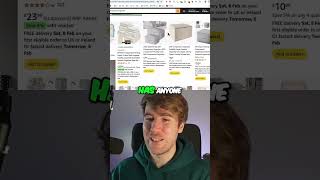
When the customer's buying products on Amazon, all they have to see is the listing, right? They can't try the product out, they can't touch it, they can't feel the quality, they can't hold it in their hands and show it to their friend and go, what do you think of this? All they have is the pictures and the text on Amazon's website. So we really need to make sure this is optimized as much as possible. Clear photos. Great description. Let's say I wanted to buy these compression packing cubes, right? And I'm a customer. There's so much detail on this page about everything, right. About the product. Save space.
Right.
Recycled, recycled rib stop nylon, high Quality, two way zippers, right? All this information, right? And as a customer, I'm gonna have one thing in my head that I'm looking forward this product. Let's say it's the question, will this fit in my luggage bag? If that question isn't answered on the listing, I'm not gonna buy it. It doesn't matter how you know sustainably the product is sourced, doesn't matter the color, it doesn't matter anything else. That hot question has to be answered, right? If I can see the dimensions and know it fits, I'll buy the product. So you have to figure out what are these hot questions that your customers have in their mind that make them decide if they want the product or not and make sure that's on the listing. Once we have these three things, we can build the fundamentals of the business. But really the purpose of the business isn't just to build a really nice business to serve you. Whatever your goal is. How do we get there?
Right?
So let's say, I don't know, you wanted to make 5k per month. How do we build a business that consistently does that to help you hit your goal and live the kind of lifestyle that you're looking for? Well, most Amazon businesses, they kind of look like this. It's a little bit of action in the beginning as we're trying things out. Then a seller will usually start to see a little bit more consistency once they've really got their teeth into the business model and a product starts to work. Once that's happened, what you'll see sometimes with a lot of successful businesses is this kind of hockey stick like curve in their sales. Now if you analyze my sales from my first year selling on Amazon in 2015, this is exactly what it looked like. So how does this happen? Well, in my first year, I didn't really understand why this happened or what happened. But afterwards I looked back, did a load of analysis and actually figured it out. There was three phases of the business. The first phase for me was the test phase. This is where I was really throwing a load of stuff at the wall to see what would stick. And this is a great strategy as long as you do it with low risk. So testing first works really well. Small quantities of stock, see if it sells, see what the marketplace likes, see what designs they like, see what you can charge a lot for. Once you've done that and you've gathered some data about which products will perform well, then you want to launch. Launching is where you double down. But we want to double down On a plan that's going to work, right? So before we launch, we definitely want to do a profit and loss projection, right? So going back to our sourcing, we want to go, okay, we charged 29.99 for the test batch. We're getting these for £5 each. These are all of our costs. What is our projected profit for when we do this big launch? If that number looks good, then go ahead and order as many as you can, right? Usually we'll order something like 500 units or whatever and that gets us consistent sales, 5, 10 sales per day and starts to make us some consistent profit. Now once you've done these two parts of the process, once, it's a case of rinse and repeat until you hit your goal. And this brings us to the third part of the process of the growth strategy, which is scale. We go from having one product to 2, 3, 4, as many as we need until you hit your goals. Now, as a general rule, I wouldn't run an Amazon business with one product. It's risky. What if that product doesn't work as well as it once did? What if Amazon suspend the listing at some point?
Right there.
There's risk factors really in any case of just having one thing, right? If you have five products, it spreads the risk and it diversifies your portfolio. So even if you only want to earn a few thousand a month, I'd still launch several products. Alright, let's say you've got all of these pieces of the puzzle. There's still one element that overrules everything and determines whether your business will succeed or fail. And that is the bulletproof mindset. Now the thing that's going to kill your business moving forward and getting any kind of result, procrastination. I do it, you do it, we all do it, right? The key though is to make sure we're procrastinating on the right things. The stuff that doesn't matter, but not procrastinating on the stuff that moves you towards your goal. So how do we kill procrastination once and for all? Well, there's three things. If you have it in place, I promise you, you won't procrastinate anymore.
Right?
The first thing is a why? Often the reason why we won't do a task and we'll just procrastinate and just sit on the sofa and watch Netflix because there's not compelling enough reason for us to actually do that task rather than procrastinate because we're always doing something. So why do we sit on the sofa and watch Netflix. Well, because there's a reason why it's fun, for example. So we need to make the why bigger for the thing you're supposed to be doing than the Netflix. So why is this? Why are you interested in selling on Amazon? Get really specific how much you want to make per month and why. Another thing you need is the how. So sometimes we procrastinate because we want to get started on something. We understand our why, we've got the goal. We just don't know where to start. What do I do first? There's loads of steps. I'm confused, right? So how do I do it? Getting clear on the how can eliminate procrastination. Usually. Just focus on step one. Using that AI tool I talked about in the beginning of this video could be a great first step to kill your procrastination. Find some products to sell now. The most important element to kill procrastination is when. When are we going to do this? Set yourself deadlines. Block off time in your calendar. And if that time is dedicated to the task and you have the why and the how, it's much more likely you'll actually take the action. Remember these three things as you build the business and you'll be much less likely to stop and procrastinate.
Right?
So if you found this useful so far and you like to put all the pieces of the puzzle together and create a plan to build your business, why not book an Amazon accelerator? Call with me or a member of my team. Here's what we'll do. First, we'll get really clear on your goals and just figure out what kind of business do you want? Why?
Right?
Just get really clear on like the reason you want to do this. Then we'll talk about how things are. Now just get clear on, okay, what's your situation? Where you starting from? And then we can build that into the plan we make. Then we'll talk about, okay, if we want to get from where you are now to hitting the goal, what things do you need help with along the way? And these could be roadblocks. These could be things you might get stuck with. We'll make a map of all the things that you might need help with. Once we've gathered all that information, we'll have a clear idea of your situation. We could create a really clear plan to help you hit your goals. And you should get a lot of clarity from this call. Then finally, if you want some help and you want to work together, we can talk about how that works as well. And if you do want to get some coaching awesome services and we can talk about the details and see if we're a fit. So if you're interested, click the link in the description. You can book in an Amazon seller at a call. We'll go through this whole process and figure out how to build a business that works for you. Thanks so much for watching this video. I hope it gave you some clarity. Hit subscribe. Hit like leave us a comment and I'll catch you very soon.