Niche Spotlight: Should You Sell Meal Prep Containers On Amazon?
This is a YouTube video titled "Niche Spotlight: Should You Sell Meal Prep Containers On Amazon?" created on May 4, 2022. The content features Oliver Denyer conducting a detailed product niche analysis focused on reusable meal prep containers sold on Amazon. Oliver explains his scoring system for evaluating market demand, competition, hassle, and gaps in the marketplace, providing insights and advice for potential sellers. The video is a solo presentation with occasional interjections from a secondary speaker, discussing the viability and strategy for launching a private label product in this niche.
Should you sell reusable meal prep containers on Amazon? Well, in this video, that's exactly what we're going to find. Out. So welcome to Niche Spotlight. This is the video series where I analyze a niche on Amazon. We do a deep dive to see if there's money to be made or money to be lost. And today I have a very new special cheat sheet, a new scoring system I'm using to help you figure out if a niche is good. We're going to run it through together. Should be really exciting. So let's have a look at this niche. The niche is BPA free reusable meal prep containers.
Okay, so it's very simple really.
They are little plastic boxes that people who are into fitness use to prepare meals for the week. So, for example, let's say you needed to eat three meals a day. You wanted to have the right amount of protein, carbs, fats for each meal, and micronutrients. You could do all your cooking on Sunday, prepare all the meals, put them in these containers, put them in the fridge, and then just microwave them for every meal. All right, so these are really popular. And we're going to do a deep dive into this niche to see whether it's viable or not to launch a private label inside the category. So we're going to start off, as always, by looking at the core elements of the smash hit product radar to see whether this niche is good or bad. So quick reminder of what these elements are. First thing we always want to look at when we're analyzing a niche is high demand. In other words, are people buying this product or not? If no one's buying the product, then we should just skip it. Let's go where the money is, right? Not try and create demand when there isn't any. You've probably seen many examples of people going on the Dragon's Den or Shark Tank with an idea that they think people are gonna like, but there's just absolutely no evidence that it will work. It's a huge gamble. And really, the Dragons rarely invest in ideas like that. We want proven demand. We want a market already that we can enter into, take a slice of. The next element is low competition.
Right?
So we want there to be demand, but not so much competition that we can't fit in anywhere. So we want space to offer our product and still get sales. Thirdly, low hassle, right? So we don't want it to be a nightmare to import the product, we don't want it to break, we don't want it to be too big. We don't want customers to have issues when they open the product and try and use it. We want everything to be smooth as possible and then finally, gap. In other words, we want there to be something missing in the marketplace or ways to improve on the product so customers have a reason to buy our product over the other products in the niche. Alright, very important. Then you can charge more, you can beat the best seller and you can make more money than everybody else. So how do we figure out, using the data that Amazon's giving us on this, on these search results, whether these meal prep boxes meet the criteria on the Smash hit product radar? Well, I've created a handy dandy cheat sheet to do just that. Now, I don't know if you can tell, but I made this myself, so as you can see, hopefully you could read my handwriting. But basically the title is Smash Hit Product Analysis Cheat Sheet. And there's a box for each element on the Smash it product radar and a scoring system which I have used before in these videos. But now it's more neatly laid out so we can figure out whether the product meets each one of these elements. So the first thing we need to check is high demand. In other words, is there enough demand, is there enough sales going through this marketplace for us to make any sales? The thing we want to look out for with demand is we want to check that there's definitely at least 3 sellers making 3k a month in revenue. Right? That's what we want, because then lots of sellers are doing well. They're probably making at least a grand a month each in profit. And that means if you sell your product then you could probably also do that.
Right.
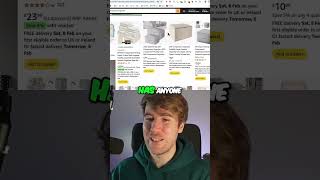
Give me my gym notification. I'm going in a second. Gonna get it off the iPhone as well. Cool. So let's have a look. I'm using amzscout right now and I've sorted this niche by revenue. And as you can see at a glance, there's already way over 3 sellers with 3k a month in revenue. In fact, there's 1, 2, 3, 4, 5, 6, 7, 8, 9, 10, 11, 12, 13, 14, 15 sellers with at least 3k a month in revenue. Fantastic.
Alrighty.
So we can check off this box or green tick.
Right?
And the score, I like to score each element out of 20 because there's so many. There's 15 of these 3K sellers. It's way more than we need, five times more than we need. So loads of demand. I'm going to give it an 18 out of 20. I mean, the number One bestseller right now is doing £66,000amonth in sales. Wouldn't that be amazing? Even if you just did like a tenth of that and made six grand a month, it would be amazing. Probably 2k a month profit. I mean, life changing stuff, right? A few of those products and I mean, you don't need to work anymore, right? So yes, there's definitely high demand. What about low competition? Well, we need to figure out if there's five or less. Let me get the highlighter out. Five or less established sellers. An established seller is someone who has 500 reviews or more, right? So customers are drawn to listings with lots of reviews because they trust them. It's harder to sell your products when you have zero reviews if there's a competitor with 500.
Right.
So we want as little as those as possible. And also ideally, we don't want a big brand competing well because if there is, then again the customers are drawn to buy from the brand. Unless you do something really much better than the brand, they'll go with the brand. So let's have a look. Are there any brands, any big brands selling this product? Well, from what I can see, there might be some relatively well known brands, but there's nothing that really jumps out on me. The only thing that could be that looks very, very well branded is this Simply Prep brand. So what I'm going to do is Google it. Simply Prep. We're going to see is this a big brand? So this is Simply Prep Meals based in Coventry. They have Instagram, they have their own website. So 15 reviews, they are a company, they are established. But to be honest, I don't think they're going to be so hard to compete with that it's going to affect us. It's not as if Nike have launched.
Their own.
Prep meal prep boxes, right? That would be a big deal. But I don't think Simply Prep are going to be too hard to compete with. They're not that well known, I think. So it should be okay. All right, there is no brand. How about established sellers? I'm going to sort by reviews and we want to see how many sellers with 500 reviews or more are in the niche. So there's 1, 2, 3, 4, 5, 6. So we want 5 or less, ideally. So actually, no, there isn't 5 or less established sellers. You can see I just checked that off. So low competition score out of 20. It's a little bit more competitive than we want. However, the revenue is really high, so there's lots of room to compete in this Niche, so I'm going to give it a 12 out of 20. Not great, but it's doable. You can compete in this niche. You're just going to have to offer something really special to the customer. All right, what about low hassle? How do we figure out if a product is low hassle when we're just looking at search results on Amazon? Well, first question we want to ask is, in theory, could we make this product ourselves? In other words, how complicated is it? Does it involve circuit boards, moving parts, all that kind of thing, or is it easy? Well, this product's really easy. Now, I don't actually know how to make a plastic meal prep container. I don't own a factory and molds and stuff for how to do that. However, in theory, I mean, it's a bit of plastic, it's not that hard. You could get the mould, melt the plastic, put it in the mold and make it kind of, you know, similar to what it should be. So, yes, I would say we can make ourselves. It's not like it's, I don't know, a graphics card or a phone or a watch. Right. It's something relatively simple. So, yeah, and make it ourselves. Is it a low hassle category? This is the next question we want to ask. So low hassle categories are these ones here we've got home and kitchen, baby sports and outdoors, pets, stationary and office supplies. If the product's in one of those categories, it's probably low hassle. Although obviously there's high hassle products in those categories. But it's a good sign if it's in one of those categories. This is in home and kitchen and I think some of them are listed in sports and outdoors. So yes, definitely low hassle category. And is it seasonal? Obviously, if a product seasonal, it's not.
The end of the world.
But it's a bit of a hassle because you've got to time your inventory correctly. If you only going to sell products in the summer, you don't want to place a massive order in September because you won't be able to sell anything until May.
Right.
So it's a bit of a hassle to plan your inventory with a seasonal product. This product will sell all year round. It's meal prep. There's no reason why it should sell better in January than in June or August or whatever. I think it will sell all year round. So it's not seasonal. So good. So in terms of low hassle, yeah, it looks okay. The other thing we want to consider with low hassle in fact, I'm going to add this to the spreadsheet because I think it's important is dimensions. In other words, is it small and light or is it massive and awkward and bulky? Well, if you click on one of the listings, you can have a look and see the size and the weight of the listing of the item and you can see what's the price going to be like to import it and to ship it to send to each customer. Well, it's 568 grams, which is under a kilogram, which is good. And it's not oversized. It's under 35 or under 30 centimeters on the longest, on the shortest side and on the longest side. So it's not too big, it's not too heavy. So the dimensions are good.
Right.
Going to have a check for that. So in terms of low hassle, I want to give this maybe a 15 out of 20. It's really good. It's probably not the, the lowest hassle product I've ever seen because you have to ship sets of say what are they doing, 10 or whatever, which could be slightly irritating. The box could be a bit bigger than we want, but it's still quite low hassle. So for these three elements, it's actually looking quite good. What about gap in the marketplace? Well, how do you find a gap? How do you figure out if a product can be improved on? Well, there's several ways you can do it. Number one, best way is to look at the reviews and see if there's any issues with the current products. So if I look at the best seller, click on the listing and I go to the reviews, let's see what people complaining about. There will always be complaints. So if we click on one star reviews, this person says rubbish because they're cheap and flimsy. Okay, so this is an issue with the number one bestseller. It's cheap and flimsy. Okay, so we could offer a product that isn't cheap, that's a little bit stronger material, that doesn't break so quickly, broke before first use, bad design.
Couldn'T.
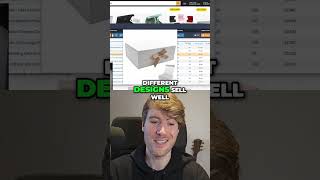
Be put in the dishwasher. Bad quality, not dishwasher safe. So we know if we come into this niche with a dishwasher, safe, strong, sturdy meal prep container, we will beat the best seller in one way. We'll do something better than that. So that's one thing you can do. Have a look and see if there's any issues with the products in the marketplace. Another thing you can do to find a gap, see, is anybody bungling is Anybody offering a set of products with bonus items, for example, meal prep containers with a protein shake bottle or something else that's relevant to the niche. I haven't seen many sellers on this page doing that. It just seems to be a package of the food storage containers. That's it. So there is room to bundle.
Right.
In fact, I'm going to add this to the cheat sheet as well, so we can use it again in future. So the first thing was issues with the current products and the second thing is no bundles the first page. And in fact, this niche there is issues and there are no bundles on the first page. So there's definitely gaps in the marketplace. In fact, I'd say I'll give this maybe a 17 out of 20 for Gap. So it's looking pretty good. We've got pretty high scores so far for the elements on the cheat sheet. But there's one element left, and this is hunch. So as you develop your skills as an Amazon seller, you will develop your hunch or your sense of intuition for product analysis. And it actually depends on what type of business you want to build and what type of business owner you are. That will actually change your hunch. That will change your intuition when you're looking for products, because you might want to go for really high volume, lower profit. You might want to go for lower volume, bigger profit products. You might want products that fit into a specific brand. You might want products with high hassle because nobody wants to compete in those niches. I mean, there's loads of decisions you might make as your business grows and that will change your hunch. I'm going to give you my impressions based on my experience and my business, whether I will launch this product or not with my hunch. So I would say the plus sides are, look, the demand is crazy, very, very good. The competition is a little bit high, a little bit higher than we want. So that's going to make it a little bit tricky to get those ads running in a cost effective way. Because, remember, the more competition, the more expensive the advertising. That's just the way it is. Also, the price looks a little bit restrictive to me. Now, we would obviously aim to add more value and charge more than everybody else in the niche. That's what we want to do. However, the price, even if we did charge more, let's say we charge 20 pounds or something like this seller has here, even though they're offering 50, which is a lot, the price is still a bit low. So whenever you see a price around £15, £13 it doesn't mean you can't make money. You can definitely make money. There's always a way. However, it just means you're gonna have to be more crazy creative. You may have to order more units and it's not going to be as easy. If, for example, you could charge £35, £40, £25 or whatever. The higher price you can charge generally, the easier it is to make profit. So for those reasons, my hunch, I'm going to give it maybe a 13 out of 20. Is there an opportunity? Definitely. Is it the easiest product to launch in the world? Possibly not. Possibly not. So let's add up these numbers and see where we're at with this niche. We've got high demand plus low competition plus low hassle is 15 plus gap, 17 plus hunch is 13. That gives us a total score of 6. 75 out of 100. Pretty solid niche, actually. You could launch it, you could do something with it. But you need to be aware of the issues with this niche. Remember, there's no such thing as a perfect niche on Amazon. It does not exist.
Right.
All Amazon gives you are opportunities. And whether you're successful or not is determined by what you do with those opportunities. You're going to grab them by the horns, be creative, offer something better than everybody else. Really know your numbers before you buy a large amount of stock. Do a decent test batch. If you do all that stuff, you can make cash.
Right?
Doesn't matter what the niche is, there's always an opportunity. Alright, thanks so much for watching this video. Hope it gave you a little bit more insight into how I do a product analysis. Hope you like this niche. Maybe go give it a go. And if you need some extra help, maybe you want to have a chat with me about your business, about your goals. Click the link in the description. Apply for a free Amazon accelerator call and we can catch up. All right, thanks so much for watching this video. Subscribe if you haven't done so already and we'll catch up very soon.