CHIPS Implementation Retrospective: Perspectives on Future Industrial Policy

Mike Schmidt and the CHIPS Program Office team discuss executing the $39 billion CHIPS Act, including how Senators Kelly and Cruz secured a NEPA exemption and how new hiring authorities let them staff faster. They break down incentive design using Apple's supply chain disruptions and assess deals with Intel, TSMC, and Samsung, drawing lessons for future industrial policy.
Chapters
Thank you so much for coming to the CHIPS Implementation Retrospective: Perspectives on the Future of Industrial Policy. My name is Ileana Kuziemko. I'm the co-director of the Griswold Center for Economic Policy Studies and a professor in the Economics Department. And I am thrilled to introduce you to Mike Schmidt, who will be Introducing the event. So Mike is the— was the inaugural director of the CHIPS Program Office at the US Department of Commerce, where he led the implementation of the $39 billion federal initiative to incentivize semiconductor manufacturing in the United States. We're really excited that we have Mike as a year-long visitor here at the Department of Economics in the Griswold Center. So Mike is doing a bunch of events with us this academic year. And so this is one of them. We're really lucky to have him and bring his expertise to a topic that is in the news every single day, sort of what is the future of industrial policy in the US? So I am going to throw it over to Mike to introduce the event, and then we'll get the panel up after Mike gives a few introductory slides and take it from there. Awesome.
All right. Thank you so much. It's wonderful to be here. So the main purpose of this event is to get you all together with some of the key members of the team that implemented the CHIPS Act to give a really kind of inside feel and look at what implementation looked like and what that means for our country going forward. But I think I wanted to provide just a little bit of context about what CHIPS is, what CHIPS achieved, a little bit of storytelling just to provide. So, so, so when we jump in to the stories and the insights, you have a bit of an analytical frame and a narrative frame for, for where to fit that in. So I'll just do a few slides. I'll try to do it pretty quickly and then we'll go from there. Okay, so background, the mission of CHIPS. Semiconductors are essential to the entire modern economy. 75% of the global economy relies on chips in some way. US used to be a leader in semiconductor manufacturing. Semiconductor manufacturing declined from 40% to around 10%. over the course of around 3 decades. For the most advanced chips, so think like NVIDIA GPUs and the entire AI revolution, that is until recently entirely produced in Taiwan, a single company called TSMC. That's on the logic side. On the advanced memory side, also really important for AI, entirely in East Asia, split between Taiwan, And Korea and a few other places. Considerable atrophy of the upstream supply chain in this country as well as downstream. So the packaging of chips. And so, so Congress, you know, this was viewed as a national security emergency. Bipartisan legislation, Republicans and Democrats came together to pass the CHIPS Act to reverse this trend. Our team was given $39 billion which paired with an investment tax credit, which is really important to try to onshore manufacturing. We used to joke there's a reason you don't give $39 billion to a startup.
The—
you don't really think about this in the context of government programs, but a bill passes and there's nothing. There's no team, there's no strategy, there's no program, there's no infrastructure. And so we were building it up from scratch. And you're doing it in the context of, for us, massive information asymmetries with the very entities that we're going to try to strike deals with. I mean, we're dealing with some of the most sophisticated geopolitical actors, companies in the entire world. And then within government, as I think you'll probably hear us talk about today, massive legal and cultural barriers to successful execution. So that's kind of what we were up against. What did we actually do? You think about the program in a few different phases. So one is pure startup mode, building the team, setting a strategy. We released something we called our Vision for Success. We wanted to put concrete objectives out there in terms of what we were trying to achieve. And then we issued our Notice of Funding Opportunity. That's basically like the guts of how the process was going to work, the actual application, et cetera. That took about— 6 months for us to do that. Ultimately, we built the team to 180 people. I was the first employee in, I'd say, September of 2022. And by May, we had what, 90 employees by May of 2023?
Yeah.
And we just kind of grew steadily from there. So, we go out into the world with our applications, When we went out in the world, we had— you have no idea what— how the world is gonna react. And so you're kind of in this fog of uncertainty. We had our $39 billion. To give a sense of what we were up against, the— we thought of the $39 billion based on our vision for success, maybe we'd do like $25 to $28 billion for leading-edge companies, memory and logic. There were 4 of those companies that were coming in with big applications. We knew that, and that's TSMC, Micron, Samsung, and Intel. Just those 4 companies asked for more than $70 billion. So immediately we know that we're in for a set of pretty tough negotiations, and they were all pieces of the puzzle that had to land together to make our portfolio work and create space for other priorities as well. So We were in this kind of period of simultaneous commercial negotiations in DC, in California, in Korea, in Taiwan. I mean, all over the world to— I mean, I'll never forget Kevin's missives from Taiwan as we were working through with TSMC. Anyways, so then we land the deals and it's a moment of tremendous pride and kind of relief. Because we feel like the pieces of the puzzle are together. We have TSMC, the largest foreign direct investment in the history of the United States. Samsung, the second largest foreign direct in the history of the United States. Truly historic, consequential investments that can really turn the tide for the industry here. Important for national security. We thought we were close to the finish line, and then we enter this period which I call the long grind, and that's turning our term sheets. into final legal documentation, which, you know, I think we kind of had this thought that lawyers on both sides would be able to work through, you know, a few technical issues and we'd get it done. It ended up taking an enormous amount of time and effort to figure out how the kind of nuts and bolts of the legal relationship that the US government would have between, you know, with these companies. And then that went into transition. We ended up getting 20 deals done to final award, $34 billion allocated and catalyzing several hundred billion dollars of investment. So what has happened since then? We have— we've seen 21 new fabs be announced, 10 new supply chain facilities, 9 million square feet of cleanroom space, and over $600— around $600 billion, a little under $600 billion in planned investment in the industry. Again, that's with our grants, but also with the tax credit, and that includes some incremental announcements that have been made since President Trump took office. All 5, there are 5 companies in the world that can produce leading-edge technology. All 5 of them are investing here. No other country in the world has more than 2 of these companies investing. And announcements in politics sometimes aren't worth that much. It's easy to make an announcement and do a ribbon cutting. you know, real dollars in the ground is what matters. This is an actual chart of what you've seen in electronics manufacturing investment. So the green shade at the bottom shows the impact of the CHIPS Act on investment. I think we will start getting into our experience and our lessons learned when you start talking to the team. But a few, you know, preliminary reflections to kind of get us going. One is the importance of setting clear goals and not only setting those goals. So we talked about those, that vision for success, but also importance of prioritizing them. And I think we had some areas where we were successful in prioritizing goals and some areas where we really struggled in terms of legal or policy frameworks that, that ran, were in tension with, with, with our stated goals. 2 is the notion of industrial policy as a real, a new form of statecraft. It is, it needs to be done thoughtfully. The tools of industrial policy can have tremendous impact, but they can also do tremendous damage and tremendous, have a lot of costs, both fiscal and otherwise. And so thinking about how to do industrial policy the right way, I think, is really important. 3 is we in government, there's often paralysis based on risk. You know, the Solyndra is like the famous Obama-era deal that went poorly. You know, you're in government, you hear about Solyndra all the time. We really tried not to be paralyzed by fear of risk, both risk in terms of the deals we did, but also risk in terms of the processes that we ran and the scrutiny we would face. I think that's really important. Team is hugely important. You'll meet some of these folks here, but we built, I think, as good as a team as you'll find in government, and that it would have been impossible to do that without without that. And we were able to do that because we had special hiring authorities under the CHIPS Act, certain exemptions from OPM. So the technical details of how you build a team, and we had a lot of admin funding. We had $780 million for admin funding. So in the early days of startup, we were not pinching pennies. We were doing what we had to do. Except on travel, Mike. Except on travel, Kevin says, yeah. We can get into international travel protocols for the US government. Okay, and then final is we really tried to prize kind of culture in our team and how we did our business, operational details. In government, there's like a culture of kind of fetishizing big policy roles and policy titles, but you can pay attention to the details pass the best policy in the world, it's the execution that matters. And if things go poorly, it's the execution that people remember. And so, so we, we definitely tried to elevate that in our focus. So anyways, now we will bring the team up here and we'll begin.
All right, so as the team settles into the panel, let me just briefly introduce them. And apologies if I'm getting the names slightly mispronounced. So, Liat Kravchik—
Kravchik.
Kravchik, sorry— was the executive— is the current executive director of the New Jersey AI Hub and was the former senior advisor on the Chips for America strategy team. Sarah Myers is the managing director of the Three Cairns Group and was the the former Chief of Staff and Chief Operating Officer of the CHIPS Program Office. Kevin Quinn, currently a partner at Genki Advisory and the former chairman of the New Jersey Economic Development Authority and Senior Relationship Director of the CHIPS Program Office at the US Department of Commerce. So you guys, do I— at this point, I thought I would ask you, invite you all to think about a story that sort of illustrates your time, you know, in the CHIPS effort and something that, you know, you found to be a memorable, you know, moment of your— of this, you know, intense 2-year period.
Who wants to go first? First? I already went.
And also, if there's anything more in your background, I gave you such short introductions. If there's anything more in your background that, you know, was relevant to the path that led you to being part of the CHIPS team, I would, you know, love— I think we'd all love to hear that as well.
So just to start, I professionally, I spent over 20 years at Goldman Sachs. I worked in their M&A department and then their technology business. I was in Silicon Valley for 6 years. I was in Tokyo for 4 years, and I ran their global electronics banking business for a dozen years. I left Goldman in 2012 and did a bunch of other things that I thought were really interesting, including working in state government. But then when the CHIPS Act came around, a former colleague said, listen, I'm going to go do this, but like, You're a semiconductor guy. Why aren't you doing this? And I said, because I'm not looking for a job. I'd spent 11 years without one. So why would you start again? But a couple of things. I grew up in DC. I'm the oldest of 5. My siblings, my parents were there. I also was approaching 60 years old, and I didn't know if I still had game. So I wanted to go back to work to see if I had game. And Mike will tell you whether or not I have game. And then lastly, you know, here's $39 billion of taxpayer money, a startup program with a bunch of very smart and well-intentioned people, none of whom know anything about the semiconductor industry. What could go wrong? So that's how I jumped into chips. As far as a more personal story, listen, when I came to— Yeah, sure.
Can you just kind of describe your job, like what you did on the—
So what does a senior relationship director do? You're basically— I led an award team. So you are the applicant interface. And in my case, the awards— and these aren't all, but the awards I did, I worked on the— I led the team at TSMC Samsung, SK Hynix, and at Amcor, a packaging company. And I was also responsible for developing the Asian supply chain kind of ecosystem. And so we did events in Tokyo and events in Taiwan and in Korea. And then the last thing is early on, I jumped into advanced packaging because I said, we may allocate almost $30 billion to front-end manufacturing, And then we're going to put all those chips on planes and send the chips back to Taiwan or back to China to be packaged. How secure should we feel about the massive investment we just made? And we knew it was going to be really hard because outside of TSMC in Taiwan, there are really only 2 other companies globally with advanced packaging capability, Amkor and ASE Test. And so that was an early one that later all that time up front proved to be well worth it with the Amcor Award. What I didn't expect when I came to CHIPS is I was 58 years old. I wasn't looking for more friends. I met a bunch of wonderful people, and the vast majority of the people I worked with were between 26 and 35. There were like 5 of us over 55, and we were made fun of. The only ism that is alive and well in the federal government is ageism. Because I didn't know how to work corporate IT and Outlook and all these things were really fancy to me. I mean, I'm fine with a Mac, but I struggled. And I had a lot of young people while they were making fun of me were helping me. And I just, I had a wonderful time making a lot of new Young friends that'll be friends for life.
Tough to follow, but I'm definitely one of those people who knew nothing about semiconductors.
I—
Sarah Myers. I basically grew up in government. So after I went to Rutgers and was a PMF, a Presidential Management Fellow, a program which has unfortunately been ended by this administration, but it was a great way to get into government after getting a policy degree. And I worked on the Recovery Act for the first couple of years, so starting in 2009. And in a lot of ways, it sort of became a blueprint for the kinds of work that I would do for the next, you know, 10, 15 years in government. So big, complicated, cross-program, cross-functional, highly visible and urgent programs that need a little bit of bringing you know, rigor and structure to chaos. And so I did— I worked on the Recovery Act. I worked on the Hurricane Sandy Rebuilding Task Force, which was another $50 billion supplemental across— I think it was 19 agencies and 60 different programs, trying to sort of track implementation there. Moved on to the Federal Housing Administration, where I was the Chief of Staff and the DAS for Operations. That's the Department of Housing and Urban Development. And then I went to local government, which anybody who is interested in government, if you become a fed, always, I would say, go local as well. It's a really different experience because you're so proximate to the citizen in a way that is just not true in the federal government. And— but after about 4 years of that in DC's education agency, 2 of which were during COVID I was ready to, like, go back to wholesale from retail. And that's where I met Mike. Who was at the time looking for a COO. And in talking, we sort of agreed to expand the role and make it both a COO and a chief of staff. I think in part it ended up— it was both very attractive to me to get to sort of be not just solely focused on operations, but also in really sort of figuring out how to drive, to build an organization and make sure that it was achieving all of its broader objectives. And that is kind of what the role ended up being. So like, you know, you heard Mike talk about starting up from nothing. It's both starting a new team and scaling it quickly with all of the normal operations stuff. But it is also the complication for us was like doing it in the context of a super urgent program that needed to— that was integrating perspectives from a very diverse set of people on the team, many of whom had not been in government before. and sort of negotiating what would make sense for us with the rest of the department, which was sometimes a challenge. And then, you know, a chief of staff job is like firefighting, air traffic control, cat herding.
Funny thing to bring up these days.
Sorry.
Yeah.
And I would also add like some therapy as part of that role as well. But rather than an individual story, I think like there's some vibes that can convey what it was all really like. It was incredible intensity for everybody. We were basically continuously planning processes from start to finish. Like, once we, like, got one process down, we had to move on to the next. And we did that through the very end of the administration. Like, we did the last process we needed to run, we ran in January of '25. And, you know, that intensity translates into somebody calling me while I'm on vacation crying because they may have inadvertently almost hired a relative, and they think they're going to go to jail. And you're like, that just like, that is the sort of, that's how seriously everybody took their work. And also like how close we all felt to like going that hard for that long. The stakes feel really, really high. So intensity, fear, and then, but really overwhelming pride. To Kevin's point, I think like, I think about, inviting people to nominate each other for, like, to recognize each other for awards. And in one of the busiest periods, we got something like 80 nominations for people across the team to, like, recognize them for their contributions. And it's really just, like, not— it can't be overstated, like, what an incredible, like, good-spirited and dedicated and motivated team that we assembled.
So similarly, had zero semiconductor experience.
I—
so my background, you know, was in working in startups, running accelerators, and then I joined local government first. And I agree completely with Sarah that local government is super, super important to understand, okay, like, how do we actually— how does delivery of services actually work? What does it look like tangibly? And I think it's really good to go from local to— which a lot of us have done— local to federal. rural, because you understand how proximity changes kind of the service delivery kind of mechanism and dynamic. But so I was at New York City Economic Development Corporation. I was co-leading a program called Cyber NYC, which was an industrial policy program in New York City, which was all about what are the investments we need to make to make sure cybersecurity takes off in the city. And at the time, it was 2019, and they had a competition about, you know, what is the New York City Economic Development Corporation not thinking about? And a colleague and I said, well, childcare, right? Childcare is where you see an absolute drop-off in differential in wages. And this is like a huge economic problem. And we pitched it and we were one of the programs selected to develop this further. And then COVID hit. So overnight, we kind of became the city's kind of economic research arm and solutions arm on how the business community is going to implement childcare. What do they do with this big problem? And so when the CHIPS Act essentially, you know, I mean, the beautiful thing about the way that this CHIPS program operated, it is truly comprehensive, right? You're talking about everything from federal direct investments to, you know, distribution of billions of dollars to how you're getting 125,000 workers, construction workers and technicians out into these factories. And how are those people going to have childcare to make sure they can be at those fabs when they're 24/7 operations and that doesn't exists as a solution. So my role in the kind of CHIPS world was this tiny sliver of, okay, any company that's requesting over $100— who requests over $150 million in funding, what we had put out is that every one of those had to provide affordable, accessible, reliable, high-quality childcare. And so essentially, I joined that team in that capacity and became maybe like the only person out of 50,000 employees at the Department of Commerce who knew anything about this issue. So definitely a— top-down kind of effort here that was pretty amazing to see.
All right. So I have a few questions to get things started. So Kevin, as the self-described semiconductor guy, maybe you could just briefly let us know, like, what were the main US companies that were the players in this industry? And how was it that they fell so far behind in the Period, you know, leading up to CHIPS?
By the time I finish this, everybody will be asleep. So where to start? Where to start? The semiconductor industry is the most capitalistic industry I can think of in the world. Money just flows to where you can make things cheapest. And if you look at, it's all about driving performance at a lower cost. And so the cost of compute goes down. Where can that happen? And so beginning in the late '80s, manufacturing and packaging began to move overseas. Now, let's stop for a second and think about the cost of facilities. There were wafer sizes is what's driven costs in the industry. So you had 4-inch wafers way back when I was getting outta college in '86. And then you had 6-inch wafers, 8-inch wafers. 12-inch has been the standard since 2000 for leading-edge manufacturing. Fabrication facilities back in the day used to cost $300 million. That was like state of the art. Then IBM built the first 8-inch wafer fab in the US in Burlington, Vermont, and it was about $1.2 billion. The first 12-inch wafer fabs built in '99, 2000 cost about $3 or $4 billion. Unless you had enough high-volume standard parts to run through a facility of that cost, of that size and cost, your margins were going to go down. And so all of a sudden it became very clear that before, the semiconductor industry was characterized by lots of volatility. These companies were— every company had to have their own fab, and they raised money, and it was boom-bust. Because you're building a high fixed cost facility, you're always inevitably gonna overshoot demand, and then everybody's in a bad spot. And then you wait another year and a half and it's good times again. Well, what happened with the significant upfront capital costs of fabs is they began to aggregate demand and companies began to outsource demand to foundries or pure play foundries, companies like TSMC and UMC. Also IBM did some of this foundry work. Samsung did a lot of foundry work. And so it just gravitated towards accumulating more volume in countries that didn't have the same environmental concerns, that were heavily subsidized by the state because we don't do that in the US. We don't subsidize the private sector for the most part. So that's how I think this got away from us over time. But by the way, think about how much a TV costs now. Think about how much a computer, your iPad or your laptop. It is remarkable how the cost of these devices that we can't live without have become so affordable, relatively affordable. And that was the globalization of the supply chain.
Yeah.
That drove that.
All right, so thank you for that very brief background to sort of get us to the eve of the CHIPS Act and when the US sort of decides that it might need its own indigenous industry and that industrial policy is no longer such a bad word. So that gets us to the CHIPS Act. And I guess looking back now, we have a little bit of time and perspective. Are there aspects of the original bill— maybe this is a question for Mike, but I invite anybody to answer— that you would have changed, that would have maybe— that still would have been politically possible to pass it, but that could have been tweaked? And what lessons might that give us if we're going to write our next big bill of industrial policy?
Yeah, I think this is a great question. I think, in general, big picture, the CHIPS Act as drafted really set us up to succeed.
Okay.
Like, I think, like, the big things that mattered. Number one being admin funding. We had, as I said, tons of admin funding. And that just put us in a position where we could build the state capacity to get this done. to pretty much a lot of discretion in— Shujan is another member of the team.
Welcome.
Yeah, yeah, you want to come up?
We could use this moment to do a quick—
He's kind of wearing Princeton orange.
So yeah, sorry for being late. I was supposed to land much, much earlier than this. So, Mike, I was listening on the streaming, which was good, while I was driving. So you were saying—
Seamless.
Impressive.
Something about the eve of the bill and then what you would like to have done differently, you know, with all the implementation challenges with the bill, if you could go back and say, hey, it would have been great if you could have added this provision or not done this thing.
Yeah, so overwhelmingly a lot of things that set us up for success: admin funding, A lot of discretion in terms of how we would do our work. When Congress starts to try to get into the weeds of saying you have to do it this way or that way, that can tend to make it a lot harder to get the job done. It gave us other transaction authority, which is a really wonky thing, but basically meant that we didn't have to structure deals to be compliant with grant regulations. And grant regulations in our federal system are quite burdensome. It gave us special hiring authority. So we were able to hire— we were able to pay up to 25 people up to the vice president's salary. So people like Kevin could make the big bucks coming to work for us. So we were set up in many ways to succeed. I think the— and there were things in the law either specific to the CHIPS Act or just into the basic kind of operating system of American government that we— where we could have gotten statutory exemptions. So one example is NEPA, the National Environmental Policy Act. You know, you can build a fab in the United States without going through NEPA. If you take federal money to build a fab, then you have new environmental review requirements, that the requirements themselves are not necessarily burdensome, but when NEPA basically allows a judge to say you didn't do a good enough job. And so when there's another institutional actor out there who can jam you up on some of your most important priorities, it creates a huge amount of stress and risk for the program. Congress ultimately realized that and provide— maybe the only bipartisan thing Congress did to support one of President Biden's programs was an exemption for a bunch of the CHIPS projects for NEPA, which passed in October of 2024. So largely, I think that helped, although there's some projects that are still going through environmental review right now. The Davis-Bacon Act is one that— it's a prevailing wage law where jurisdiction is in the Department of Labor. We had problems not with the notion that prevailing wage should be paid. That was kind of baked into the deals with the industry. But we had challenges with the administrative implementation of that that were— that really caused a fair amount of trouble for us. And again, it has to do with that discretion and other institutional actors kind of controlling your feet. So I think some statutory things. And then there are just all sorts of stuff in US law, like—
Yeah.
You know, the Fly America Act and the Cargo Preference Act and the, you know, the Paperwork Reduction Act. And we impose so much on our government that other actors in the economy don't have to do. Federal interest.
OMB.
OMB heads. So it's really, you know, there is like a bit of a moment right now for an emerging field called state capacity. Which is how can we make our government more effective? And I think like you'll find the alumni of the CHIPS office to— it will be filled with ideas for how to make government more effective. And then I think without, you know, we can talk, there were some operational decisions we made early on that, you know, if we could do it again, we would do it over, we'd probably save 6 months. It's just, you know, just mistakes. You know, you don't get everything right. Okay.
Sarah, I wanted to ask you a bit about that. I think you said you're employee number 7. How did you manage growing it to 80 and then 180? What was that like on the ground?
Horrendous.
Can you talk us through some of the chaos?
Totally horrendous. I mean, it was really— we spent a ton of time. The first group that was recruited was mostly the leadership team, so the most senior people across each of the verticals. And we basically said to them, all right, go. You have to figure out what the shape of the team is going to look like kind of almost independently, and just find the best, smartest people you can. Because we had some of these special hiring authorities, we really could leverage networks in a way that is not often possible if you're just going through a regular hiring process. But the truth is we also spent like many, many, many hours— like, this, that was like the whole first, in addition to writing the NOFO and like getting the vision for success, all of the other work was hiring basically. And there was a, there was a time when I was the only person with supervisory authority except Mike. And so literally like every person's transit subsidy, salary setting, national security clearance paperwork, like I was I was up till 12:00, 1:00 in the morning signing those documents. So it was both like— I should say, it was really hard. We dedicated a lot of time to it because it was the most important thing we did was assembling that team. And we were very fortunate in that we were situated within NIST. Of all the places they could have put us at the Commerce Department, which had basically the best, most sophisticated hiring operation that there was, and they knew that they needed to sort of push the envelope a little bit. to help us go fast, including doing things like breaking down the very typical silos that you see between the badging office, and the technology people, and everybody in between. That just made it— it was just a very clear priority from the beginning for everybody involved. But it was the biggest thing we did in the first little while.
The thing I would add is it was a huge focus of Secretary Raimondo. So like cabinet-level attention on hiring and recruiting at that scale is rare. And every briefing we had for the first 6 months of the program, didn't matter what the topic was, the first topic was hiring. And then when I would go to the White House, and I would brief the National Security Advisor, the National Economic Advisor, first topic was always hiring. And then it was on us to ask them favors, right? So I remember like recruiting someone and saying, like talking to Jake Sullivan and saying, You know so-and-so, send him a text right now. Tell him to say yes. Or Raimondo probably would personally get on the phone, probably personally got on the phone with 20 or 30 people who ended up coming on the ship, seemed to sell them on coming. And so it was that level, and it makes it a lot easier when you have that kind of leadership.
Leah, can you say a bit about the culture? Sarah mentioned the 80-something awards or award nominations. Can you give us a sense of what the culture was like? Because it seemed fairly effective. I guess both of you. But yeah. Sure.
I mean, I think what's very unique about CHIPS is that you have all these people from completely different backgrounds, super focused on a mission, and they're there because they believe that they are creating an incredibly comprehensive program that's going to benefit the American people, and that is going to create real impact in regions. And I think when you have that kind of mission-driven focus, I mean, that really dictates the culture, because you have people who are there for the right reasons. No one's getting paid the big bucks, I mean, with the exception of maybe Kevin here. It's all relative, Kevin.
I'll come back later.
So I think it's that, and I think it's also a lot of people from the private sector or mixed sectors that can bring in a little bit more of a Risk, you know, the risk-averse culture you often see in government is not the culture that was there. So I think it's just like super entrepreneurial, mission-driven kind of culture with people who are like really, you know, the leadership like really brought everyone together. So I think it was, it was just like the kind of right set of ingredients for that kind of great culture.
Yeah, in terms of the risk, Sarah, can you say anything about, you know, the Solyndra risk and In terms of picking winners, like trying to not pick losers, in particular dealing with oversight and inspectors general, that kind of thing?
Yeah. I mean, so I was not really on the deal side. Like my concern was not the commission omission risk so much as it was the like literally everything we do is gonna get scrutinized in a really serious way. And we need to not be paralyzed by fear because we gotta move fast. And also, we need to be like pretty robust in like documenting our decisions. And I actually think that we did, we ended up striking a pretty nice balance. And you know that because like the people in government, the people with government backgrounds thought we were not like, we were taking too many risks. And the people from the private sector thought we were not taking enough risks. And so we like landed somewhere in the middle. But it really paid off when, you know, the IG came to ask us for stuff or GAO came to ask us for stuff and like, We had it all there. And there were some early decisions I think we made about how to engage with them, with the oversight community, and to manage those relationships, but also take really seriously and just anticipate that everything we did, somebody was gonna ask for that paper later. And so you had to thread this needle to design processes that weren't gonna kill everybody. And also that were going to protect us in the end. And we did not get it right in the first instance ever. And we had to sort of iterate over time.
Now I want to get into some of the brass tacks in terms of the money. So you said after the initial proposals, people— this is, I guess, a question for Mike, but for any of these, feel free to to chime in, anyone. You know, they asked for $70 billion. Like, how did you figure out the allocation of money of the $34 billion that ultimately went out? Like, how much did each of these groups get? What was the package between grants and loans and other terms? And like, you know, how did you do that in a reasonable way? Because that seems very tough.
It was tough. I will— maybe I'll go for a bit, and then Srujan and Kevin, you can jump in. How did you do that? We set up governance in the office through an investment committee, not unlike you'd see at an investment firm. I was the chair of the investment committee, and the investment committee had members of our senior leadership team, so our chief investment officer, our chief strategy officer, our chief risk officer, and then a couple of outside industry and financial experts who were not in the day-to-day muck with us, but were almost like an independent view. But they were special government employees. So they were part of our organization. But they were kind of added to the kind of robustness of the governance. We then thought about portfolio allocation. from a top-down perspective and from a bottom-up perspective. So from a top-down perspective, we took our vision for success, and then we mapped it against the applications that came in.
By the way, remind us what the vision for success was.
The vision for success was basically the strategy document that we put out 6 months after launching the program that said, like, we want— for Leading Edge Logic, for example, We didn't just say, oh, it would be great to get leading-edge logic manufacturing. We said, we want at least 2 thriving clusters of leading-edge logic manufacturing. So that becomes a North Star. How are we going to get 2? We then have to— we then think, how are we going to do that? Well, we get applications from 3: Intel, Samsung, TSMC. There are 2 ways you could do it. One is by concentrating your bet on 2 of those. Another is by creating a diversified portfolio across all 3 and using a diversified portfolio to try to help you achieve that objective. We had a lot of discussions about which of those approaches was right. At certain points in the program, I actually thought we were going to go for the more concentrated approach. And I think there were a lot of people on our team who thought we should have gone for the more concentrated approach. But we chose the more diversified approach. So that's like the type of bottom— top-down analysis. That top-down analysis also involves looking for gaps. So for example, it was very clear to us that we had a gap in packaging, hugely important part of our vision for success. That was Kevin talked about. Kevin took that on. He said, we got a problem. So he went out, he traveled Asia, he engaged companies to try to get them to apply. But at the same time, we were applying pressure on the front-end manufacturers themselves. So they were having conversations in the industry saying, okay, how are we going to package these chips? So using, but doing that top-down and then marrying that top-down with a bottom-up assessment of what it would take for these companies to succeed here. And maybe, Srujan, I can hand this over to you because you really led this work. But it was, you know, we weren't a tax credit, so we had discretion about exactly how much money we were going to give. And our goal was to give just enough to get them to invest and not more.
Hello, everyone. My name is Srujan. I was the senior investment director for the CHIPS program. Right now I run a semiconductor company. So some of the things that Kevin and Mike were alluding to in terms of packaging and, and making sure that we have enough supply and we address the bottlenecks, I'm actually facing it real time right now. My only regret is we, we, we didn't do it sooner because we, we still have those bottlenecks now. But going back to your question, you know, in addition to the top-down analysis, like what one of the things we did really well was to actually put ourselves in the shoes of the CFO. or the CEO of the company, and think about what is the cost of capital from their standpoint, and what is the return on this asset that they're going to build, and make sure that, you know, if you're the CFO or the CEO, and from a shareholder standpoint, you will never do a project or undertake a project if your return on that project is not greater than your weighted average cost of capital. Very simple, right? So put ourselves in the shoes of of the company and think about what is the mix of loan and grant that we can provide to this company to make sure that their average cost of capital, after taking into account the loans and grants that they're getting from the US government hurdles, and compared to whatever, whatever else they could do, like they could go and build a project in Taiwan, they could go and build a project in, in Malaysia. What is their weighted average return on that project? versus building it in the US and what we can do to make sure it hurdles. So that's one of the pieces of the puzzle. On top of that, then we have the responsibility of putting ourselves in the shoes of the taxpayer, right? So now you need to think about it's not just the cost of capital for the company to make sure it hurdles on a risk-adjusted basis. Can the company actually deliver the wafers that we are looking for them to deliver, right? How do we do that? How do we quantify that? One of the things we could do is look at what the financial markets are saying, right? Look at where the CDS spreads are trading. Look at where, how the risk is getting priced in the market when they do a bond issuance or loan issuance. So these are all metrics that you could distill and put it in the framework to figure out on a risk-adjusted basis, if Company A is saying they'll do 20,000 wafer starts per month, but Company B is saying, I'll do the same 20,000 wafer, I'll do 40,000 for the same dollar. But Company A's CDS is trading at half the price of Company B, then on a risk-adjusted basis, you probably— the taxpayer probably wants to go for Company A because that $20,000 is more guaranteed than a $40,000, which is more risky. So that's another part of the equation where we need to think about on a risk-adjusted basis for every dollar we are putting out, what is the output from a taxpayer standpoint? Taking into account all the metrics in terms of how risky the company is, the track record, what the customers are saying, both the qualitative and the quantitative analysis. So that's piece number 2. Then I would say number 3 is, overarching, like, see, our goal in the CHIPS Act, you know, role is not to displace or was not to displace private capital, right? We wanted to encourage private capital to come in alongside the government funding. And so, are there creative ways for every dollar that we are putting in, the company can go ahead, and use it as a multiplier to get $10 from the capital markets. And if there's a way of unlocking more capital to come alongside your loans and grants that you're providing, then that's a win for the taxpayer because you're getting more bang for your buck. So we went through a whole exercise in terms of not only interacting with the companies, but actually, you know, me and other team members, we spoke to about maybe 100+ private market participants. So private equity companies, insurance companies, pension funds, sovereign wealth funds, all of these guys who wanted to come and support this program, how we can use our dollars to unlock some of their capital to come in alongside. And there are some success stories there that we can get into. But long story short, to answer your question, it was, it's like a 4-dimensional chess puzzle that we had to, you know, go through.
Yeah.
And I'm glad we went through it because that is the level of scrutiny and critical thinking that I think we need to make sure that the taxpayer dollars are being put to good use. And I'm glad we went through that.
Can, before, or go ahead, Kevin.
Go ahead.
I was gonna say, in terms of the hurdle rates, I'm curious, you know, how, what did those look like in terms of investing, you know, in another plant in Taiwan or expanding in Taiwan and, you know, there's subsidies in other places. How, you know, what were the main economic determinants? Like the cost of healthcare, the cost of construction workers, like what actually moved the needle on those hurdle rates in addition to the loans and grants? Like how big is the delta in cost, or productivity-adjusted cost? Maybe you can—
I can start and others can chime in. So I think, so there are 2 pieces of, even within like geographical diversification, right, there is the company angle, which is purely looking at what is my cost of capital, and then there's a customer angle, So for example, Apple would value some diversification in their supply chain. So they're okay to pay more or they're okay to support build-out here. Even from a company standpoint, they don't want to get exposed to a single point of failure either. So there are non-economic factors that, you know, we need to take into account. But if you just purely look at the economic factors, I would say the biggest, one of the biggest delta is, you know, depending on, I mean, it's different for different companies. So for example, if you are, a wafer manufacturer actually building the, you know, the actual silicon that goes in into wafer manufacturing, then the most expensive input from an OPEX standpoint is electricity cost, right? So in Texas, electricity is much cheaper than in Taiwan. So for them, actually, the differential was actually more attractive to build here. But if you take somebody like, let's say, TSMC or one of the fabs, Then labor is a big, you know, source of, of expense and getting labor cheaper and quicker here was one of the biggest hurdles. So I would say that, you know, those were, you know, some of the considerations that they were going through.
Well, you can see we have really smart people on the chips team and then other people on the chips team. Just one thing I just wanna put in there. To put into context is the awards. We had a guideline in our NOFO that we would provide awards that were between 5% and 15% of eligible capital expenditures. So it wasn't like the— our awards were like paying for a third of a project. Now, there is the investment tax credit, which companies get, but for us, we were, say, 10 cents on the dollar. is what we were really impacting. Now, there are certain projects like advanced packaging, which the economics are far more challenging than front-end semiconductor manufacturing. And so in those instances, in the case of Amkor, we were north of 20% of eligible CapEx in what we provided them. And there was all the supporting You know, cost of capital stuff that we did too, and then we pulled numbers out of a bag and say, hey, that looks about right. I'm kidding.
You know, one of the most impressive, I think, accomplishments is getting TSMC to kind of expand what they were doing in the US. Kevin, can you talk about how the CHIPS team managed to do that? And other people can chime in, but that, you know, can you walk us through that specific deal?
Sure. TSMC purchased some land in Arizona, started construction in 2021, right? April of '21, before the CHIPS Act was passed. They really struggled to build in the US. They had no familiarity how they contracted the work. Is not the way anybody else would've contracted the work in the US. TSMC does not use— does not act as the GC in Taiwan. And there are contractors that they've worked with for basically 20 to 30 years 'cause they can promise them tons of work on an annual basis. If you're working at TSMC in Taiwan as a contractor, you never leave their facility. You have a job for life. In Arizona, there was a lot of trial and error. And so you heard a lot of jawboning in the press about the struggles they had in Arizona and how uncompetitive the US and unfriendly for business. And that dialogue, through some coaching provided by some folks, got better. But they came to us with a proposal that was smaller than we wanted. And Secretary Raimondo is very persuasive, persuasive, and she said you need to, you need to do more, you need to go bigger. And this is true with other leading-edge applicants as well, which I think is different than why not just give all of these applicants, increase the investment tax credit to 35%. Well, they'll build whatever they want. Here, there was a dialogue with all the big guys, Intel, TSMC, Micron, Samsung, about our specific needs that included things like trailing edge foundry, like advanced packaging, like, oh, that's nice, you're gonna do 2 fabs, how about doing 3? And so that was how the discussion went. Listen, everybody left. when they heard what their award was? All of the Big 4 were horribly disappointed. They didn't like us. The most awkward business meeting I have ever been in was when we told TSMC's team what their award was. And they— we stared at each other for about 45 seconds. And some of the younger people on my team, one person in particular, Felt so uncomfortable, all she did was stare at me. So I'm sitting there, she's just staring. And the other 2 are like— I could tell they were going to tap me with their feet, like, what do we do? I was like, you can't— it is what it is. As soon as you try to tell people, hey, this is what's on the menu, what you're getting is $6 billion, there isn't a lot more to say. And I knew that we would end up in really awkward spots if we tried to say more. And so our hour meeting, after the long staring, lots of disappointment, red faces, ended after 20 minutes. So, but we got there, and we had a wonderful relationship that Mike as well was a big part of.
Just after that meeting, we went to brief Secretary Raimondo. I actually wasn't in that meeting, and Secretary Raimondo asked one of the Kevin's colleagues had— she goes, so how did Kevin do in the meeting? And her response was, well, he didn't say much, so that was good. That was good.
You know, your team—
But just to— just on TSMC, the reason we were so focused on the scale is they had around 1,000 acres, enough to build 6 fabs. Each fab is the size of 11 football fields. And they had committed to that first fab. They were building it. When CHIPS passed, they said, okay, we'll build a second. The way they build it is kind of 2 at a time. So you build one and then one next to it. And that kind of— those are kind of connected operationally. We wanted them to be on a path to really building out the full 6-fab gigafab. And so getting that 3rd fab Meant that we were kind of— we really felt like we'd really reached escape velocity on the full 6-fab gigafab. Because once you built the third— Build the fourth. You build the fourth. And then once you've got 4 fabs operating and you have the muscle memory to build those fabs, it seems very likely you'll do 5 and 6. So when we announced our deal with them, they actually had a replica of the 6-fab gigafab in their— the lobby of their big office building, and they— it was like covered in a tarp or like a blanket or something, and they took the tarp off and kind of announced— and then when President Trump took over, they announced it to the world, like, we're gonna do the full 6 fabs. And so I think it was— but that was why we were really focused on that 3rd fab.
I mean, one of the pieces of criticism that the team got, I think most notably from Ezra Klein, was on the everything bagel issue. Liat, can you speak to your views on that? And others can chime in as well on how fair or unfair that was and how you thought about those considerations.
It's my favorite topic. Well, maybe, Mike, do you want to start with what you got at the beginning of this announcement? And then I can—
I guess I should define what it is.
Yeah, maybe I can define it. And then, Liat, I will— you should speak to it without my editorializing. How about that? So the everything bagel thing was, when we announced the NOFO, we had this provision asking for childcare plans for our larger applicants as part of a broader workforce plan, because building out a workforce, how you were going to build out the workforce was part of our evaluation. We wanted confidence that you could build the workforce. And so we had childcare as part of that. And for a variety of reasons, that particular provision got a ton of attention. And then Ezra Klein coined a term around it called everything bagel liberalism, where it's this idea of, you know, that you're trying to do too many things. You don't have one objective, you have many objectives, and if you have too many objectives, then you don't achieve anything. Of course, the biggest flaw in the analogy is that the everything bagel is the best bagel. It's a delicious bagel. And it costs the same, right? So it's kind of amazing. But anyways, I think it was a criticism I think we took seriously. But Leah, I'll turn it over to you.
Yeah, so maybe— so there's a couple of things here, right? One is like, let's just remember that like alongside the story of national security and economic resilience is the story of the divestment from manufacturing and what it did in this country, right? And it's a story of how people you know, lost their jobs and the regions around them really, you know, were devastated in many ways. And we're still feeling the repercussions of that, right? And so, you know, remembering that story, you have to think about like, what are the investments that you make at the last mile? Like, you could build the biggest fab and you can have all the right investments. And if there's nobody to work at that fab, you haven't done the job. So this is just as much part of the economic story as anything else. And I think we, Often talk about social versus economic investments here. And that's just not— I mean, the facts are that 30% to 40% of workers are parents. And because of childcare, I think it's 40% of parents have turned down a job, over a quarter have turned down a promotion, a quarter have been fired, and a quarter have quit, around those lines. So these are real repercussions on what's happening in the economy because of lack of access to childcare. And those are confounded by the fact that these fabs are 24/7. and that you're building a lot of these fabs in areas that are not developed. So usually you have kind of an informal system to catch you, the grandparents or extended family and friends. If you want to attract workers to an area where there's nothing built but a fab, you need to have a place to put your children, right? And those were just the facts. And, you know, in Taiwan or in Korea, those are, you know, every— these fabs have childcare facilities. It's not really questioned the way it was here. So that's kind of one piece of it. I think the other piece of it is how companies reacted to it, which is, with the exception of maybe one company that reacted badly to kind of anything we said, frankly, every single company was like, okay, this is— I've been hearing about needing to provide childcare. What the heck do I do? Like, you know, most people have 2 kids. That's 30% of your income.
Right?
You can't pay some 30%— you can't increase an income by 30%. Even if you had the money to pay for childcare, more than 50% of Americans live in a place where there's 3 children for every 1 slot. And in areas where we were working, there were 50 kids for every 1 slot. So even if you had the money, there's nowhere to go. Right? And that's not a normal HR problem. HR is like, let me— what's the benefit? And let me check the box. Healthcare broker. Do I do Plan A, B, or C? That has become common. Childcare is at a place where there is zero— imagine healthcare with zero insurance markets and zero kind of— the market is completely not mature. So what we had to do is— the question was not if, but how, right? And those are the things that people don't understand about this, is that we got zero pushback from companies. If— and we also didn't dictate how to do childcare. A lot of the coverage was like, we're requiring everyone to build a childcare center. No one who does childcare thinks that's a good idea. We definitely did not require that. We work with the companies to say, look, what's the right size investment on that front? We didn't put any punitive measures on it. It wasn't like we were going to say, TSMC, by the way, you know, those billions of dollars, you're not getting it because you're not providing this kind of childcare. That wasn't going to be the case. So it was like— small carrots to de-risk an investment they were already interested in making. And what they lacked was the technical assistance to do it, right? So the whole story and this political flashpoint that has been made of the childcare question actually was something that the companies were hungry for. And I think the numbers, the results show it, right? So by the time I left, I think we had funded 24 companies. 18 of them had rolled out childcare plans. 7 of those weren't required to roll out childcare plans, right? So these are just to show that companies were all in on this regardless of what the media has said about it.
One other thing I would just add is like, that's absolutely right. This was like never the issue. Totally. It did, however, internally, not childcare specifically, but the breadth of the Number of items we had to sort of deal with in negotiating these deals. Mike talked about like the long grind. Like we had a thing called the policy annex, like going through every kind of requirement from every expert like Liat, but like people in cybersecurity and like literally everything else you can think of that was included in our NOFO. Like we had to negotiate those terms. And that itself was just like a really complex operation to pull off and set of internal negotiations to sort of wade through.
Sarah, can you say a little more about that? Like, one thing that's striking to me about this episode is, you know, people are writing Abundance and Why Nothing Works. And, you know, there's high-profile EV programs that get a ton of funding and don't get very many chargers built. And it seems like you're team was able to get 20 deals done in 2 years. How would you compare and contrast, you know, why this team was able to navigate all of these things, you know, and how would that compare to your other experience in government? You know, you had a long range of experiences at HUD and other places. So can you speak to that?
I mean, I'm sure other people have things to say here too. I think, like, number one, the people and the sort of spirit that Liat referenced. Everybody was inspired by that mission. Everybody had something that was like super motivating. And that just creates more of an egoless environment than I've ever seen. The second thing is that we had a lot of special privileges. Like, we really did. Money is like, it's just a huge deal. No other place I've worked in government have you just had like kind of unlimited resources to fund the operation of the thing. We also had very clear top-down prioritization from day one. It was a clear administration priority. And I think we were really intentional about trying to build bridges across this hugely diverse team and work through the stuff that was really hard. So I don't know. I feel like I'm missing stuff.
But I mean, I'd just add on the people side, just what does that mean? You know, what that means is people working 80 to 90 hours a week and not getting paid what they used to get paid on wherever they came from. And that was the thing that was most inspiring to me is how hard the young people— and I worked hard too, believe me, because I was doing calls with Asia either early in the morning or late at night. I never ate between like 6 and 8 o'clock, you know. I'm eating dinner all the time at 9:30 in an empty apartment and saying like, yes, this is what I want to be doing. But it's— people worked really hard. Now, the other thing I'll say is, and we're all being candid here and people don't have to— I felt we lived under the tyranny of legal. I think our deals could have progressed much more quickly if we met the market where it was. And we didn't. We met the market where it was after Kamala lost the election. And we got a lot of our deals closed in those last 2 months, in part because legal took a commercial approach, because some of the positions that legal were taking were just absurd. I mean, if you ask me how much time did I spend negotiating with the 4 deals, with the companies themselves versus negotiating in our building, it was like 5 to 1. I spent 5 times as much of my time in our building trying to get people to a place where we could get a deal done with an awardee, and that was immensely frustrating to me.
So let me add— I think that's a— let me add a couple of framing points. Number one, in terms of how do we get it done, yes, overwhelmingly, it's just incredible team, hard work, heroic efforts. Like, I remember looking at Kevin in October, and we had to get— or maybe September. We had to get—
September.
we had to get Samsung and SK Hynix done, and I, and I just was like, Kevin, I don't think we're getting these deals done unless you go to Korea. And it was like, all right, next week we're going to Korea. Like 7 people to Korea, and Kevin gave a legendary performance in one of those meetings where he, uh— People still—
DC for 2 and a half months. I lived in New Jersey.
My mom was there.
She was kind enough to come down, but I— that was really hard.
But in, in terms of the In terms of this kind of abundance, why nothing works, all that, like, just a couple of framing points that I think are really important. One is, we made a really important process design decision at the outset, which was that, yes, we might ask for childcare plans, workforce plans, operational security, cybersecurity, supply chain resilience, It was a lot. And that required us to manage a lot internally. It frankly put a lot of pressure on me internally, because within the team, I was the final arbiter of, you know, do we give on this term or not? And so I think, you know, it was a lot to manage. I would try to simplify it if I could and all that. But we were— it was a fluid negotiation. And we didn't say— our application process didn't say you'll get 10 points to do it this way and 12 points that way. It was always a holistic process. And that meant that there was give and take and that it was really with the companies. We were able to do it in a spirit of partnership. If we had said, unless you do childcare in a certain way, a judge is going to overturn your deal, that would have been a very, very different proposition. And where we ran into problems was where there are other institutional actors, as I said, who controlled our fate. You know, David Spakeman at the Department of Labor. NEPA, we had judges, right? That is— so like the everything bagel, it tastes good because there's like one chef that's like piecing it together, right? But if you have the salt makers adding the salt, and that's all their job is just to add the salt, then the bagel's not going to taste very good, right? So that's one way to think about that. Even then, I think Kevin's point is that at the end of the day, what was much harder was in terms of getting the deals done, was the core commercial and legal relationship between the government and these companies. And so, like, I was personally spending, just mired in the weeds of conditions precedent, and reps and warranties, and events of default, and covenants, and indemnities. And I mean, it was really— And, and, and I will say that our legal partners, like, in the building worked— like, we were just— it was a new frontier. And so we were all trying to get there. But there was a lot of internal negotiation that was happening to try to make that happen, for sure.
I have a bunch more questions, but I want to make sure to give folks here a chance. And Ileana is eager to start.
I have to run to daycare.
So thank you for childcare.
It seems like a theme for all of you is just like what a great team you had. And so I was curious, what do you think motivated people in many cases to take a pay cut? Was it— I mean, it's gonna be different for everybody, but on average, you know, do you think it was like the national security side, that people really were worried that, you know, patriotic sense that America was falling behind in something that would imperil its national security? Was it more, as you were saying, like the Decline of the manufacturing base and the sort of human consequences of that and the chance to rebuild places that were left behind? Or was it just like this exciting chance to be part of history? Like, what do you think when you were jawboning people, come on, join our team, or when the Secretary called, what were the pitches?
The one thing I'll say is I actually think it was quite different for everybody. And Mike and I did a little bit of a listening tour right around the time we reached 100 people. And asked everybody how it was going and how they felt about the team and the environment. And people had complaints for sure. But overwhelmingly, everybody really just had a different reason, a different thing that was motivating them to be there, in part because we had a lot of people— that's a great example of who were going to be focused on a very specific thing that was going to be theirs. And they got to own and shape it. And I think, like, just this very deep sense across the board of contributing to something important and a sense of patriotism. Yeah.
Yeah.
I mean, I would add just on the industrial policy front, the country hadn't really done anything from an industrial policy perspective for 60 years. And so that means that if this doesn't go well, it's not going to happen for another 60. And so let's make sure we get it right. And I think people were really attracted to that. I think some of the uneasiness of like what happened to supply chains in the pandemic, so it was very present to people what that can mean for the country or maybe for their own families and friends. And similarly, Russia's invasion of Ukraine, of what could happen with Taiwan and the incredible vulnerability that we still have there today. was motivational?
I think, you know, to me personally, so I grew up in a very small town in India, and I never thought I'll work in the US government, and I never thought that I will have an opportunity to, you know, to do that. And so I'm a naturalized citizen, I was not born here. So for me, so I remember when I got invited to do this, I was waiting in the lobby to meet the Secretary. And in the same lobby, there were 2-star Army generals also waiting to meet her. And they were there to figure out what to do with the F-15 and F-35 programs, right? I had never met an Army general in my life. So it was, you know, I never even imagined doing that, you know, growing up as a child in India, right? So to me, it was this unique opportunity to give something back to the country that has given me so much. Second, I would say is, when I joined, it was very early, and it was a very entrepreneurial experience to grow a team and build a team. And like, you know, there were, there was no structure, there was no, we didn't know how to do this, right? And that risk-taking element, the fact that you're doing something new, you're building a team from scratch, it was almost like an entrepreneurial startup within the government. So to me, those were the two main things. that really, you know, drove me to it.
A couple more things. One is people really believed in Raimondo herself. Like, she was a cabinet-level leader. She inspired a lot of motivation and kind of high accountability, but she kept it light, she kept it fun, and she kept everyone connected to the mission. And then I would just say, like, in terms of a broader discourse, I had worked almost 10 years in government. I had led a major agency at the state level. The extent to which people will— can be motivated by a commitment to service is extraordinary. And it is— if people truly believe in a mission, how hard they will work, it's a pretty awesome thing. And so when I look at the current discourse, And particularly the early days of DOJ, the cost is not just in what is happening agency by agency, but the motivation of people and the morale of the government. And the government, you don't have the ability to say, hey, come, I'm going to pay you loads and loads of money to come take this job. What you have is the ability to tell people, this matters. Right? And we don't— we're so lucky if we get to do something in life that you feel like can have a really broad impact on a broad number of people. And I think that's really something that we should treasure, right? That's a huge asset for the government as an employer, as an institution, and hopefully it's a spirit that we can recapture.
And— okay.
We're getting close to time, so let's take a couple questions. Maybe I'll— we'll collect 3 or 4 and then, you know, you can do one last round of answering them. Maybe we'll be able to answer all of them. So, you can go first and then I'll try.
Thank you. Appreciate the talk. It's been really enlightening. We've spoken a bit about the industrial policy implications of the Chips and Science Act, but we alluded to place-based economic development policy implications as well. I'd be curious to I was curious to hear more about what role the communities that were vying for these investments played, or maybe their state and local governments, the congressional delegations. How do they interface with you in vying for these investments?
We're gonna take a couple of— yeah.
Yeah, thank you for the talk. I was curious to hear more about the NEPA exemption and how this decision was kind of like decided on. Was it firms lobbying for this, like pushing Was there a market for it, or was this more of a top-down governmental side decision that national security should be prioritized over environmental concerns?
The question about—
great to hear from you—
a question about Intel and the story that we see today of industrial policy being now we have an equity stake.
Is that—
how does this sort of play into what you think is going to be the trajectory I'm going to take 2 more and then we'll do rapid-fire answers.
Okay, sorry that they're— go ahead. Yeah, and then—
Thank you very much for this talk.
My question is, we just talked about motivations.
I'm wondering about firm incentives, and specifically, do they actively seek kind of a return or a reward for any supply chain resilience investments that they make?
And more broadly, how does that today factor into their future projections?
Yeah, so I'm curious about the federal hiring authorities that CHIPS had. Sarah, this might be a question for you, but to me it strikes me as these special hiring authorities are kind of ways to circumvent impediments posed by the Title V civil service framework, candidly, and I'm wondering I'm wondering if you're talking to a policymaker, do you have tactical recommendations to bake some of these flexibilities into Title V or hiring more broadly?
That's fine. So maybe we can—
Should I play traffic cop here in terms of— OK. State and local. Leah, you want to do that one?
Sure. I mean, I think there's multiple levels to this place-based kind of development. So maybe I'll take it in one direction, which is we started with why it's so important to work for local government and then federal government. And federal government, you're seeing so far away from the place, and you have to figure out, okay, like, not only— like, you can't— so, so for childcare, right? Because nobody knows how to solve this issue, part of what I was doing is going to Colorado and being like, oh well, there's an empty church there, and there was like 3 home-based daycares here. This would make a better sense for you in the terms of financials, in terms of like redoing this church and making this make sense to you. Doing that with 20 companies, you know, we did that. But that's not reasonable to do. So I think part of the question for us was like, how do you build the capacity of local government to do that work when they're not doing that work per se? So sometimes they were doing that work and we were partnering with them, but a lot of the time they didn't know how to do it. And so our work was to think about— for workforce, we created what we called intermediary entities, which were third-party entities that worked between the employer and the community. And they were responsible for curating what were the training programs that matched the demand of the employer. Those entities often did not exist, right? It was a completely new structure that we introduced. Similarly, we worked with funders who for the first time were thinking about, oh, maybe there should be some sort of economic development organization that knows how to build childcare because nobody knows how to do it. And they invested in the structures that now exist in many places that didn't. So I think it was both So it was both playing nice with them, but also building the capacity for them to do things that they hadn't really done before.
I'd just add that almost all of the awardees had already selected a site, and that was all done through work directly with the states. And it wasn't always incentive-based, the decisions that they made. It was largely based on the business community access to power, water, are there air issues, is the land cheap. That's what really drove location, but that was all handled by state authorities, and some are better than others.
NEPA exemption. On that one, I can take it. That really bubbled up on the Hill, and it was Kelly, Senator Kelly, represents Arizona, who was really driving it. TSMC is in Arizona, Intel's in Arizona. And then Senator Cruz ended up being very important representing Texas. And there were others as well. But it was the folks, you know, who— folks on the Hill who were trying to make sure that the projects in their states would be successful and then building coalitions that were really driven on the national security importance of In terms of— what do you want to do? Hiring next, Sarah?
You're right. So, the 3 hiring authorities that we had that were special, one is in the bill itself. It's the thing we call CHIPS 25, which is effectively an excepted service position, meaning like you don't have to post, you just find the person and get a resume, you do minimal paperwork, and you rock and roll. And it allowed us to pay people more. The 2 other things were not in the bill. They were permission we got from OPM. So we had to, like, justify why we should have direct hire authority, which we ultimately ended up having 275 slots. It's like, that's like a number of actions that you can take. And you still have to post, although that's debatable. And like, this is one of those things that agencies interpret in different ways. So you get, like, stuck with some lore. We posted those jobs because our cousinist wanted us to. But it meant that you could have preferred candidates and you could get away with like not doing this very rigid sort of tiering process where a hiring manager could end up with like 3 or 4 different certs, as they're known, which are effectively lists of ranked candidates that you then have to go through and justify every one there in a particular order. We could dispense with that. And what we actually did was we said, We're going to do a soft posting, i.e., not in USAJOBS, get a good candidate pool, and then open the real posting for a very short period so we could like rock and roll through the thing. The last thing we had was accepted service, which is like what I said for the SHIPS 25, although not with special pay bands associated with it. And like without those things, we would not have delivered the program. Like there is literally no question. Our average time to hire was 67 days. The government benchmark is 80 days, and it has not been close to that in many years. I think the most recent was 103 days. And so, we just blew it all out of the water, and it would not have been possible. To your question, though, like, I think about that a lot. Like, is it appropriate for every kind of job in the government? Like, if you're, like, in— if you're in the IRS, if you're in some massive place that's got, Hundreds of thousands of employees, like, should— or in a call center, like, should it be this network-based thing? I don't know. Maybe not. Probably not. Like, there's reason for these rules. But we should be much more flexible with the circumstances in which you can get these exceptions. And, like, a big supplemental bill for billions of dollars is basically a no-brainer. And that's the one thing I would have changed in the bill. Just make them all except at service, because we could have done that. Thank you.
That would be great. I mean, I will say that it probably doesn't make sense for the entire federal government to operate through excepted service. And it's also probably no question that the competitive hiring process, standard process, could be streamlined meaningfully, that you could introduce discretion without, you know, while managing the risk of, you know, abuse. And okay, the— why don't we do the firm-level incentives? So you're— and maybe Sreejan and Kevin, I'll ask you this one. Like you're a manufacturer, you're deciding to come here. What are the incentives around with supply chain diversification beyond the incentives we are providing on the subsidy side? Is that fair?
Yeah. I mean, I think, so it really depends on what the company's perspective is and what their business model is. So I'll just, let's just take Apple as an example. Apple, if you look at what happened during COVID they missed, there was a quarter where they missed the iPhone numbers because they just didn't have the supply chain ready to actually deliver. And if you look at what happened to their stock on a single day, it went down by like $8 to $10 billion. Now, going forward, if you, even if you attach a 10% probability that that'll happen, so that's like $800 million. If you can pay $200 million today to secure supply chain resiliency, then even on a probability-adjusted basis, it makes sense for you, right? So that is just a rough way of thinking about it. I mean, a lot of people were attached greater than 10% probability that something happens between Taiwan and China. And so it depends on your perspective of how resilient you think the supply chain is. So that's one way of looking at it. Look at what happened during COVID to Apple, to all the auto manufacturers. Like there was a lot of turmoil and that's a good example of what happens in supply chain disruption, right? If you flip the coin and look at it from a TSMC or a fab perspective, See, they're making whatever, 60% gross margins on the business. They want to keep supplying in a crisis. They want to, they actually want to have facilities outside of the US to immunize themselves, right? So from their standpoint, it's existential that they diversify outside of Taiwan. I mean, even if it is not for China, there could be an earthquake there, and that's an earthquake-prone region, right? So from their standpoint, diversification is not an option. It's actually a necessity. that they have to undertake. And I think the CHIPS Act and what we did there in terms of incentives accelerated that process and gave them an incentive to actually pull forward the plans of doing that. And we were very successful in doing it. But, you know, I think overall everybody coming into the CHIPS Act and also the industry participants recognize this is a need and this is not an option that we have to, you know, go about. And depending on which company you are, Where you sit in the supply chain, you're, you know, the math and the way you think about it is a little different.
So I think we have 60 seconds. Why don't we just do Intel in 60 seconds? Kevin, I'll have you do that and then we'll wrap it up.
I'll catch up with you on firms incentives. I got a hot take for you.
We don't even have 60 seconds. Okay. We don't, we don't love, we don't love the Intel deal. And I actually wrote an op-ed on it, which I can send you. So there you go.
All right. Well, I want to thank everyone for coming. This is fantastic.
More from Owen
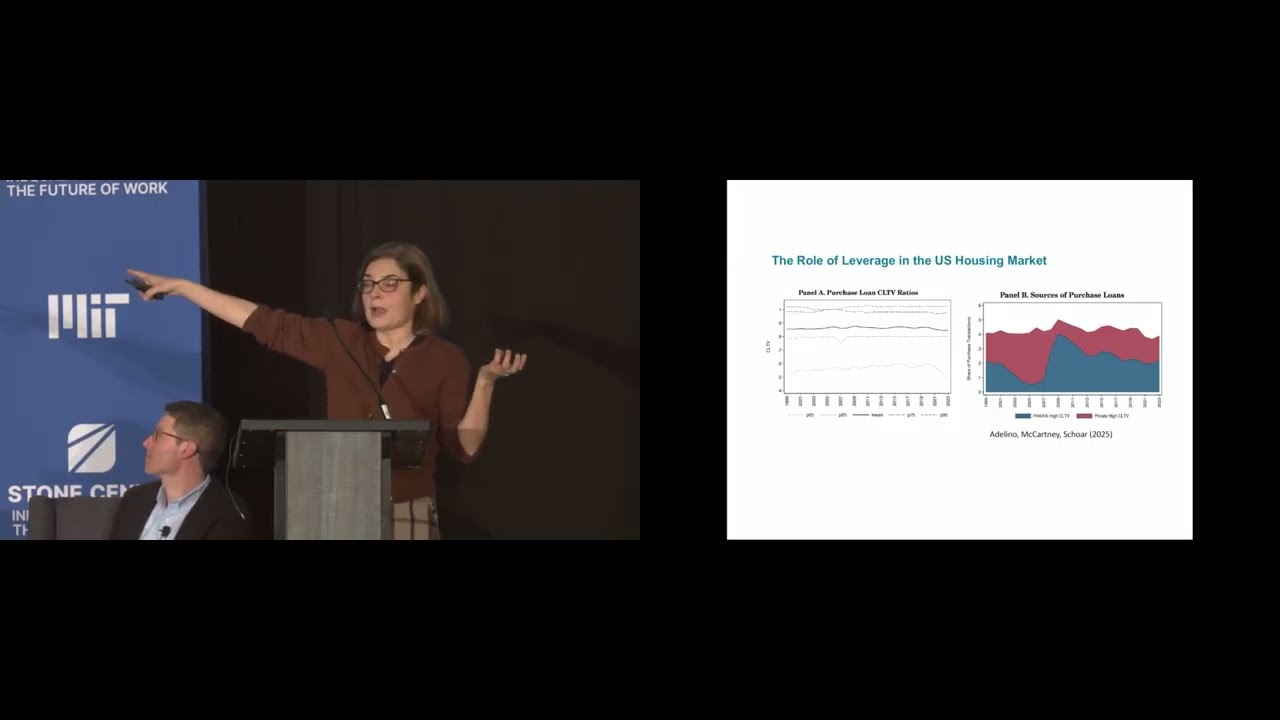

Evaluating State and Local Business Incentives - Owen Zidar | O-Lab Workshop 2020