Miniseries Business Reimagined, Episode 1: Culture is the Catalyst
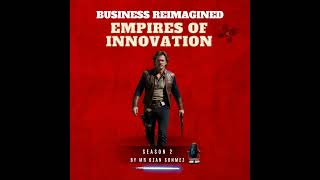
A podcast episode (YouTube) from the "Business Reimagined" miniseries (host Ozan Sonmez) exploring how large corporations can foster innovation through corporate entrepreneurship. The guest, Ozan Sonmez, describes his background (finance → entrepreneurship), consulting work with corporates (Siemens, Ford, Akbank, Arab Bank, others), common barriers (culture, incentives, R&D vs innovation, bureaucracy) and practical strategies (separate spin-outs, HR and finance alignment, upskilling, early-adopter focus). The episode emphasizes competition/opportunity as triggers, the need for urgency and incentives for corporate intrapreneurs, and realistic expectations for timelines and outcomes.
Chapters
Welcome to Business Reimagined, the latest miniseries for Empires of Innovation with Ozan Sunmes. We'll explore the evolving world of corporate innovation, where legacy structures meet groundbreaking ideas, and where the old rules get reimagined. We'll dive into the complex journey of reshaping corporate culture, fostering entrepreneurship, and crafting an environment where innovation can thrive even in the largest organizations. We'll examine how companies can overcome entrenched barriers, balance risk and stability, and align with emerging trends to stay ahead in an ever evolving world. Whether you're a corporate leader, an aspiring intrapreneur, or just someone fascinated by how businesses transform, this series is for you. Join us as we uncover what it takes to build a future focused company culture and rethink the meaning of success in today's business landscape. Now let's jump into today's episode of Business Reimagine.
Welcome back. This is Empires of Innovation with Ozan Sunmis. Super excited to have you here again. We're starting with our second mini series of the podcast. We're going to be talking about corporate innovation and lots of good stuff related to corporates. So I hope you're ready to get going.
Yeah, let's do it.
Awesome. So I think first and foremost we heard a bit about you in some of the other episodes, but I'd really, in relation to corporate innovation, I'd love to hear, you know, what you're about, what you've been working on, what you've been doing, how you've been supporting corporate innovation.
So I started my career in a very traditional consultancy company. I started in Deloitte in finance, the one of the most black and white stuff with no innovation whatsoever. And I quickly moved to university environment. But I did finance for 10 years and I audited a lot of companies. So my corporate experience is going through a lot of different verticals of companies and publicly listed companies, private and international companies, and understanding their business models. And then back then I had very little understanding of entrepreneurship and innovation. I didn't care too much about it because finance is finance. There's not much moving on on that front unless there's a regulation that's coming and forcing out new applications. But then when I moved to entrepreneurship scene around 2010, trying to understand entrepreneurship, trying to finish my MBA actually. And then I understood the business side and then I understood like the theory of management and theory of innovation and of course through disruptive innovation theories and everything else that the late Clayton Christianson put through and many other academics put through, I started going through, okay, what will be the next generation of education, what will be the next generation of companies, and what will be the next generation of technologies that are interesting. So I started becoming very curious and by this, almost at the same time I started hearing about these entrepreneurship to zero lean startup business model generation, four steps of epiphany. So they all came together and especially the more I read about the lean startup methods and how they are applied into the corporate setting, the more I started getting curious about the innovation side itself. Yes, I'm not a technology enthusiast. I'm a technology enthusiast, but I'm not an engineer. So I have a skepticism towards R and D, which is okay. But then a lot of people were confusing R and D with innovation and I understand that's not the case. A lot of discussions were happening about open innovation and open source and entrepreneurship and everything else. So I started getting very curious about all those angles, especially when I moved to the U.S. then I figured out a lot of these venture capital companies have their funding from large entities or their corporate venture capital which is using that tool, alternative investment tool, as a way to be relevant, to stay relevant. I actually did a research and wrote a chapter on corporate innovation and corporate venture capital in Turkey and Middle east long time ago with a friend, with Andrew Romans who wrote the book on corporate venture capital, Masters of corporate Venture Capital. He talked to a lot of corporates in the US and kind of summarized together what their strategies are. And all of a sudden I started finding myself more in the circle of corporate innovation and corporate entrepreneurship because some companies were afraid of becoming irrelevant, becoming disrupted. I helped a few companies in Turkey, a few in the Middle east and since 2022, I think it's been two years, we're helping Siemens, the Global army, which is based out of San Francisco and in Germany. We help Siemens engineers to become to think about corporate entrepreneurship as a tool for corporate innovation. We helped Ford and its employees to be mindful about new technologies and search kind of discovered the ways it could be applied to the fort setting. We did that with Arab bank partially. We did that with Zane Group in Kuwait and we've been doing that for Akbank in Turkey for their corporate entrepreneurs and corporate fund. So I've been very involved in all of those settings with different industries, different, different structures. Not all of them are investing. And we've been reading and writing about that for a very long time.
Wow, it sounds like a really like diverse group of, of corporates that you're working.
True.
Did they, did they approach you or do you put out bids to work with them or how, how did you kind of stumble across these, these opportunities?
So all of them have different cases. We don't go out and actively search for companies who are trying to become more innovative through entrepreneurship for a couple of reasons. One, there needs to be a maturity level in the company to be able to understand what is required. Even the thought process of why should we let our internal sources employees work out different solutions is a challenge in the corporate setting. So it really takes a long time for the corporate body to realize what they should be doing. And only then they can look for service providers or partners like us. If you go to a company and try to convince them, yes, innovation is important, innovation is important. That will probably not go anywhere. It's like going to your friend who's having a, well, maybe a terrible analogy, but who's having either bad marriage or unhealthy lifestyle and trying to convince them they should change. That won't probably happen. Like they'll listen to you, but they will not do the work because it needs to be internalized first. If there's a pain that's been recognized, then we can be partners in either researching that pain level, giving examples of how other companies solve it. But there has to be a pain for any large corporate to move into that space. Most corporates are paying lip service to innovation anyways. So even the R and D departments are not working on things that are innovative. They're only working on things that are 1% or 0, 0.1% improvements, which is like more development than research. And it's impossible to convince a company that they should be investing in their people, investing in new technologies, searching out for different methods. That's a very uphill battle. So once the corporates realize, hey, we're missing out on something, that then they're ready to take the medicine. There has to be a pain, or at least there has to be a vitamin requirement. So let's try this new thing and see what happens. Is a motivation. It's not a painful motivation, but it's still a motivation. So without the motivation, the company executives, there's, it's, it's almost impossible to go on, convince them to do anything.
Yeah, I mean I think for a lot of people that might be tuning in, especially like startup founders or anybody who's really interested in innovation. Corporate innovation almost sounds a little bit contradictory because you think of these kind of like slow moving giants who don't necessarily take the time to be like creating a new product or a new service or really offering anything Innovative. So I guess that kind of begs the question, like, how can corporates foster this innovation and how can they really get going and sort of have this side of the business that is focused on the future.
So I think if I have to choose one word for that answer, I think it's competition. If a company is facing competition, whether from existing rivals or from potential new rivals, that is usually the triggering point. Before that, the other maybe word is opportunity. A lot of corporates are triggered either by fear that they're going to lose against competition or by hope. Oh, if we get into this, we can actually get a lot of money, we can get a lot of return on investment. So those things will drive especially publicly traded companies because they need to provide results to shareholders. Even for privately held large enterprises, that is the case. And usually that case is driven mostly out of not fear, but mostly out of opportunity. In times of technological shift, companies are very late in adapting. And it's not only the old methods of doing business or old business models, old old economy companies like oil and mining and education, it's even the new technology. Companies are not very good at following the trends. One large example is like Google missed out on social pretty bad. They tried to catch up with it, they couldn't. A lot of companies missed out on mobile. Even the new ones who kind of led the world into the online education or online structures, digital structures kind of missed out on other things. So every large company is designed to be good at doing what they're doing. And anything new is a threat. It's either a threat or an opportunity. So the ability of large companies to decide, okay, let's see where this goes is usually an independent endeavor of a board member or an independent endeavor of a C level executive. Sometimes it's the independent interest of the second or third generation leader in a family company. So we've seen a lot of good cases on those. If they are trained in a different setting, if they are seeing different opportunities in their domains outside of their companies, it's easier to start exploring. And most companies are not good at exploring. They're good at execution. That's why they're good. They've done something, they explored something once in a while, once upon a time. Now they're really good at executing what's happening and they're not really open to go back to that exploration phase. So if they have these catalysts of innovation, internal catalysts or champions of innovation, then there is abundant resources and abundant methodologies, various ways they can engage with either startups or with Incubation or with acceleration programs or with corporate venture capital, or with direct investing, or with anything that's related to partnership building and open innovation sourcing. So there's so many tools corporates can access, can have access to. As long as there's a need, there's a determination and there's a will. And of course there's a budget.
Of course, that's always the most important part.
Right. Usually easy for companies to find the budget, but the will is, is the one that's lacking. The companies have the money. Yeah, they don't have the will.
They just have to also be inspired to spend that money on that purpose.
Yeah.
So in terms of your work with, with corporates, I mean, you also work with startup founders, you work as an investor, you work in a lot of different multifaceted kind of world of innovation and entrepreneurship. So what are the differences between your work with, you know, founders and your work on entrepreneurship or corporate innovation? I, I imagine you really have to like, approach things differently, especially when it comes to like, mindset motivations, et cetera. It's a different kind of world. Can you, can you talk about that a little bit? I'm, I'm curious.
This is, this is the holy grail of the topic because most of the people working in corporates are hired into the corporate because they're good at doing one thing. But entrepreneurship and being a founder requires you to be good at many things at the same time or to be open to go to fields where you're not comfortable or you don't have the experience. If you're an engineer, you're hired to do engineering work in one large company. But if you want to come up with your own idea and execute that idea, discover that idea, validate that idea, execute that idea, you need different skill sets. It's not impossible, definitely not impossible, but it requires a mind shift because they have to be comfortable with the idea of failure on many things. They should be open to the idea of failure because, yes, they're inside a company. They're exploring if there is a value proposition for an idea that they had outside of the company in the real market. And they may not be so one thing. That's very often the problem with corporate entrepreneurs is they come up with an idea and they have a corporate ego. They have an ego of a professional. They say, okay, I came up with this idea, I know it is going to work. But then you force them through methodologies and you force them to really go out and figure out sometimes that actually is not a really Important problem. It's not like their idea is good or bad. The ideas are not by themselves, good or bad. The ideas are just ideas. It's not important. They change over time, especially when they really meet the problem set through the market. Muhammad Ali has this famous thing like all boxers against me had a plan until I punched them in the face. Like that's pretty much that the case. Like the market will have its own say and the market is not going to care if you have been working this large company for the last 20 years or not. It's the market is the market. The problem is the problem and the customers are the customers. Those are things outside of their control. But in the corporate side, they have the illusion of everything's under their control. So first thing that I need to retry to break them really hard. In any program, the first four weeks is just breaking and remolding. It's like their idea may not work and they should be okay with it. They should be very happy actually about it. Because if that idea does not have resonance from the market, then it is in their power to come up with a new idea. Now they have a perspective. So we try to teach corporates as well as the individuals to not fall into this idea of fetishism or this, oh, I have to come up with a bright idea. No, it really doesn't work that way. And then the second biggest issue with corporate entrepreneurs is the pace of things in the corporate. They're used to decision making and sometimes you can call them analysis paralysis. Like there has to be a lot of analysis before an action is determined. And once the action is determined, like it's the course it's set that has to be executed. In the startup world in the new idea generation phase, that's not the case. You're not designing a path to execute, you're designing a path to explore. So what tends to happen is individuals come up and say, oh, I've been planning for this for the last four or five, six months and I'm going to execute. Someone say, well, hold your horses, don't execute anything, don't build anything, don't spend any money. Just go out and talk to customers and say, no, I did my research, it's okay. But like this is a little bit different. So once they go out, they try to turn their biases into actions. I talked to this customer segment, but they really didn't get the product. It's like, okay, talk to more. So they keep on hitting that wall and they say, oh, they didn't understand the Customers did not understand what I'm actually trying to give them. And we kept like they keep saying that I would say, are you actually listening to yourself? You're just telling me you don't care about what the customer wants or needs and that's a sure way of building something stupid that's irrelevant in the market. And they have this mindset about working in the mainstream company, trying to do the things in the mainstream way, which is really detrimental to the health of the startup. They try to go to the enterprise clients on day one and they don't understand this crossing the chasm structure where there are a lot of decision makers in older companies or more mature companies, it's a different decision making process. They need to find early adopters. So they don't understand this early adopter mentality because they're working in a very large company. They're not early adopters, they don't work with startups, they don't work with innovative things and they assume everybody will start looking for what a mature company will look for. And they try to design something that will be valuable or meaningful in the last next three years and until then nothing's going to happen, which is, is not how it works. So pace is the second thing that we try to teach entrepreneurs. Crossing the chasm and early adopter mindset is what we're trying to teach people. And then if they get it, then they have a really open floor for them to kind of go explore, search through. That's actually where the real learning begins and how to startup world works and how the mature company works. For startups, same problems. Most startups also start by trying to address the large market, the mature market, with decision makers who wouldn't touch anything new unless it's been proven in the market. But it's easier for startups to understand because unless they understand they run out of money, then there's a bigger pain for the startups to figure things out earlier. Where for corporate entrepreneurs, sometimes there's already a budget approved. It's not their money, it's not yet their company. So they feel they're spending the company's resources, which they don't. They care about of course, because they don't want their company to go belly up. But it's not as painful as a startup. Founders like nightmares, oh, I'm gonna run out of money, I'm gonna run out of money. They're like, okay, if this doesn't work, if the company's resources are spend, I have my job, I don't have to do this outside. So the learning process is less painful and less urgent for the corporate entrepreneur. And that's why we try to change and give them the perspective of a founder. So they feel pain, they feel urgency, they feel prioritization. Now I think that's also a very important word.
Yeah, I mean that's a total mindset shift. Right. You're comfy, cozy in your role. So I think that begs the question, how do you really incentivize those employees to engage with innovation in a productive way? I think that's so hard. They don't see what's going to happen if it doesn't work out. What's going to happen if it does work out? It's so hard. How do you get there?
I think the answer to that question was different maybe 10 years ago and now it's a little different today. The reason is the new generation of employees are almost have that insatiable taste for change and new things. They want to get promoted faster, they want to become more responsible faster. They're very impatient. They literally don't have patience or anything. And yes, it's like Gen Z boomers. I mean, I don't want to name names on that, like generational nicknames. But yes, the new 22 year old employee thinks very different than what the 22 year old employee would think 10 years ago. And that is a driving force because they are internally asking for these things now. They're internally pushing the management systems to do things differently even though the corporation and the enterprise and the structure is not ready for that fast change. So there's, there's an increasing tension between new employees and older employees, one their managers and the total infrastructure. Because the company wants to train these young individuals to become entrepreneurs now, to become managers in the next five, 10 years. But those people don't have that patience. They keep moving back and forth and they're actually pretty okay with gaps in their careers. So that's a very different potential that has the ability to harm and benefit the company at the same time. With older employees or not in age wise, older, in people who are working in the same company for the next last 10 years or 20 years. They are actually, maybe I should use the word cautiously. They are a little sick and tired of how things are done. They see improvement opportunities, but they're not incentivized. Their structures, their pay grades, their bonuses don't require them to do anything new, but they have the inner energy. So that's also the potentially beneficial and harmful because if somebody who's working in any company for the next last 15 years will have really good ideas on how to improve things. Probably not through the lens of new technology or new innovation, but in terms of improvements, in terms of should we do this with established technologies we haven't been using? That's what we see in most of these corporate entrepreneurship programs. But if you're not incentivizing them, and in those cases, money is more important, improvement in salary is important. Bonuses are important because they're at the top of their ladders anyway, so there's not so many other managerial titles or director titles they can go on, hop onto. So they will need something else to, to incentivize them. And the fact that they're doing everything they used to do, they're getting bonuses as they used to, they're getting paid as they used to, is not satisfactory for them. But they don't want to leave because they know the company, they like the company. I want the company to do something else. So those people who are working in a company for the last 10 years are loyal to the company and they want the company to succeed and they want the hr, especially strategy, to be able to open for new changes, new ideas, and incentivize them. Sometimes it's very, very difficult for any HR to change even the minor details of how people are managed, how people are incentivized, how people are subsidized. It's a very difficult conversation in large enterprises. That's why there has to be a champion on this. So there are these two groups of people. One is incentivized with money and position or respect or recognition, we should say. And the other group that are newly employed, they are motiv, motivated by being able to do something new, being able to be decision makers. Oh, I built this, I helped this, I created this. So they're more motivated, not with money, but more opportunities to grow, opportunities to test. So these two groups are available in every company. So the company's human resources and the management of innovation or entrepreneurship, if that exist, needs to take into account these abilities that are dormant and needs people like us to kind of mold that into a structure. But it all starts with understanding the customer. Again, that's what we really do well. Understanding what the corporate culture is, what people are complaining about for the company, inside the company, and what people are looking forward to inside the company. And understanding those motivations are really, really important. And then comes the traditional bureaucratic stuff where, oh, you can't do it that way because it's never been done that way. And Those are the difficult points where we kind of intervene and tell them, focus on things that are outside of the company. Because the company is very hard to change. Company culture is very hard to change. So one of the things we keep telling a lot of corporates is focus on spinning out or creating independent structures where the individuals who come together as a team to do something new does not need to go through the company bureaucracy. They can build their own brokerage, they can build their new things apart from the rules and regulations of the company. Because at the end of the day, if anything goes to any legal or compliance officer inside the company, it starts with a no. Their job is to say no, because that's not the way it's done, that's not the way it's in the books, that's not the way it was approved in the general ledger or in anything. So you can't really instill something new into the company if it's not legally approved, if it's not HR approved. And those things take ages. So our utmost recommendation to companies who are trying to do something internally for their internal people is don't, don't have these people report internally, don't have these people get approvals internally because like, then that's, that's almost like giving birth to a still baby.
Unfortunately, that's a really interesting take. I mean, I think a lot of people would assume that innovation requires like a culture that's innovative as well. And I think, you know, we see that in these more recent, you know, large corporations that actually do innovative stuff. They have a culture that is innovative. But you know, you're saying when you look at older, older companies, older corporates that don't really have that culture, you're saying to kind of ignore that, that aspect or ignore it for the time being. But how do you look forward for, for a corporate that wants to keep being innovative? How do you ensure that eventually it does become a car, a part of the culture? Is that possible?
Well, this is the, It's a, not a million dollar question. It's a billion dollar question because culture is something very inorganic. It's very difficult, it's very intangible. Yet you see traces, you see applications of involvement to change culture, like happy hours or Taco Tuesdays or wear whatever you want or funny socks days or this, you can work 20% of your time for something new days. A lot of companies have these tactics or open forums, things that would be more creative and more culturally innovative, things that are new, big lunch openings and everything else. So foosball tables, ping pong tables, yoga rooms. So there's so many tactics that are applied by large technology companies that became trillion dollar companies, billion dollar companies over the last 20, 30 years. So large companies who are not in that era look into those and see, okay, I'm going to do all of these that they have done and will become innovative now. I wish that was the case so it never happens. Tactics are tactics. Yes, maybe you need the football table, maybe you need a 20 day off structure, but maybe not because maybe your people are not in the right mindset. So culture is very difficult to, to change once it's established. So my recommendation to companies is that's a very long term job. It does happen. It can happen. I can't say, oh no company can, no, they can change their culture, but they need new things. Most U.S. companies get those new things through acquiring startups. They need new people, new mindset to come in and inflict change. Most large companies in the US and elsewhere as well do that by acquiring Echo, hiring startups that their product are not actually working, but they have a really interesting team, really interested culture they put it in and sometimes they hope for the best without structuring it. And for those who are seeing the serious Silicon Valley, it's really fun. The case is like Google buys a lot of these companies and then shuts off their products and those startups are inside Google doing nothing and just spending time and doing funny things. So even companies like Google had trouble in integrating new people into their culture and that's very difficult. It requires definitely execution, power behind, not just a champion, but a total buy in from the company. That requires structural changes on how people are incentivized, how people are motivated, how people are hired, how people are fired. That's almost like a complete different company inside a company and it rarely succeeds. That's one reason why most innovation, corporate innovation stories that are successful are through organizations that are operating outside of that company's borders, literally in a different city, literally in another block of the city, literally under a new organization, new company. Famous examples like Skunk Works, those things are really, really successful because they were not inside that company. Because things will happen, things will not be allowed to work that way. Culture is all about people. You can't change the cultures unless you change the people. And changing the people in a company in a mass setting is not very easy. And it's almost impossible. Like you can't change 50% of your people just because you want to change the culture. But you can find different avenues of Operations, different methods of operations to instill that mindset. And you should also be, any company should also be okay with shutting down the existing operations, which is very, very difficult. Like that's the whole disruptive innovation strategy and disruptive notion theory. That and then many, many others, they kind of dictate a large company can never out innovate itself, cannot create a new version of itself from within because the structures are not there to support it. Yes, you can make the company become more open to testing new things without changing too much of the culture. And you can take the good bits of the culture and try to implement it. I remember reading a book about how U.S. secret Service, and I think it was either CIA or FBI, was doing new things through different methodologies by keeping the core values of the culture that created that culture at the first place, like the operational excellence culture and being able to learning organization culture. So there are things that can be applied. But again, the mindset should not be on execution. The mindset should be on exploration. And that's where it gets really tricky. Like explorers and executors are different types of people and the company who's in the exploration mode of operates differently than the companies from the execution phase. But again, companies can, can change the way they're looking into new things, especially new technologies, and then kind of force feed themselves the bitter pills and operate differently and see results of that change in three, four years. But that requires a mass change.
I mean that's, I think we're going to see it in a couple organizations in the coming years, especially after all of these major layoffs and how, you know, a lot of large tech corporations are looking at how they're going to adjust to this new way of working and the new economy that's happening. So maybe we'll see some good stuff come out of it. I can only hope. I can only hope.
Yeah, same indeed.
I think that's, it's a really interesting take. I mean, I think this all sort of differs from a lot of how standard corporate strategy talks about change and transformation. So one, super innovative for you to say all of this. Two, I wonder how many corporates can really consider implementing things like this. It's a huge task. I think that's where you and your team come in, of course, and other teams like you. I think I'm really interested to know, like how can you put in a strategy and a support system to really effectively manage and implement eventually these employee ideas that come out of, you know, corporate innovation programs, corporate innovation settings. How, how do you Go about that when you work with corporates.
So there it's like a decision making matrix. So one of the things is we ask the leaders who approach us or kind of we start engaging with is what are you doing in the incentivization structure? HR is definitely a key part of this. What are you doing in hiring? What are you doing in R and D? So hiring and incentivization, two different parts of the HR curve and also involves finance and R and D as well. Because what we have seen in some companies that we no longer work with or didn't have the chance to work with, is they have a very R and D dominated discussion in terms of innovation. So before there was the word innovation, all of this was R and D. Now most companies have changed that and put it under innovation department or innovation programs. So R and D suddenly becomes part of the innovation demo. But because there is no other choice, no other program on innovation, all of a sudden the R and D takes over just the word and does everything R and D way, which is no problem. I mean this works. It's not like we never say R and D doesn't work, R and D works. But one thing that doesn't work in R and D is they have to have a set budget. That's what the structure becomes. You go as an R and D leader, you go to your management and say, okay, I need this much amount of money. And for your leaders, you prepare as an R and D leader. What will happen if the company spends that much money? So that's predictable. We do this, we do this, we do this. Some things will work, some things will not work. There is, yes, an understanding of failure is an option, but it's not embedded into the cycle of decision making. Well, let's ask X amount of X million dollars and the company executives, especially finance and general management, will assume that X million dollars of investments will return something in the next year. It's not like we'll return something in the next 10 years. A lot of those, a lot of companies don't have this 10 year visions in terms of technology improvements. They have a yearly cycle of budgets. And that's the stress factor for anybody doing R D. They have to provide results. So there is very little room for experimentation, there's very little room for exploration. And they don't want to go to their management say, hey, we blew up that money. But you know what? We learned a lot. There's no money value on learning, especially in the financial budgets which I used to run. So because of that like limitation, innovation is not R and D and R D is not innovation. So they have to work both hands in hand. So we ask corporates, are you actually okay with incentivizing your people differently? Do you have the potential to hire people differently and do you have the potential to put a separate structure outside the domain of R and D into this program? Or will you put this program into the decision making tool of R and D? Will the entrepreneurs need to come and ask money as if the only thing they will be doing is R and D and everything should be on testing level. So if the answers to those questions are workable, even if the answers are not yet, not yet is okay because they don't know how to do it. If they knew, they would have done it already. So we kind of give them examples. We say, okay, if your HR is okay, here are a couple of things that they can be doing in hiring. If your HR is okay, here's a couple of ways that you can, you should be building a program to incentivize your people. And yes, and then yes, legally or structurally, this is not R and D. So there will not be a result immediately coming out of this spending in the next one year. So your finance and your R and D should be okay with that. If they're not, if they're going to be mingling around with budgets and cutting them out and like looking for results. Of course results are important. Results are what companies will live for. But you cannot create results in a year. For a company with a corporate entrepreneurship program, it's highly unlikely that things, anything good will happen in the first year or two of that individual team. So there's so many examples of new startups, they are now billion dollar startups, but their first year was shitty. They were just trying to get something out the door. But the next two years, next three years, next four years, they start to do exponential growth. And most companies are not understanding this exponential path. One big, big example that we give is like Coca Cola. I mean one reason was, I mean it's been documented, so it's not, it's not a secret. Coca Cola started doing corporate startup weekends and corporate hackathons because they couldn't wrap their heads around how no name startups that are created only a year ago are now billion dollar companies where we need to do so much to create billion dollars of value. Like we need to be doing a lot of resource allocation, get a lot of things out of the ground like water and sugar and everything else. Put them in a factory, put them through Structures, put them into our large distribution networks to make a billion dollars. What on earth these companies are doing differently than us? That are just billion dollar companies in two years, I can't see that again, it's out of this world for the corporate setting, but to us it's very normal. So they got the feeling of FOMO fear of like, are we missing out on something? So they started doing corporate hackathons, they started sponsoring corporate accelerator programs just to understand how this world works. But they had the budget, they had the mindset, they had the interest and curiosity and almost like the motivation of not missing out on anything. So those are the things that are important with the corporate. So we ask those questions. If the corporate leaders in innovation and entrepreneurship say, well, we can't change anything on the incentivization structure, okay, good luck. We can't change anything in the hiring structure, okay, good luck. We, we can't change anything on the financial structure and how decisions are made to invest in an idea. So, okay, good luck. Like, there's no way in hell this is going to work for you. You can do PR activities. I mean, yes, there are still some ways that you can start changing the culture, instilling some energy and like spiritual, like the, the entrepreneurship spirit into the company. But they're not going to end up well because they're going to be short term. They're going to be motivating people for a little period of time, let's say a huge dopamine kick, and then not supporting anything else. So those people are involved will be discouraged rather than encouraged to keep doing something new. And you're going to lose those people who felt the company was changing. They're just going to, that's what the term comes from. Like you're going to just do an innovation theater. Hey, we're this large innovative company, look how we're doing. And then behind the curtain, nothing's actually different. So all of a sudden you have misaligned incentives, you have discouraged and unmotivated employees. So you tell them, like, there is a huge risk in mismanaging this conversation. If you only look at from the PR sense. If you only look at from let's make people happy sense. So again, like not too different than just putting a bunch of football tables on the, the lunch venue. So again, we warn them about this and sometimes it just takes time. They start with one executive in HR who says, okay, let's try it with 10 people only. It's okay, fine, I mean, that's a start. And then you move on. And then you move on and you more. That's, that's how the corpus that we work with, I think the best example so far has been Akbank. They have been iterating their program over and over and now they come to a version where I say, okay, we're going to do this for a longer period of time. HRS are fully buy in, they're fully buying with the structure. They're changing the incentivization structure. They're changing the not necessarily hiring yet, but they're changing how people will be incentivized in that program, how they will be picked, how they will be matched with team members. And all of a sudden finance is also attached to it. Like finance is actually supporting the structures. When these independent entrepreneurial teams find out a problem validated, put MEPs together and want to spin out. So there's financial incentives as well. And the bank doesn't take ownership as much as they probably should. But they're really incentivizing the people inside because they figured out in order to change the culture, they need to instill people with the right mindset. So what happens is they start with a larger batch. It keeps shortening down because some people find out there's no problem, so their idea doesn't work. They go back to their organization. But they're not discouraged, they're encouraged. And now they're skilled to think about customer centricity, to think differently about value creation, to think differently about how they can create new ideas when they see a problem from the customers they're facing with. And then all of a sudden you have five, 10 people that are spinning out in two, three companies a year. But there's like 30, 40 people who are going back to the company and HR is incentivizing them to do things differently. And that's how you instill different ways of doing work that are innovative. Not necessarily new products, new technologies, but the way of looking into things, the perspective of looking into things, prioritization of looking into things, start changing. And that's where the bank gets the most reward, to be honest. Not with the startups that are just spinning out, raising funds, going. That's a win, that's important. But the bigger win is like they actually have people inside almost every division, almost in every part of the country that are looking into things differently, innovatively, and that there is no way to do it. Well, I think that's, that's one of the most efficient ways that we have seen at work.
Yeah, I mean there's so much to be said for, for upskilling, you know, yourself, your employees, what have you. I think all of this ties back into education. Whether you're educating leaders about what the right path is to take or educating employees about how to take it, how to be innovative, how to kind of change your mindset. It's, I mean, education most important thing, right?
Learning.
No. Yeah.
Being open to, to do things differently. True, true, true.
Exactly. Yeah. No, I think, I mean, I have a ton more questions for you and we can dive way deeper into this in coming episodes, but I think this is a really great introduction to corporate innovation and also for a lot of people who might be tuning in, probably a mindset shift as well, just to look at how corporates can really take a new look at being innovative. Because I think this, this kind of goes against what a lot of people have been taught about, you know, slow moving beasts. So I think this was super informative. Thank you so much for your time and continue the conversation in another episode.
Looking forward to it. Take care.
Take care.
Bye.
We hope today's conversation has offered fresh insights into the world of corporate innovation and spark new ideas for reimagining what's possible within established organizations. Don't forget to subscribe to Empires of Innovation for deeper dives and more forward thinking discussions. For more about Ozan's work on innovation space, visit www.mrosonsomez.com. this is business Reimagined for Empires of Innovation. Signing off.
More from Ozan




Your biggest client could become your biggest threat. #mrozansonmez #podcast #businessreimagined

Miniseries: Startup Mind, Corporate Grind – Episode 2: The Founder’s Worldview

That stable corporate job you think you have? It's not real. ⏰ #mrozansonmez #podcast


Why Brands Fail to Connect with Young Adults Today #mrozansonmez #cryptocurrency


