GMT20260318-155530_Recording_gallery_1324x822.mp4
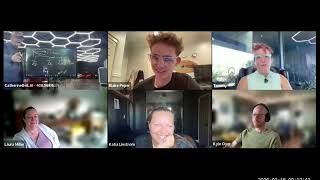
Tommy Dobczyk walks through Titan 23, a fund-of-funds offering real estate across RV parks, data centers, and residential projects. Debt investments return about 8%, equity returns 12-22%. The team plans to use Fractional's platform to let non-accredited investors join through clubs with a $3,500 annual fee.
Chapters
Good morning and welcome to The Deal Room Live, the daily real estate deal tank powered by Titan Impact Group, a global leader in AI-driven real estate investing and funding, where the real estate world meets speed, precision, and profit. And bring us your deal so we can put it into our AI model that analyzes and structures real estate deals in minutes, generates all the docs you need to get the deal done, and gives you a verified, unbiased breakdown of due diligence reports. The investors get the advantage of getting fully vetted AI-analyzed deals that cut their due diligence time down by 60%. So you're in the right place. Let's Open the deal room now and get into today's opportunity. Good enough right there. Good, good.
Nice.
We're good. We're good there. We're good there. We're live, live from New York. It's Saturday night. I've always wanted to say that my whole life. My whole life. Nope. Every day. I'm going to start the podcast every day. Live from New York. It's Saturday night.
It's Thursday morning.
You guys do know that's where the Land Shark Mastermind name comes from, right? Saturday Night Live?
No.
100%.
Okay, that's hilarious.
You ever seen the skit? Does it run? You ever seen the skit on Saturday Night Live? No. Oh my God, you got to go look it up.
Okay, Laura, can you go find that skit?
I'll go find it. Go find the Land Shark skit on Saturday Night Live.
Nobody can find it, it's Laura.
They knock on the door, they go knock, knock, knock. He goes, mailman, I'm not answering the door. Cleaning lady, And it was just like over and over. And finally, when they come to the door, there's literally a shark at the door and it eats them. It was during like the 1980s when Jaws was, was the number one movie in theaters, was a big fake plastic machine shark eating people in the ocean on a daily basis.
That's fun.
So I put it, I just put it in the chat.
Okay, something's gone off my Facebook. It's saying it needs to be 60 days old before I can.
We are, we are. So I appreciate everyone coming in there. I don't know who else we got in the room, but yesterday we had our, we had our conference meeting yesterday and we talked about having to postpone the, the, the Scottsdale Summit. We are not canceling it, we're just postponing it, and we're going to have a discussion about a new date sometime between October and December. It's Arizona and we don't play in the summer out here. So if we're gonna have a Scottsdale Summit, it cannot be anytime Satan is in town. So we know when Satan's in town today. Do you know what the temperature today is going to be? 101.
So I call that 100 and holy crap, right? Anything under 100, over 100, 100, it's 100 holy crap.
My brother used to call them motherfuckers. He'd be like, it's a mother— it's 113 mother— fuckers today. I was like, what happened to degrees? She's like, anything over 100 is a motherfucker. And I was like, oh, so it's 113 motherfuckers today. I'm like, oh, it's hot.
Holy crap.
Yep, yep, yep. It's not hot at this place right here. Does anybody know where this is at?
This AI picture behind me, it's hard to see it the way the camera is set up.
It seems to be zooming in on your face instead of the whole picture.
Oh yeah, yeah, yeah. And it's set up to, uh, do that auto. Is that New York? I think it, I think it wants to be New York. It's definitely AI because New York doesn't have mountains behind it like that.
Can you see him?
Yes, we're good. We still good. So we got, we got, we might get people that barge in on us today. Like it's, it's, it's one of those.
It's going to be a—
we're going to, we're going to have some fun here. So let's see. I wanted to pull up some, some stuff today. We're going to talk about some deals, but the one thing was I wanted to get back to the Scottsdale Summit. 2026, end of the year, October, November, December, somewhere in there. But between now and then, we are going to push hard on membership to the Land Shark Mastermind. We're going to push hard on membership to the Wealth Wise Women Mastermind. And we're going to push hard on getting Titan 23 front and center on raising capital. And so that's why I pulled up the whiteboard was because I want to I want to talk through Titan 23 on the Land Shark Mastermind podcast because the guys can't see that damn board, can you? I don't know where the white—
whiteboard. So I can— we can see it.
Oh, you can see it? Yeah, we're good.
I can try to increase closer.
We try to increase my pencil in.
Like, if you pull it in closer, I think that it would be a little bit more beneficial.
But then I just want to make sure you guys can see me.
We can see you. Yeah.
I can't see your boots.
We just, yeah, we won't be able to see your boots, but that's okay.
You got to see the boots. You got to see the boots. They call me boots.
Then just do like a backwards kick every now and then.
Chops my head off. I got to stand like this.
Just go like that.
Anyway, so the Titan 23, let me start over with that.
You're going to erase it to rewrite it.
I increased, I increased the pen size. Is that better?
Oh, that's, there we go. That's clear. Yeah.
Is that better?
Yeah.
You can see better there. And it's back. Is it backwards, you guys, or does it look like—
No, no, it's fine. It just keeps coming in and out of focus, but it's fine.
All right. I'll do that a lot.
Yeah.
Right. Anyway, what this is, Titan 23 is a fund of funds. And this is where I want to talk about this because we can talk about this in the Deal Hunter. But a fund of funds means that the investor puts money over here into Titan 23. The investor gets to pick any one of these asset classes. This is an RV park. This one is a data center. This one is actually a land holding development company because that's what— that's, that's, that's— we can call that Lindstrom without, without the D now has a D. So Lindstrom, Lindstrom Holding and Development, right? That's what Katya is going to become. Lindstrom Holdings. That's what that is.
We got to go set up your entity raising caps, right?
Raising caps. And then we've got LSD, LHD, LHD, right? And then over here, we've got the, what's something else we got? I, my brain's dead right now. What is it? Industrial, right? We've got the industrial deal. There's more deals. There's like 10 deals.
Well, yeah, the 720 acres.
Yeah. Like, like bison, like it goes this way. Right. But this investor, what this investor is able to do is he's able to shop because we've got this set up where this investor can look at any one of these asset classes. This one is $20 million raise. We're gonna raise $20 million and they get to choose between 8% guaranteed. They can 100% get 8% every year guaranteed on their investment. And the way we're able to do that is that when they invest in this, instead of this becoming equity, it becomes debt. Equity pays between 12 and 22 because it's variable, right? And so this is how we've structured Titan 23 to help people grow those 7 streams of passive income is because they can invest in any one of these asset classes and it returns a different variable every time. Now, if they want to have a steady stream that they don't have to worry about, they go right over here in the debt structure. And what they do is they invest into the RV park through a debt vehicle. And the RV park pays that debt to them every month until the 3-year, 5-year, 10-year note is up.
Debt means being the bank.
They're the bank. This is somebody that wants to be the bank. This is somebody—
equity, right?
They want to gamble. They want to— can I get 12%? Can I get 22%? I'm not going to get it. I'm not going to get it right now. This comes every month. This one over here comes every year, right? So once a year they get 12% on their investment. Let's just say their investment into the RV park was $1 million. We're going to make sure they get $120,000 at the end of the year, right? Minimum. So are we tracking? Everybody good? So with that being said, let me just jump real quick and I want to, I want to make, make a better example of what all this is. So you understood what all that looks like right there, how we're going to package this. And this is what the The Land Shark Mastermind does. This is how this ties into Land Shark Mastermind. Ready? Everyone knows Land Shark Mastermind is the ultimate due diligence machine. It's called an underwriter. And what we have is we have a, a highly skilled underwriter that can tell us what kind of numbers we're going to look at immediately. And we can vet and validate these numbers instantaneously, where it takes teams months and weeks, weeks and months to figure out. Like, we release this to a team of underwriters, it could take them weeks, if not months, to bust through because some of these deals like this one, especially how long have we been busting this deal? 7 months.
Yeah.
We've been busting on, on, on the DC, on the data center deal now, 7 months. We've gone through 14 underwriting teams. 14. Wow. Right? Because every time we underwrite it, they go, oh, what about this? What about this? And then it takes them 2 weeks to figure out the math on it. When we're sitting here and we're literally feeding these underwriters our documentation out of our Deal Hunter, right? So Deal Hunter, this is where this is, this is where this comes in. So Deal Hunter vets every one of these deals. These deals are brought to us by people like you guys, you guys in here. Again, this is the prime example. Our shining star, not too much pressure on you, right? Katya, you know, our shining star is this—
not too much pressure.
Yeah. No pressure on you, Blake. A girl's whooping you right now. But Katya is the prime example. Her deal— did somebody just wow me from the audience?
Back off.
$30 million is where we're going with Katya's deal.
Right.
We got to raise $30 million to get it where it needs to be. Right. We got— he has got a great deal. If you don't know what it is, $12 million land deal, $4 million down, no payments for 2 years. Right. Skating.
And then what we're going to do with it.
And so during that time period, we're holding it. It's— say our holding cost is, is like $40,000 a month. Katya's property is going to make about $85,000 a month net off of the rentals that we're going to be getting off there. So the cash flow to the property for 2 years is going to cover the holding costs. So that's, and we're gonna profit a little bit. So that's how we're able to offer these folks right here that invest into this, we're gonna offer them that 8 and 20, right? 8% guaranteed or the 20% variable rate, right? Maybe they get 12, maybe they get 20, right? They probably get 22 on this deal 'cause Katia has made that a home run. This is why people are going to invest in it, right? Is because of these numbers right here. How do we know we're gonna get the $30 million? Because it's in an opportunity zone. We're gonna put, we're gonna actually go from the, I think they have it scheduled for 64 units of luxury. We're gonna go to 170. Really? I can go up to 18 stories on that property.
Really?
They did it across the street. Bam, bam, bam, bam.
Let's do it.
That's, that's how you get excited right there. So the data center deal is a $50 million raise, again, with the same returns. RV park, $25 million. I made it $28. So now we just made $3 million by my, by my little crooked hand move. And then over here on the industrials, we're going to go, you know what, I want to change this to something that we actually doing. We're going to go $30 million. We're going to call this I want to go to the agricultural because I want, I want people to get excited about that one. Like, that one's going to be super exciting right there.
Yeah, we had a call with the team yesterday. They're really excited.
Is this the buffalo farm?
Yeah.
Okay, I'm very excited about that one.
I think it's like, I want to be there the day they're born. Can I be there the day they're born?
I would love that. Is that okay with you guys?
Fine with me.
Okay.
I will not participate.
So our Bison operation, that's a $30 million deal. What Titan 23 does is it covers all of the investors under what's called a 506(c)(reg)(d) filing. You guys can go look this up later on, but this is an SEC filing and it's regulated under the Section D filing of the SEC on how you're able to structure stuff. There's a a subsection to that, which is what this is broke down to into the A3. It's like an algebraic expression. We'll just put a line there for algebra purposes, but it's XYZ, whatever. I don't remember what the rest of the letters are, but the rest of the letters are how we're able to split this up over a debt structure and an equity structure. Does anybody have questions about the difference between debt and equity? Before we go into explaining capital stacks.
And again, it's good to ask questions because if you have that question, somebody else does too. So be brave.
I do have that question.
Bring it.
Can you explain the difference in like one sentence, like simple dumbed-down terms?
Yeah. So debt— and ready for this, Katya, do you have your Deal Hunter open right now?
Yes, I have several.
So you're probably like me, Deal Hunter on every device, right? You got 6 of them running. Yeah, that's how I operate. I do. I am. I'm horrible at that. Like, I got 6 things going all at the same time.
I actually have 6 exactly. Okay.
I'm right there with you, sister. Let's go. So pop open your Deal Hunter and then make, make that simple prompt to Deal Hunter. Say, I have a deal where I'm going to— I need to have it explained to me. This is the prompt. This is the key prompt. Explain to me like I'm a 5th grader, the difference between debt and equity and how they're the same and how they're different. And if you tell it to do it like you're a 5th grader, Don't be insulted when it talks down to you a little bit.
And Katya, if you can, it'd be cool if you would share your screen and then share your sound, because I would personally love to hear what it has to say.
And this is going to check to see if it's using my brain, because I can tell you in my brain what my words might say. Right. And I'd love to do that. But I think it's exciting to use the tools that we create to do this. So, yeah, down at the bottom is a read aloud. Oh, oh, okay. Yep, right there. Click there.
And, uh, yeah, think of a house deal like buying a pizza shop with two buckets of money. Debt equals borrowed money. This is money you have to pay back, usually to a bank or lender. Equity, ownership money. This is money from the people who own the deal. They put money in and get a piece of the profit and value. Easy example, let's say a property costs $100,000. You buy it with $80,000 debt from the bank, $20,000 equity from you. That means the bank is not your partner, they just want their money back plus interest. You are the owner because your equity is your ownership stake. Biggest difference: debt gets paid first, equity gets what's left. So if the property makes money, one, pay the lender first, two, then the owners split what's left. Super simple way to picture it. Debt equals a loan, equity equals your slice of the pie. Another kid-level example: imagine you want a lemonade stand that costs $10 to start. Your mom lends you $7, that's debt. You put in $3 of your own money, that's equity. If you make money, first pay your mom back. After that, the extra money is yours because you're the owner. Why people use both? Because equity alone can be slow. If you only use your own $100,000, you can buy one property. If you use $20,000 equity plus a loan, you may be able to control a bigger deal. That's why real estate people mix debt to make deals possible, equity to own the upside. One more important difference: debt is safer for the lender. They get paid first. Equity is riskier for the owner. If the deal goes bad, equity can get wiped out first. In one sentence, debt is borrowed money that must be repaid. Equity is ownership money that gets the profits after the debt is paid. Real deal version: in most real estate deals, debt equals mortgage, hard money, private loan, construction loan. Equity equals your cash, partner cash, investor cash. If you want, I can explain this next using your actual deal numbers so it clicks fast.
Okay, so that's exactly— that's hopefully answering your question exactly. The only other caveat I can add to that is in your situation where we're dealing with investors, the investors, like she said, get paid back first on debt. That's why they get a lower return. 8% is guaranteed, but the return is low. Why? Because risk is low. Low risk, low return, right? If we fail on, on this, which we won't— it's not even a factor. But that's why they get 20% is because the risk is higher for them in that if we if they— if they— if we raise $30 million, we spend $30 million, and then it's only worth $29 million, they get all this money and they get jack shit.
Okay, gotcha.
That actually— the lemonade stand completely tied it together for me, right?
Well, and again, I love that he used mom because he's like, if you got to pay your mom back first, like, yeah, because if you don't, you could get an ass whooping. Like, that's literally how that works. Always take care of the bank. If you don't take care of the bank, they will spank you. They will spank you badly and put you to bed with no dinner. So, and I've been there and I've done that. Okay. I had 10 houses that I built, and the bank that lent me the money was called Deutsche Bank. And literally they were like foreclosing on because I built 10 houses and never sold a house. 18 months. Not one builder sold a house in 18 months in the state of Florida, 2008, 2010. So like we ended up 2008 selling the last house in October, then sold another one until almost December of 2010. Crazy. So I had 10 houses sitting in the middle of a subdivision that didn't go nowhere, didn't get sold. And so what ended up happening was we, we did what was called deed in lieu of foreclosure, but the bank just let the property sit there, right? And so just before I went to sign and sign off that I was deed in lieu of foreclosure, we got notified that the houses had what was called Chinese drywall in them, and it turned into black mold. And we got a huge insurance check that covered the money that I put that I owed the bank. So I literally signed the check and it went right over to the bank and all gone.
Nice.
100% all gone. No foreclosures. So, and then I actually was able to get a contract to go back out there and demolish my own houses. Wow. With a hazmat team. And I made enough money to pay off two of my investors. We closed out that deal and the house went back to the farmer that we bought it from on owner financing. And it grew, it grew houses eventually. We were just down there in Florida, drove through it. Remember my eyeballs driving through there? I'm like, oh, look, my baby. I literally felt like I had a baby, gave it up for adoption, then got to go back and see when it was all grown up. So I was like, oh, that's funny. That was cool. Anyway, understand debt equity. Now let's talk about capital stacking. So capital stacking is we know that Katya's project is going to cost more than $30 million. What this $30 million does is gets us to the next level. How much do we need to begin with, Katya?
So can I just say—
wait, who's talking?
You said 4.
Right.
Go ahead.
Really quick. When we were watching the Shark Tank thing in Colorado, the way that the, the laundromat deal was done where they literally had blocks stacked, I thought that was the most brilliant visual for understanding debt stacking or capital stacking.
Yeah.
And so if you could do that, I'll pull that together like that.
So let me watch this. I'll pull that over here. Get out of here. Stop it. I don't know what I just did. Move your ass over here. Thank you.
So, and really quick, uh, Kyle is on here and he was scheduled for a 9:30 with you.
Kyle is on here for 9:30. What's up, Kyle? How we doing? Good.
How are you guys?
Awesome. What's up? Let's see. Starts in 8 minutes and Kyle's with Fractional.
We, we met Fractional while we were out there and, um, super excited about this.
Out there in Colorado, and they got an amazing— Kyle, Kyle is probably the one that needs to be drawing these boxes because this is, this is how this works, right? So we'll, we'll get into this. Okay, so in an, in a development situation, right, green don't work too well. In a development situation, you got your, you got your land, you got your entitlements, you got your vertical, and you got your finish. And this is basically how a how you structure a property deal, this is, this is as basic as it gets, is basic. This is, this is how it kind of falls out. And each one of these has a price tag along the way. So when we, when we go over here, each one having a price tag, we got to raise capital for each section of this going up as well. Right. And so this one right here, the land usually is going to be a creative deal or private money, you know, or whatever, because this is the base, this is the basis. And so if we go through and price this out real quick, let me do that. We're going to say, well, just for the sake of argument, make it cheap. $100K, $100K. I'm going to go up to $1 million with it. So we'll do this at, at, at $600K and then $200K, right? Making this $1 million deal. Cause I'm going to build a capital stack for a $1 million deal, right? So for our capital stack for $1 million deal, I need $100K for the land, $100K to get entitlements. Entitlements are documents, permits, blueprints, whatever, water access, sewer.
But that's what increases the value of the land.
Increases the value of the land. I'm gonna break down what that looks like over here percentage-wise. But when you buy land here, so if our deal's $1 million, land is only going to be between 10% and 15% of that total, right? At most 15%. When you do entitlements, it goes to 30% to 60%. Now, right, depending on what you're building, your vertical is going to be 30 to 40%. This is how you end up going over and getting more in value. Because again, our cost to build is $1 million. So our percentages are going to be over 100%. Like people like, you can't do more than 100%. Yeah, you can. It's called profit. This is called margin. It's how you build margin, right? So if it costs us $600 to build it on the vertical side, we better, we better increase this by 30 to 40%. And then our finishes actually are where you make a lot of your margin. Again, you should be getting 40 to 60% over here. If we tally these up, you got $710. So this is a 10% margin build right here. And this over here, 60, 60, 40, uh, that's, uh, 120, uh, 1, uh, or let me back up, 175. So I got 175%, which means I have a 75% margin. Anybody have questions about how I did that?
Is everybody clear?
Thumbs up if we got it right. And so now, now you understand how we're able to make profits over here. Now you can understand what we gotta do to get our capital stack taken care of, because all these people are gonna need to get more money than we need over here. Right? So if I'm at 110% margin, these people can't make any money. So all this better be my own money, right? If I'm going to make 175% margin, I need to pick out of here that I'm good with making 25% of that margin, and I'm going to feed the other 50% to my investors, to my, to my bankers, to my whatever. It'd be nice if I could flip it, right? But just for the sake of making sure I'm staying conservative, I'm going to give everyone this and be happy with taking that, right?
So does everybody understand why we would technically take less of the profit. Does anybody not understand why it's not flipped? I just want to be clear that you're all understanding the psychology behind this.
Because again, if there's not enough meat on the bone for everyone to eat, they won't come to the table anymore.
Yeah. And I'd rather take care of the money.
I'm going to do— if I, if I can do 10 deals at 25, that's better than doing 2 deals at 50.
And you guys, this is the same as being 100% owner in one deal or being a small percentage owner in hundreds of deals.
Margins are where it's at.
Like we're a small percentage owner and this is one of hundreds of deals.
Right.
So it's totally worth it for us.
So to get creative with this, if I need $100K for the land, I can either do a private money loan or creative finance, right? If I need the entitlements done, I'm also going to include this into the private money loan or ready for this? Hoy, is Hoy in here today?
Not yet.
Hoy has credit cards that are 0% interest. And so what you can do is you can pay $5,000 to get a 0% interest credit card that you use to pay for all your entitlement work. $100,000, 0% interest loan for 18 months.
Nice.
Free money. Cost you $5,000 to get one, right? So you can do that. So we'll put over here a CC loan, right? On your vertical, this is where you're going to get a construction loan. Okay. And this is where it's going to go up. That the— where you're going to get this is definitely an institutional loan. Or in the case of Titan 23, we're going to do equity. And what we're going to sell this individual is— we're going to sell this individual $70,000 of this million-dollar investment, right? Because why? I'm getting a huge profit margin to cover them. Okay, and this is where Fractional comes in, is because their, their program, their, their platform allows us to make these offerings to people that are not accredited. Titan 23 only does accredited investors. Fractional allows us to go with friends and family, go with smaller smaller contributions so that people can— so that people can start getting into these types of investments, these types of deals. There's been millionaires made over Robinhood, for example. Yeah, like, because people can now go on and do stock trading simply and easily. They've been able to do amazing with it because smart people can do stuff like that, right? But the platforms were what were the holdback. And now that we have the platforms in check, Like that's where to be. So we're going to jump over and start talking with, uh, with our guests here now, because I think we're right there at the, uh, at the spot. But as far as capital stacking goes, you can see here how I find different sources to get the money covered. When I get to the $200,000, I can use it from here or in the $200,000. What I'll do is I might, I might sell it like over here. What I might do is find the buyer. And what the buyer is going to do is he's going to hand me an offer for 175% more, which is $1.75 million. Like, so this buyer is going to hand me $1.75 million from his down payment. I'm going to come in and do the finish work because I'm going to let them pick the tile, let them pick the color of the, the, the wall paint, what kind of roof shingles do you want on it, blah blah blah, the finished stuff, right? They don't get to pick the structure because they like what I already built, they like the layout, they like the beds, blah blah blah, right? So this is my capital stack. My friends and family, my credit. I got a bank involved. And then I was able to pull the buyer to the table, built up a capital stack.
So is this helpful, what he just drew out for you? You understand the full capital stack. So when they're saying capital stack, this is what it means. You get that, right? Was this helpful?
Yes, definitely. And I'm excited to play around with it a little more. I took notes. So I'm going to—
Was it helpful to see it in a diagram like this? Like blocks?
And so again, this is This is just a basic custom home capital stack. When you put this over into Katia's deal, Katia's deal is the same thing. It's land, $4 million, entitlements, $2 million. The vertical on Katia is going to be about $150 million. Come on, Katia, let's get to work. Right.
Um, and then Katia's first deal.
And then the finish, the finish is going to be, again, if we're using our percentages and going through it, our finishes and stuff, this'll probably be closer to $120 million there. So you got 4, 6, and then these 2 is 270, 276. Let's just call it, let's just call it $275 million deal. If we're doing, ready for this, let's do some math. Who's got a calculator?
Here we go.
Hunter, I said how many doors? 170?
Yeah, you said 170.
We got 170 doors, right? And we're selling these, they're going to cash flow. Let's just say we're going to get $7,500 a month per door. Do the math real quick.
$1,275,000.
So $1.2 million. And that's, that's per month, right? Times 12. Right.
So that's $15.3 million.
$15.3 million. Yeah. Okay. So now take that big numbers, right? These are tough numbers to play with. Now, what we want to do is see what our cap rate is. If our, if our value now is at $275 million, Katia, go to, go to Deal Hunter and say, I've got a, I want to know if my income is— how much did we say it was? $13 million?
$15.3 million.
$15 million. $15 million. If my income NOI is $15.3 million and I want to, I want a 7 cap, what is the value of my building?
Hold on.
Are you ready to dictate?
Sure. Ready, go.
Go.
I've got a $15.3 million NOI on a building. And I want to have a 7 cap and an 8 cap. Give me the value of that building at that price, please.
Amor is here.
Hi everyone.
You want to share your screen?
Yes. Yes.
I'm getting there right now. So at a 7% cap rate.
Oh, that's it.
Okay. So our cap rate at 8%, 8% cap rate has our value at $1,191,000. Here's what we're trying to reach, $275,000. Yeah. So on a 7 cap, it's 2.18. So this is going to be probably like around a 3 cap. That's probably more normal for— do a 3 cap. And I bet that's what it is because that's probably— that's what Grant Cardone's trading on at the industrial— at the current multifamily rate, he's getting 3%.
That's nuts.
Is our plan to hold it and then sell it to a developer or—
no, opportunity zone. So I just sell it, right? Right, right. Well, we're selling the plans to a developer, but we got to make it make sense to him, right? So if you do that same deal, if you tell it you got a 3 cap now and change it to a 3 cap, see where that comes. We're going to jump into this talk with Kyle here in a minute, but I want to see the 3 cap because I know I came up with this value based on, based on a different lineage, but I always validate my numbers. I redo the math another direction just to make sure I know where I'm coming from. So let's see what it says for the 3 cap.
$510 million.
$510 million. Boom. Right. So now it makes sense to a, because It's guaranteed income. Remember, low return because of what? Very low risk. Luxury apartments, people do not vacate those. Like, they get on a waiting list to frickin' move in there, right?
Especially for that area.
God, for that area. It's right next to the river.
Yeah. Kathy, you're going to have to come and stay at the Belle Hotel and come see it.
It's frickin' ridiculous.
And it'll be so cool.
Okay, let's jump over and talk to Kyle about fractional. Let's let him share his screen, whatever he wants to do.
He's comfortable.
Thank you, Kyle, for being here.
Of course. It's great to be here. Nice to meet all of you. Warren and I have spoken plenty of times. I got to meet Tommy at SquadUp, so we started chatting a little bit. So yeah, so with Fractional, what we are is, you know, Tommy was talking about 506(c)s, you know, what you're doing with that. We're completely the— well, not completely the opposite, but we cut through all the red tape of going that route and allow you people to work with unaccredited investors. So an investment club is it's not a syndication or a fund. Where it's similar to a fund is you're raising capital based off of, you know, a business plan or a criteria. Now with us, because we're not a syndication or a fund, there's no need to file paperwork for PPMs, you know, create 506(b)s, do all the everything that is normally involved, any outrageous upfront costs. You can start raising capital basically right away and there doesn't even need to be a deal under contract. So basically the way it would work is is, you know, the club would form based on the business plan, and then your network would join in with you based on, you know, what you're looking to accomplish with the general business plan or criteria. Where it is a little bit different, you know, I'm not sure how familiar all of you are with funds, but there is going to be a voting process. So as soon as a property is brought back, the investors or the club members are going to vote as a group that they agree that it fits the criteria and that as a group they want to move forward with the opportunity. The reason the voting happens is that's active participation, and that's why we're not a security. So there's no need to file with the SEC. And that also allows anyone to invest in the investment club. They can be accredited, they don't have to be.
So do we have to have— do we have to have a preexisting relationship?
So it is your network. So it's people that you know, like, and trust, but you can bring in people. So people do run paid ads. You can't run it directly to your club, but you can bring it to your brand or, you know, you— if you have a website or a social media page, once they're in there and they're warm, that's when you can talk about the investment club, what it's doing, you know, when you're, you know, when you're going to be launching it, how to join the investment club, everything.
So like we could, we could put Katya's deal in here and all our membership could invest inside of Katya's deal, right?
Yes, as long as it's not currently going into a fund or anything like that. The fund of fund model, which Tommy was talking about earlier, doesn't work with an investment club. But yes, if you have a network that you're raising capital for—
sorry, can they be set up simultaneously, like multiple clubs? No. So like, can we raise capital through Titan 23, which is for accredited investors, and then also have a fractional club for the same property?
Not for the same property because it's going— if it's going into a fund, then unfortunately that's the fund-to-fund model, which doesn't work with an investment club.
But the other—
yeah, well, but it's not one or the other because we have plenty of club leaders that are running funds as well as clubs because I just mean like per deal it's one. Oh yeah, yeah, yeah. So it would have to be—
we have, we have a, we have an A, we have an investor fund. I have a fund-to-fund structure, fund-to-fund structure with Avestor, where we're able to put a portfolio together. Um, like you've seen, we demonstrated here with our portfolio, we're raising funds individually. The investors get to choose which fund they want to go into and into which bracket they want to go into. The other thing we have is we're going to be creating a marketplace of SPVs for qualified opportunity funds, which are the Opportunity Zone Program funds. So we're going to be nesting several opportunities for investors to come in, whether it's through capital gains, accredited investors, or even non-accredited investors. And that's why we're interested in working with Fractional. Yeah.
Yeah.
And then, Kyle, can I just ask a question? So I got to talk to April and I feel like we understand more how do, how we get kind of paid or whatever for the work that we do. And so she was saying it's like she has a separate LLC. Her, her group is separate and they work in partnership with this investment club. And then so she's not a part of the investment club. She doesn't have a vote in that part, but her company is in partnership and that's how she makes her money. Is that correct?
Yep. So basically the way most people do it is they have their LLC hold title or they're the ones being the borrower or lender. And then you have either a joint venture agreement or a promissory note with the fractional club. So, you know, we have people, you know, if you go the debt route, we have people that are interest arbitraging. So lending out at, you know, 15%, offering the club 12%. So they're keeping 3% as the club leader. Or, you know, if it's an equity split, you know, you could say, hey, 70-30, and you're keeping 30% for being the leader. Focusing on, you know, everything with the club.
Got it. Yeah. And then we can do as many fractionals as we want, right?
Yep.
Can you go over cost? So go ahead.
I'm sorry. Oh no, you could. So I, I cut you off. I apologize. So you could raise a club for one singular asset. You can also raise a club for multiple assets. So, you know, and this, I'm just using random numbers, but say a project is $250,000, you know, instead of $250,000, you could raise $1 million and do 4 opportunities within the same club. or you can raise $1 million to go to one particular asset. Uh, so there are open options when it comes to the club. And then as far as pricing, the only pricing or charge as a club leader is a flat $3,500 annual fee for all the backend work. Because we also take care of all taxes, distributions, K-1s for the club leaders as well, as well as setting up the LLC, handling all the movement of money. We do an identity verification on everyone, and we also have the former senior counsel of the SEC on our team. So we handle all the legal and compliance as well. So for all the backend work— taxes, distributions, K-1s— it's a flat $3,500 annual fee as long as the club is alive. The first year's annual fee is due upfront as a setup fee. That's for us to just build everything out for you, make sure everything is legal, compliant, get you ready. But then, like I said, it is directly applied to the first year's annual fee. The only other charge is the investors pay a 3% transaction fee based off their contribution.
Okay.
And sometimes you— with some, like, for example, the one I'm in with April, she's like actually paying us back that fee as a part of whatever the earnings. Are there any other fees on like what we make? And stuff like that?
No. And typically, I can't remember when was— when did April's club launch?
January.
January. Okay. Yeah. So you would just have to set it up. Typically the investors are paying the percentage just because, you know, it's the cost of doing business with you. But, you know, there are options, obviously.
And then we would also set up the learning and stuff like that because I know that's a part of a lot of people's clubs, but I mean, there's already this container of the mastermind, so that could just be a part of it and we could have like a special session.
That's what I was kind of leaning into was wanting to ask, is it possible that we could create a fractional for the Land Shark Mastermind as our, as our group, and then use the investment of that to go and do, say, just the entitlements? Because a lot of times that money for entitlements is the hardest to sort. And so if we had a fund that just— it was, uh, it was a fund that could be used to just do entitlements. We vote, do we want to do entitlements on this property? Yay. Then we move forward, we fund it. Is that kind of how we could structure that up?
100%, you could totally do that. So you're—
and then once we get through entitlements, because you've seen on entitlements, that's where the most gains are too, right? Like, once we get through entitlements, the property value goes up 60 to 70%. And that's the best time for me as a developer. That's the best time for me to exit because I make the most return, right? So at that point, we could probably just have a fund for Land Shark that covers those entitlement costs. It produces, and they're exited by the Titan 23, for example. Titan 23 comes in, exits the entitlement fund or the Land Shark fractional fund, and the Land Shark fractional fund is exited by Titan 23. Every time.
Yep, that could totally work. So basically, you know, you would just set whatever your term is for, you know, when you plan on Titan 23 buying out or when you plan on refiing them out of the club. So yeah, you could raise for the land entitlement and then your club business plan would be, hey, you know, we're, we're focusing on land entitlement. You know, these are the types of opportunities, you know, XYZ, just what the general plan is. And then all you have to do is say, hey, I found 123 Main Street, do we want to do, you know, loan this land entitlement to that? And then the money would be deployed to it. And then whatever you decide, however you want to dissolve the club, whether it be Titan 23 buying it out or refi, however you do that, that's totally acceptable as long as it's not going into—
would there need to be a new club established every time we we put money on a deal.
How often are your deals coming? Like, how—
how I could do— I'm looking— I want to do about 12 deals in a year.
Okay, so the, the only thing with that is you can do multiple for the same club. So you can have clubs, you know, for each individual one. You can do one for multiple, but you'll just want to make sure that you'll be able to deploy that money in a timely manner, just because You know, if that money's sitting in a bank account, unfortunately it's not doing anything. So you could raise a club, like again, say, and land entitlement is $250,000, just random example again, right? You could raise $750,000 and say, hey, we're going to do 3 of these projects or more, but you'll just want to make sure that you can present those opportunities so that money is deployed in a timely manner. That's all.
No. Yeah. And again, like these deals would be presented in a, a very timely manner. Like, because yeah, once that, once that property goes under contract, we're looking to spend entitlement money almost immediately. So, but we know that we want to make sure that we have the property secured. And a lot of times the bank won't give us the money until we're 100%. Oh my God, Katherine sees a bug. Timeout, timeout. Life has to stop. There's a grasshopper in front of Katherine. You see her moving, right? Look at her running. Look at her running.
And then I think too—
I gotta go. I got— hold on, I'll be right back.
Oh, sorry.
Gotta go, gotta go.
April was saying like the important thing is us like—
it's a grasshopper. See, it's a grasshopper.
Oh my God, we don't need to see it. We don't need to see it, Tommy.
I ate it. I ate it.
Take it outside.
Disgusting.
Okay, thank you.
So April was saying like it's also important that we keep flipping the money because that's how like she kind of gets paid. That's how we kind of get paid.
So we actually love that.
That, and that setup is the, is the key. Like when we were talking to the, we were talking to these guys yesterday, as a matter of fact, with the 700 acres, I got them in tune or touched with a lender who can do their cannabis operation. And what we end up with is we end up with the other, uh, 600+ acres that need entitlement work. Right? And so we can't get the money for the land and the entitlement at the same time. So this would be a perfect project for that to happen. And then what we would do is we would stack that pipeline with these types of projects to the point that we need $1 million right now for it. And as the, as the funds come in, it can be satisfied because it's— we only need them in like $50,000 to $100,000 tranches. We don't need them in a million-dollar trunk. Right? So we could, we could do $10,000, $20,000, $30,000 payments out to get entitlements done as these, you know, as these investors put their money in. But how does that work with the voting now?
So basically— sorry, could you repeat that one more time?
So let's say I got this property where we do want to raise the capital for the entitlements, but they haven't put their money in yet. How do they vote on it? Do they vote on it After the money comes in.
So basically what would happen is they would join your club, they would pay the 3% commitment, the 3% hard transaction fee to hold their spot in your club. Once your club hits its goal, that's when we collect all the money. We open a bank account in the LLC's name that we create, and then that money is sitting in that bank account ready to deploy. So as soon as you present an opportunity, they vote yes. Money's deployed wherever it needs to go.
So yeah, I don't want to put the cart before the horse. So we should really focus on trying to raise capital for the Land Shark Entitlement Fund and then start presenting deals after we raise a certain amount of capital.
Yes, you can do it the other way too, where if you have a project in mind, you can say, you know, here's the club, here's our first potential opportunity. So if you do have something you want to focus on, that, that is an option, but you don't have to. So you can raise the capital And then present the opportunities, right?
Yeah. No, go ahead.
No, so I was talking to Dustin just about like, do you know like the percentage? Like, hey, we invite this many people, we need to invite 200 people to kind of get 50 people in it. Like, do you know those numbers? Because like Dustin was like, just being— making sure that you're inviting enough people or doing the little webinars with enough people because the percentage that actually commit— like, do you know those percentages? Do you guys have like data on like as you've looked across clubs, how many people do we need to like present this to?
And that is hard because it also depends on what you set your minimum investment. So if you're looking to raise $1 million and you set your minimum to $25,000, You're gonna need a decent amount of people, so you're gonna want that outreach. I don't know the percentage. I would say at least from, you know, cuz pe— it's their own network, so I don't get to, I don't get to see how many people they reach out to versus, but like I would say for like Zoom registrations for calls, I would say about 30% show up. So like however many people you, people you invite, 30% show up, give or take. Some people just forget, some people get busy. So it just depends. But like Brittany Arneson on our platform ran a deal for a boutique hotel and she raised $1.4 million and only had 13 people or no, 8 people in her club. So it just depends on the check size, what you think people would, you know, be willing to invest. And then that's kind of where you'll want to think about, okay, how many more people should I invest? Because like If you're getting, you know, talking to people and they want to put down $25,000, you know, and then your goal is $1 million, you're going to say like, okay, I'm going to need to reach out to a lot of people because that might be the normal.
And the minimum for fractional is $10,000.
Yes, but there can only be 99 or less people in the club. So that's where you also want to think about your minimum as well, just to be realistic.
So if you're— if our minimum is $10,000 and we wanted to raise $1 million, we can't technically do it.
You could raise $990,000, right?
Well, we are— if our, if our goal was the million, we could only take 99 people. So we're only ever going to be able to raise the $990,000.
But some of them can give $25,000, some can give $40,000. Like, people can get— they can invest different amounts. It's just the minimum is $10,000.
You got to do the numbers of how much you want to raise. Yeah.
And we've even, we've even had people like, hey, for the first 24 hours, the minimum's, you know, $10,000. After that, we're going to bump it up to $25,000.
Right, right, right.
Yeah.
No, that's a great incentive as well. That's, that's, that's, that's called a discount, I think, in the capital world. The other thing is, do you guys, are you guys able to do bonus? Because we do bonus on some of our equity shares when we do the 506(d). Like we do a 20% bonus, meaning we give, we give 1.2 shares for a 1-share price.
So you can't give away anything that's monetized. So you can give away, you know, things like, hey, you'll get a free class to my mastermind or something like that.
Like someone like April did coaching. Like I'll do one-on-one coaching for the first, like if you do $50,000. And she also had like a retreat or some type of like in-person meeting.
But we didn't do anything that we did. The same thing that's monetized. Does that mean like if we sell coaching, we can't give coaching away?
You can give coaching away as a perk, but you can't say like, hey, if this property performs better, like I'm going to give the people that XYZ more money, or you can't do like a waterfall payment. So if someone—
I got it. Got it.
Okay.
Yeah. All right. No, that makes sense. I mean, they just have to be given the same thing. No, I think from the standpoint where we're at, we definitely are going to look at starting a group for Land Shark Mastermind raising— I think $1 million is plenty. Like, $500,000 is actually where we should be with it. But I think $1 million would be plenty. And then it becomes kind of like a rolling account where— because Titan 23, we should be able to buy out and, and, and close those within 6 to 12 months. Yeah, right, right. So we could— so if we, if we had $1 million in there and it started lending it out, it's going to lend it between $100,000 and $300,000. And as we get rolling, each, each one of these is going to go up for a vote. Hey, we're going to vote on the RV park getting done. $300,000. Everybody says yes. We deploy within, within 9 months. That money is going to be back in there. Right, right. And that'll pay back the investors. Can we go over the million if we say, for example, we want to raise a million? And it goes up to $4 million. Is that—
well, that's what— okay.
Yeah. So you can oversubscribe. The one thing that we recommend though is starting at the lowest number that, you know, you can move forward with. The reasoning behind that is it creates a better story for you. It looks like you're knocking it out of the park, right? Then you can oversubscribe. So say you hit $500,000 in the first week. You could say, man, we've had such great interest, we're going to go for $750,000 now and open up more spots. It creates a better story for you. It also creates FOMO and urgency for the investors because like if you're looking to raise $500,000 and you get to $250,000, you're already at 50% to your goal. People are going to have to act quickly. But if you set your goal to $1 million and you get to $250,000, you're only at 25%. Investors may see that and be like, I have plenty.
Like, I don't want to get in that. Okay.
Yeah, they want to wait until it— when it hits 90%, that's when they want to dance.
Exactly. So we just see a better story with that. I was actually going to share my screen with you. Unfortunately, I just got a new MacBook and I have to restart to let it share my screen for some reason.
But I'm trying so hard to not—
anyway, keep going, Kyle.
But yes, so, so basically, you know, Brandon Brittenham did a Simple Debt Club, so he raised $800,000 to lend to short-term loans and basically is just rinsing and repeating that money. So he set a 2-year commitment to his club and he said, hey, these are the types of properties we're going to look at. He actually, when he raised the, the club, he came and said, hey, okay, I found 5 properties, these are the ones I want to loan to, here's why. And then basically like that money was deployed. As soon as it comes back, he just presents another opportunity, money's redeployed.
I like it. Yeah. Uh, cause again, a lot of times we're in a holding pattern with it. Like Katya's property is going to be a 2-year hold. Right. And so, um, being able to get operating capital for that real quick, set up, start cash flowing, and then paying it back is very important because Titan 23 will raise the $30 million for it, but we got to get the entitlements done prior to, uh, it is literally the yoke between the horse and the cart. Fractionals, Fractional can be very useful for us in that way. It's a, it's a part of the capital stack for sure. It's a great product. So, Kyle, thank you so much for coming in, sharing with us about it.
Yeah, this is awesome. Thank you, Kyle.
We wanna, we wanna thank Amor for bringing that, making that connection as well. Go ahead.
Of course. Yeah. I'll send you and Tommy or Tommy and Amor some more information. And then if you just wanna forward that to the team, they can have all that information that I'll send as well.
So sounds perfect.
Yeah, I see this being a couple of things for us. Definitely going to be an entitlement fund that we can establish. But I heard something else in there that triggered another thought, which was like the rural housing. We've talked about this so many times that banks do not lend to rural housing if it's outside of the— if it's out like 5 miles outside of the—
it's a secondary or tertiary market.
Yeah, they don't even touch it. And there's like So much, so much rural property available out there right now to lend on. It's ridiculous.
So, Kyle, if you could do me a favor and also include me in that email as well.
Yeah.
Can you drop your email in the chat?
Yeah, it's— so it's just Katherine at Titan Impact Group.
Okay, perfect. Yeah, I will shoot Tracy.
Just joined.
Oh, yeah. And I have Tracy's email.
Yeah, you have Tracy. You can just send it to Tracy. We'll get that out for it. It's all people need.
Yeah, I think it's— I think it's going to be important for us to do that. And what we'll probably do as a club is everybody Everybody that wants to partake in this, cuz they have deals, we should probably put up $500 apiece. We get 7 of us to crank it up and crank out the club. We can get that money back. From my understanding, we can take that back out of—
it works.
Uh, once we start raising, correct, we get reimbursement and, and, uh, fund, uh, can we re— what, how does the fund structure work? Is it only investable or, or in, into the property? Nothing reimbursement.
How do you mean?
So like on a Reg D, we can get reimbursed for the lawyer fees. Like when the investor pays to invest in our Reg D, we can take out our fees for how much it costs to raise the capital, all of our marketing, advertising, and we call it, we call it a management fee.
Yeah. So that would just be, you know, what I was talking earlier with Amor about you setting what you want to keep. So basically there's not like a management fee, but if you're, you know, say you're, you know, just a lending club, you're lending out at 15%, you know, you can target for the club 10%. So then you're keeping 5% for yourself, basically as a manager.
So that's how, that's how we could structure it up. Because again, like between those, those two general funds that, you know, I thought of right there, the entitlement one and the rural, you know, rural housing, I think those two are very strong, can, can definitely have a good amount of return and stuff.
So, uh, we have a question for Kyle.
Oh, we're gonna drive it through.
Kyle, I got a question for you real quick.
I think this will actually be fun.
We're gonna have have a little surprise drive-through.
Well, we're going to end the show and we'll just let them drive through. I'm going to move— they want to move the TV and stuff. Yeah, but we'll keep it live streaming so you guys can see this. But we'll— Kyle, we thank you. They want to— because we were, we were podcast live today from a, from a, a exotic car place. If you can't see behind me here, there's some exotic cars everywhere. So we'll get to watch these guys move some stuff around today. So it's been fun playing around, but It's going to get loud and it's going to get crowded. So I got to move this TV, everyone. Thank you. We'll see everybody tomorrow.
This is fun.
Tracy, I can answer your question.
Okay.
So my question was, you know, I was, I was having a hard time wrapping my head around the structure because, you know, I have to be all compliant and I'm the stickler there. So what I came to understand is that we would form another entity and that would be the management entity that the club would, could pay, correct?
Yeah. So you would— that's typically how it is. There's your LLC would hold title or whatever, be the borrower or the lender, and then you would have a joint venture agreement with the club level or the fractional club that we create, or a promissory note if you go the debt route.
Okay. So that was the little bit of information that I was lacking in our last conversation. I'm like wrapping my mind around how do we stay compliant and still get paid? I'm like, oh, you got to have another entity. So I get it now.
Awesome.
Cool.
Well, I will send this all out to you. If there's any additional questions, just feel free. That's my personal email, so you can reach out.
Thanks, Carol.
Awesome. Thank you all.
Can't hear you, Katherine.
How's that?
Okay. Now see the fun car?
Yeah.
Driving through.
Oh yeah.
You got to stand by the car over there.
So yeah, yeah. The further you go back, the clearer it is.
Plus, it's entertaining.
So this is the office we all get to work out of. So whenever you all come to stay at the Belle Hotel, this is—
this is Maddie, my— this is Maddie, my young investor apprentice. She started today.
Hi.
I love it.
So I—
we were late to the deal room, but I figured this would be good for her.
We talked about capital stacking. The nice thing is you guys can go and check it out on the YouTube channel. We're going to start getting those up on our regular basis now.
So one of the things that Tracy— this is again catching up on all the things— her and one of her other partners have started an internship program with college students, funny enough.
Nice.
So Katya, Blake, they're a part of ours. So you want to talk about like what that 12-week program and stuff is with all the things? But I know we've got another call we've got to get on. Do you want to end this?
Yeah, thank everyone coming in today. Let's wrap it up with a prayer. Heavenly Father, we thank you for the blessing of this day, blessing of this life, and the blessing of all the things you're able to provide for us in this world. And we ask that you continue to bless and guide us and so that we can do your son's will, your will through your son's name. Amen.
Amen.
Amen.
Thank you. You all are amazing. Thank you.
All right, yeah, connect me with—
I want to, yeah, talk about that. Okay, you guys, you're awesome. Super excited about getting this fractional set up. So we can all invest. Start talking to all your college friends. This is a way they can all start actually like generating passive streams of income now.
I think, I think that, I think that the, the college group could probably start their own group.
They could.
We'll foster it with them.
Yeah.
When we have our networking finale for the financial literacy group that I created, I think it's going to be end of summer. I would love for you guys to Fly out and then discuss it with the group because I'm sure a lot of them would be extremely interested.
She's in California. I already spoke to California. Yeah.
Oh, bummer.
I hate going to California.
Oh no, it's, it's a bit hot for me. So you do the East Coast, I'll do the West Coast.
I'm in Oklahoma. I'm happy to fly anywhere.
What part of Oklahoma?
Well, I'm in Edmond.
Got it. I have family in Yukon.
Oh nice, it's about 30 minutes from here.
Not too far away.
So yeah, so we'll probably sponsor the fractional and then you guys can sponsor it and then we'll raise all the capital, you know, specifically for literally college students. That would be really freaking cool.
And the group, their group gets the benefit of the profit.
Yeah, you're— you guys get the benefit of the profit.
And I'd say our group now with everybody who's been, I'd say we have about 60 to 70 people.
If they all did social media posts, it's grown.
It's been really cool to see.
It would be ridiculous. So come join our college, you know, financial group and learn in the Land Shark Mastermind how we're going to make it.
We can barely hear Tommy.
No, I'm just brainstorming because again, it just for me, it's like if we, if we can get 60 college kids to post on social media once a day about, about this, like That's, that's, or that's what they call organic traffic. And so the new Robinhood, you know, you can literally, literally tell them, come over, join our financial club. It meets every day, 9, 10 o'clock every day on a podcast. Learn, learn stuff. I mean, honestly, if you guys learn something.
Yeah, I would. Yeah, that's a great idea. We need to start promoting it now. So we're going to put together a whole campaign and that, that phone number that I had you all call. Tommy is having one set up specifically for this. So we're going to have these AI agents be able to talk to people about all of this and then schedule calls with us. Keep inviting people to this podcast every single day. So we'll create some campaigns for you to share.
Land Shark covers every one of these assets.
I'm going to change my Facebook profile thing.
Yeah. Land Shark's catching land, you know, land investors, multifamily investors, industrial, investors, office investors, single-family rental.
Yeah. So just a thought, it would be really cool if you could create some just images so that we could actually like one for Katya, one for Blake, one for Tracy, if she wants, so that we're inviting people to this, because if you guys seriously want to be a part of—
Yeah.
If you send me an image of you, what I'll do is I'll put together like one of my little cute postcards that I do.
Yeah.
And it'll say, you know, come join the Land Shark Investor Group, you know, and how to join it and how to be a part of it.
Change all of our banners and profiles to be that and be promoting it. Because the more people we get into this, the sooner we can get funding different deals.
Is there already social media made for Land Shark as such as an Instagram or YouTube?
I'm going to make it today.
We're using, so we're using currently all of Catherine's social media for it. So anything Catherine already has Land Shark on it. If you go to Catherine's Instagram, it's Land Shark. If you go to her Facebook, It's Landshark. If you go to her YouTube, it's Landshark.
So just point everybody to me.
All the content's already there. We can start building out the new—
I think we should build out a Landshark.
We can start building out a brand. So anybody want to step up and jump on that, like hop to it and then let me know because I use Opus Clips. I can start pushing stuff over to that channel and we can start building that channel doing that as well.
I think we need to, right?
But I want to continue to build your channel and we can go and build the other channel Yeah, and I want—
again, I want to build the band. So Land Shark Mastermind is the band.
Blake, you open your mouth too soon, buddy. You're in charge of setting up all the new Land Shark Mastermind accounts.
It sounds interesting to me. I mean, I'm all for that. So I just want to see if it's paid or if that just seems to be real.
Let me get it created, and then Blake, I'll add you as the, uh, and we'll send him a logo. Well, no, it has to be created under my name, and then he does it. Just trust me on this piece, please.
I do. We've got 47 Facebook accounts with your name on it.
Blake, I'll get it all hooked up to you today and have you get to have fun. Give me 10 minutes.
Sounds wonderful.
No worries. We'll have a meeting about it, Blake. Appreciate you.
That'll be great.
Have a great day.
Bye, guys.
More from Tommy



Mind-Blowing Phone Farms Explained: Unlock Social Media Growth Secrets! #shorts



Planning Secret Investor Retreats with Prism Jets: The Ultimate Networking Hack! #shorts




