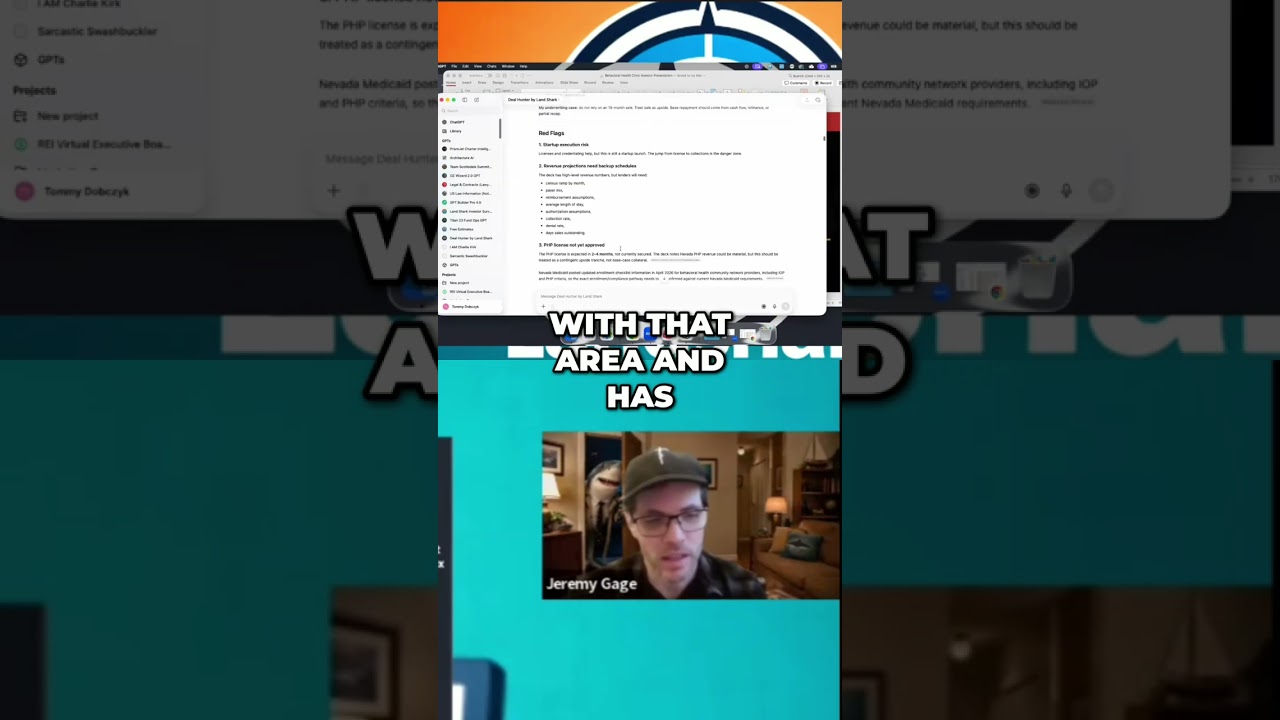
In this short discussion, Tommy Dobczyk evaluates a proposed healthcare operating acquisition, emphasizing that the opportunity is fundamentally an operating business rather than a simple real‑estate transaction. He highlights the market need for a detox center, noting hospitals and jails lack capacity, and probes the team’s direct experience in that space. Tommy stresses the importance of the key‑person (Dre) whose licensing credibility underpins the deal, recommending a detailed due‑diligence profile. He outlines strategic financing pathways: bringing in a joint‑venture equity partner instead of debt, and separating the real‑estate assets from the operating entity. He also points to the need for negotiation leverage, go/no‑go scenarios, and a structured backup plan before any capital is committed. The conversation serves as a checklist of critical actions for investors evaluating a high‑upside healthcare operating deal.
Final short thing is here's where it explains, yes, this is high upside healthcare operating deal, but it's not a simple real estate deal.
There's also what we're not— what's not showing in this type of format is the— we're planning on doing it. I don't even know if we've added this to the presentation is we were talking to people about that. We want to have a detox center as well. And the detox is one of the highest demands right now in hotels. Hospitals can't keep up. Up with the detox demands and having a—
hospitals are not designed to detox in, neither are jails. And so having an institution for a detox is important. However, again, I go with what is your experience in that, aside from like, have you ever physically worked in a detox?
That's why we're here as the financial side of things, right? He's our, he's our guy that's done that a lot in the behavioral health space, and, uh, he is well familiar with that. Area and has, uh, worked with others and talked to others and stuff and been around that, been around that space. And he has done stuff, uh, around that. I'm not sure if he's done— gotten up quite to that 3.7 directly, but I'm familiar with it. And so it's planning on adding that, which will be a good— very good pipeline.
Go back up a little bit because it says right there the key person concentration. So Dre is gonna The licensing credibility is tied to that individual. So having a very detailed breakdown of their, of their history is very important here. Aside from raising capital from a traditional source, you can get a JV equity partner involved and get them to invest instead of take debt. I got path number 2 is to split the real estate from the operations. And so if you don't understand why that is important, I would suggest copying and pasting that Backup path right there and doing a deep dive on why that is the plan. Having that, you know, set up is better. These are all the things that you're going to need required before anybody really projects any money forward. Negotiation leverage is here and go/no-go scenarios are here. Final Shark Tank is it. Here's where it explains, yes, this is high upside healthcare operating deal, but it's not a simple real estate deal. So really understanding all the nuances of your deal. Is important to people like us as investors. And so it's going to give you some suggestive actions moving forward.