Tommy Dobczyk explains three creative financing methods for real estate investors: subject-to deals where you take over mortgage payments while the loan stays in the seller's name, wraparound mortgages that layer a new loan over the existing one, and existing-lien takeovers. All three carry due-on-sale clause risk, so using an investor-friendly title company matters.
Chapters
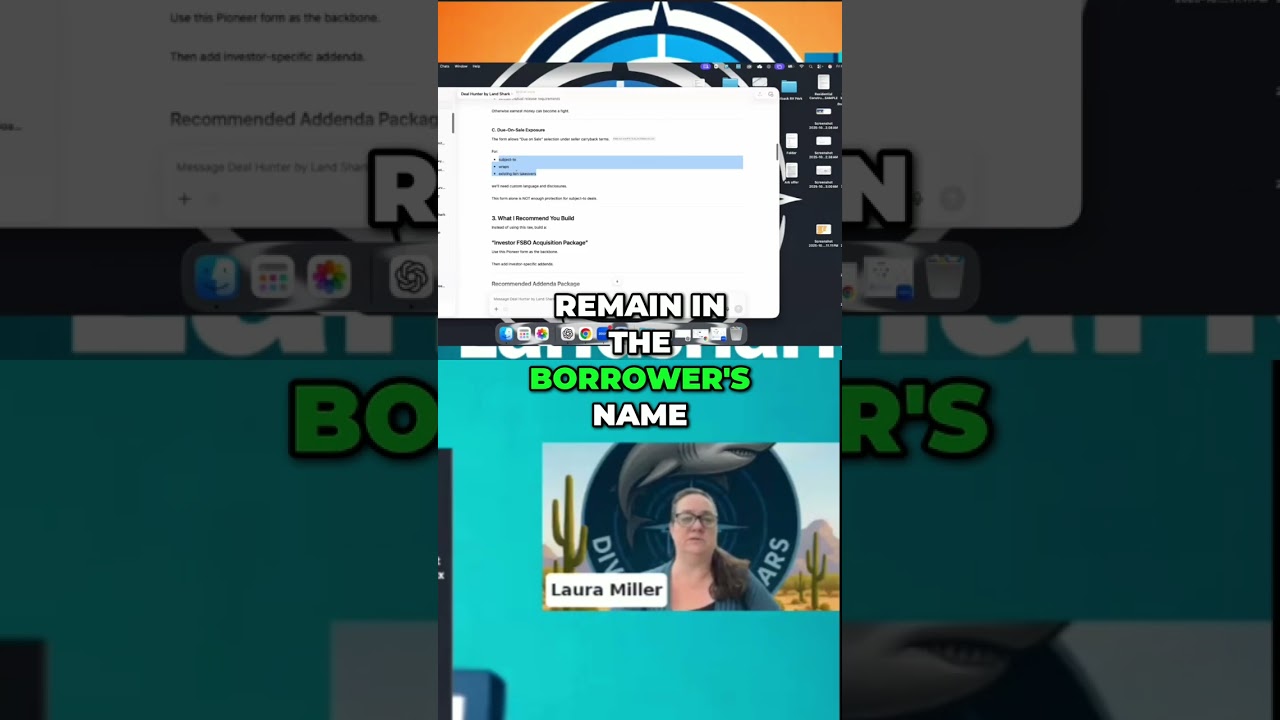
Who knows what FSBO means? Anybody? What's FSBO other than Laura? Blake, Alyssa, do you know what FSBO means? Is it for sale by owner? There you go. There's a more— for sale by owner. So yes, that's exactly what it means. And so for sale by owner means that there's no realtor involved. And so we have the contract, we got it from the title company. Title companies typically who are investor friendly have all this stuff and they know how to do all this stuff and they're really great about it. So we uploaded the contract. So key investor review, what matters most, the biggest strengths, the biggest weaknesses, what needs to be fixed for the addendum, and then earnest money release risk, due-on-sale exposure. So if we're doing sub-2s or wraps or existing lien takeovers— more really quick, do you want to quickly give a quick lesson or a quick explanation on subject-to, wrap, and existing takeovers, what those are? I know you've been taking all the classes.
I have been taking all the classes, but I don't have the full definition to No worries.
So subject to is where essentially we're taking over their mortgage and then wraps are—
hang on though, subject to.
So, okay, then you, then you say it.
So a subject, subject to, you're, it's not taking over. The loan is going to remain in the borrower's name. You're going to take over payments, but it's not an assumption of loan. It generally, the biggest concern, which generally doesn't happen, is the due-on-sale clause, but as long as the bank is getting paid, they mostly don't care who's paying the loan. So it would be an opportunity. Catherine owned a house and she wanted to sell it and was willing to have me come in and have it be subject to. So the loan would stay in her name. I would take over making the payments. She would— it's usually done through a third party, a title company or whatever, to ensure that. But it is a creative financing vehicle if you're not able to, if I was as the buyer, not able to qualify for my own mortgage or didn't want it, but like there's a lot of reasons for subject to, but it's, you're taking over the payment of it, which is distinct from assuming the loan, which I think is the third one.