Using AI to Write a Book
Tommy Dobczyk walks through writing a book with ChatGPT, from picking topics like health and wealth to generating a table of contents, chapters, and case studies. He shows how to use ChatGPT memory to keep context, verify sources, and rewrite sections for tone, plus how to switch between free and paid accounts when you hit session limits.
Chapters
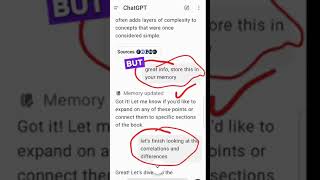
Are you trying to figure out how to use AI to improve your life? Are you tired of hearing people say how it's going to replace jobs and people are going to become homeless and jobless because of AI? Did you know 100% of those people have never used AI properly? Well, let me show you how it works. We're going to write a book. And So I asked ChatGPT to help me do that. I figured I'd write a book about business, but I also want to incorporate some of the stuff I'm knowledgeable about. In another video, I'll show you how you can use ChatGPT to do an interview of yourself so that you can figure out what you want to write about and how to get it out. See this little warning right here? This is how I limit the time I spend on ChatGPT. Using the free version of ChatGPT limits me to how many questions or how much time I spend on it. So let's get back to our book. I'm going to show you some things here that you might not know. The first thing is ChatGPT can help you organize your thoughts and store the information for you and what they have as a memory. And so you'll see, as we go through, ChatGPT will ask me questions regarding my subject. And so my answer will then parlay into to another set of questions by ChatGPT to kind of continue to clarify further and further. Make sure that you talk to CHAT GPT as if you're in a conversation with somebody, but you have no regard for their feelings. ChatGPT has no emotions. It is just a thought machine. That's all it is. It generates thoughts, it generates questions based on. Based on learned memory, and it keeps this information so it can also reach out and search faster than anything else. So right here, this is a line where I'm going to tell ChatGPT what we're going to do. We're going to focus on this, this area. And so my next set of questions got deeper into information, and it was focused on just asking questions about that information. You'll see, as I explained to it, how I want to structure each one of these topics, health, wealth, and sex. So I rely on ChatGPT to go and learn about, for example, evolutionary psychology. In another chapter, I've asked it to learn about it. And so here I tested it and said, can you find the information from the Internet about wealth in the caveman brain? And boom, it broke it down. Another nice feature is that it actually provides the resources that it came from so right here you'll see that you can click on the sources and you can go and review those sources and make sure that CHAT GPT is providing you with accurate information. You know, and some of these things, you can see they're outdated, they go back quite a bit. So you might want to tell it to update its sources. But for the purposes of this video, we're just going to move on. So I made sure to tell it that it did a great job. Always, always, always communicate with ChatGPT. It doesn't mean be nice, it means communicate. Tell it when it does a good job, tell it when it does a bad job, and then continue the conversation with it. Make sure that it's updating its memory. The, the idea is that when we get to the end of, of this, I'm going to have to do a part two, but when we get to the end of this, you're going to use all of these memory updates to actually craft the book in your own words. Because ChatGPT is learning about you. It's learning about the subject, it's learning about how you want to craft the book. And you'll see here that it's noticing how we're getting to the next subject. And so it asked me if we want to, if I want to continue. I say yes. And then it asks me a couple of questions because it wants to, wants to deep dive with me into this subject. So I tell it we're going to follow the format so far that we've used. We're going to do one step after another and we're going to make sure to follow the same format that we did with the previous one. So you can see here that ChatGPT acknowledges it and then I got the warning. So we're going to stop right here and start with part two in five hours, when I get the ability to go again, come back and see in a second. Starting at the end of part one, we're going to get back into the conversation now that our five hours is up and we are going to have more conversation about it. But this time we're going to allow it to do its own research so that we can review the knowledge that it had. We will inform it that it is doing a good job or a bad job. And when we speak to it, we're going to be precise so that we get accurate information. Like right here, the year 2025 is used to gain information as it goes out looking. This conversation I'm having, particularly about this book, is prompting ChatGPT to start providing me with information so that I believe it knows what it's doing. And I will use certain prompts to get it to bring me back information right there. It provided me with a lot of sources, so I told it to store all this in its memory. And that did take a minute, but we got it updated. Now that I've given it a task to do something, it's going through the data that it has collected and doing that task. It'll make suggestions like a case study. And I'll tell it to go ahead and do a case study and I'll ask it to provide me with multiple case studies so that I can test its knowledge and its comprehension and its ability to write what I want it to write. This is a reverse text. I tell it to write the opposite of what it just did five times so that I know for sure that it's doing a compare and contrast. Now we've come to the point where I tell ChatGPT to write the table of contents. Not that only does it provide the table of contents, but it also provides like, subtitles and it also gives me some suggestions, additional ideas of what else to do. One of them is to create like, some images, and the other one is to perform a couple of things. So I tell it go, go ahead and perform those things you've suggested. And in the example here, you'll see that it, it wants to write a question for every single chapter. It wants to have, like, thought questions. So it created those. The next thing was I told it to go ahead and find studies for each one of these topics so that we could provide resources at the end of the book and basically build our resources page. So it went ahead and started doing that research and provided me with a couple of. A couple of articles from each topic, again providing me with the sources. So, and then, so I asked it to go ahead and start writing and about the author section because I know I'm almost done and we'll start writing the book pretty soon. So I'm getting all of the pieces to a book together. And here I'm having a conversation with it back and forth, making it rewrite my author page over and over as I add new information to it. I don't overwhelm it with a lot of information because then it can get kind of crazy. But what it will do is it'll resort back to previous conversations as it did right there in TNT Investing. And what it's doing is it's going back and, and referring to conversations I had with it before to write the information about it that it knows. So it's, it's an interesting feature. So stay tuned for part three. We got you picking up where we Left off. Part three of writing a book with Chat GPT. Always remember to communicate with your ChatGPT as you're going along. Now something I threw in here, just to mix it up a little bit, was I asked ChatGPT to give me the history from 1925. You'll remember from part two that I asked it to get me from 2025. Now I've asked it to give me history from 1825, 1925 and 2025 and give me results from their analysis. So that way I'm enriching and enhancing the information that ChatGPT is getting for the book itself. You'll notice that it's overachieving here by changing the way the chapters were written. So I have to go back and say, hold on, wait a minute. Even though I want you to add a new chapter here about this, I don't want you to change what we originally had. So I have to remind it of what it was that we originally had. Once I've pasted that back in here, I'm going to have it rewrite the table of contents, adding the new chapter and the information, and then expanding the rest of the book that way. Now this is a cool feature that came up. It gave me options on how to proceed with writing the book. I asked it to give me some, you know, options, give me a plan. And what it did was it gave me two totally different options on what we could do. So in response one, it had a set of steps. In response to, it had a set of steps. It was a little bit similar, but there was a difference. There was a variation. And so I decided to choose response one and we went with the response one for the rest of writing the book. With this option selected, we went ahead and began to build out the way we were going to write the book chapter by chapter. And so I wanted to test its ability or comprehension of the information and asked it to write the introduction by using the word the prologue to the book. And you'll see that I did a couple of variations of the prologue. I wanted it to use a different tone, so I told it to change its tone to a more witty and professional tone. It rewrote the entire prologue. And then I said that I wanted it to use the book as knowledge and as instead of a self help. And so it rewrote it based on that. Once I felt that we were at that point. I told it, good job. I reminded it of the table of contents that it was to use and the format of the. Of the chapters. And then I made sure that I updated its memory there. And then we went ahead and gave it the format, the steps that it created. We reminded it of the steps we created and updated its memory. But I also added some things here where I told it how long I wanted the book and how many words I wanted it to use. So as soon as it understood that, it went ahead and wrote the introduction, and then I encouraged it to include the questions, and then it wrote chapter one. And within chapter one, it actually followed the same format of questions and case studies in chapter two, same thing. But it was not writing enough information. You'll notice there's like a couple of paragraphs and then it's on to the next subtopic. So I asked it to give me a word count. It tells me that the word count is very low. And so I said that we need to work up to a 5,000 word count. Told it to go ahead and restart, write the introduction over, this time, Write it with 5,000 words minimum. So it attempted to do that, made it to 500. I said to rewrite it again. So it rewrote it again, this time completely understanding that I want it to be increased. And over and over I tell it, yes, you know, expanded on it more, expand on it. I'm about to hit the roadblock again. And what I'll do from here is I will take all of this information over to my paid account. I will finish the book and publish it, and everyone will be able to read what it was that me and Chatty came up with. Thanks for watching.
More from Tommy



Mind-Blowing Phone Farms Explained: Unlock Social Media Growth Secrets! #shorts



Planning Secret Investor Retreats with Prism Jets: The Ultimate Networking Hack! #shorts




