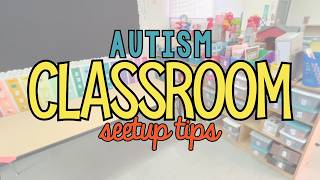
Michelle, a special-education teacher, shares six strategies for setting up an autism classroom: establish structure before decor, divide the room into clear zones, use visual supports like schedules and labels, plan staff roles and breaks, start small with materials, and build in proactive behavior plans with sensory breaks and choices.
Chapters
What do you actually need to set up an autism classroom that works? Not just looks good, but really functions for your students, your staff, and you. That's the question I wish someone had helped me answer my first year of teaching. Hey, I'm Michelle. I've worked with hundreds of autistic students over the span of almost 20 years, and in this video I'm breaking down what I wish I knew when I was setting up my very first self-contained autism classroom. Because let's be real, setting up this kind of classroom is not something they really teach you in college. So whether you're brand new or just need a reset, I've got you. Tip number 1: Structure first and decor later. I was so excited to decorate, but what I should have focused on first was the structure. Things like your classroom layout, traffic flow, where kids were work, where where they'll calm down, and where staff will be. Function over flair every time. You're definitely going to want to set up your classroom like a mini roadmap for independence. Number 2: Zones are your best friend. I didn't realize how powerful it is to divide the room into clear zones, like a work zone, a play zone, a calming zone, Here's my calming corner where students can go when they're feeling upset or if they need to just regulate. Even teacher-led zones. These help with transitions, behavior, and expectations. Here is my whole group zone where students sit in chairs while we do circle time and other daily activities. Tip #3: Visuals are non-negotiable. I knew visuals were important, but I didn't realize just how essential they are. There are so many visuals just in this one image. Things like schedules, mini schedules, first-then boards, labels. These are not extras, they're survival tools for both our kids and our staff. I want to make sure that you know that you can make your visuals durable and accessible. I'm telling you, lamination and Velcro, they're your besties. Tip number 4: Think about staff flow too. I was so focused on my students that I forgot to plan for my staff. Clear roles, posted schedules, and cheat sheets for routines make such a huge difference. You guys are a team and your classroom should run like one. Don't forget to schedule in your paras' breaks. They do need breaks and they work so so much better when they know when to expect their breaks. Tip #5: You don't need it all right away. I thought I had to have every center, every material, and every system up and running by day 1. Nope! Start small and build as you go. Your classroom will evolve, and that's a good thing. I never began teaching curriculum or assessing skills the first month of school. Tip #6: Behavior plans. Start with prevention. So my first year, I spent a lot of time reacting to behavior, but now I build in proactive supports like structured choices, sensory breaks, and then communication tools to help reduce those tough moments before they start. If you're setting up your autism classroom for the first time, take a deep breath. Focus on structure, communication, and connection. You've got this, and your students are so lucky to have you. Now I want you to check out the rest of my videos on the Autism Helpers YouTube channel so you can see what an effective autism classroom looks like.