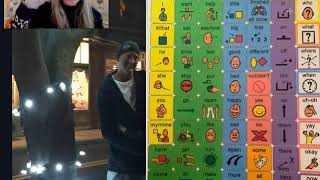
Gina from The Autism Helper demonstrates how to teach adapted books to autistic children using Farmer Farmer, What Do You See? She shows how to use tactile supports like Play-Doh and tube animals, target core language words, and keep lessons short and flexible for children with short attention spans.
Chapters
Hi everyone, this is Gina from The Autism Helper. I wanted to show you a lesson that you could do live with your students. Depending on what age they are, you can swap out the materials. So this would be targeted for early childhood. Obviously the attention span is not very long, so I feel like keeping it moving and having several different fun engaging activities will be helpful. Of course, all kids are different, so it depends on what you're targeting and you know, the stamina of your kiddo and also the parent as a facilitator. It's definitely best if you can prepare them ahead of time and have materials ready, but of course in this crazy situation that's not always possible. So what I do have for you today is a little Animal Farm core word language activity, and I think what's best to always have is some type of, you know, little schedule. So maybe you're going to say hello to each other, you'll read a book, and then have a little activity. I just took a screenshot of a core language board that I have and just AirDropped it to my computer so that I could post it while I read the story. And then you could also use something like this, like a Rocket Board, to show tasks are being finished if you have, you know, a student who might need a little bit more. So for this activity, I chose the book from Autism Helper, Farmer Farmer, What Do You See? by the lovely Sarah Gas. It's amazing. And in this book you can target lots of different things, but specifically you could target core words such as "what" and "see" or "you" and of course the word "in" because all the animals are going in something. I happen to have some Tube Animals. They come in this little box here in my home. And then I also thought it would be fun to use some Play-Doh with the child and just have a little plate to make something to stick the animals in. If they have a barnyard at home, they can do that. If they don't have Play-Doh, they can use anything that they have at home. Maybe they can get some grass from the yard. Just make it a little bit more fun. So what I would do is, you know, say hello, go over the schedule.
"Hi! Ready?
We're gonna read our farmer book and then we have an activity to do. Are you ready? Okay, let's make our grass." And just show them how you're making your grass pen, or if you have brown and you can make it into mud. Just a little spot on yours. If you're lucky enough to have your camera where you can position it down onto your barnyard, even better. And then just go ahead and start reading the story.
Farmer, farmer, what do you see? Ready? Farmer, farmer, what do you see?
A and then have the child name it, or maybe name the animal, or maybe they can hold up the object, the pig.
A pig in the mud. A pig. Okay, put your pig in the mud.
Ready?
Squish! Oh, my pig is in the mud.
Yuck! My dog's joining me. Alright, and if you want to take off the pieces, it does come with adapted pieces on the back. You can put them in, or if you don't have these little animals at home, you can put the pieces into your mud. Okay, and then just go to your next page.
Pig, pig, what do you see? What do you see? What is that? Let me give them some wait time.
Maybe they're showing your animal.
Great job, yes! A duck in the pond. Okay, find your duck.
Are you ready?
Gonna find my duck. Duck. I'm going to put him in the pond.
You see how I point to the core word?
Eddy, squish, in the pond.
Maybe you still have your other animals in there.
Okay?
And you just keep going through the story like that, pointing out core words. Animals, they're learning labeling animals. Maybe they're doing expressive or they're just doing receptive.
Duck, duck, what do you see? A woof woof woof woof.
Maybe you give the animal sound.
Woof woof. Dog in the doghouse. In the doghouse.
Ready, find your dog.
Where's your dog? Show me. Dog, woof, woof, woof. Ready? In the doghouse.
And so on. So you get the idea. You can use bigger animals, whatever you have on hand. Switch out your core boards, whatever you need. You can, you know, I have a little flip book up here that my awesome speech and language pathologist, Jen, made with the colors and other identifying up here. So I hope you like that little tutorial on what you can do with Adapted Books, and I'll show you some other things you can do with a theme for the week.