Sasha walks through the All About the Kitchen unit, a structured life-skills curriculum with three difficulty levels. It includes pre/post tests, word walls, social stories, adapted books about recipes and directions, file-folder activities, and worksheets that progress from matching to sentence writing and inference tasks.
Chapters
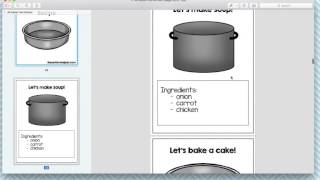
Hi, this is Sasha from theautismhelper.com, and this is a video product preview of my All About the Kitchen Life Skills Unit. So I'm super excited about these units. There's 4 different household life skill units: kitchen, bedroom, bathroom, and living room. Um, they all follow the same format, which is really great for our kids because once they learn the format of the worksheets and the activities, you can switch out the content and teach new skills a lot quicker because they're not learning the structure of the activity. So these are structured in a similar way on purpose because I find that with a lot of my resources that really helps. There's so, so much included with this unit. I originally envisioned this being really small and then I kept having all these ideas and a million things came out of it. So I'm super pumped. So this is the table of contents of everything that's included. So if you're only using certain parts, it'll be easy to print exactly what you need and there's instructions and notes on how to use. So there's 3 levels of a pre/post test. So you can circle if it's a pre or post test, score and show growth over time. So the level 1 focuses on basic receptive or expressive language, matching and tracing. The next one focuses on naming the words and writing a sentence with the words. And the last one kind of takes it to the highest level with utilizing these concepts and more inferential concepts related to the kitchen. So this whole unit is really themed around learning the vocabulary, learning what the vocabulary means, learning how to apply that vocabulary. So there's a lot of different ways to use it. Here's the anchor chart. You could blow this up, you could put this in kids' binders. This is basically the kind of central concept of everything that we're working on. There's a life skills word wall that includes a few different components. The main things that I include in here are the pictures and the definitions, but I also included instructions on how to make an expanded word wall. So adding in sentences, definition— I'm sorry, parts of speech, category, sentence, and syllables using these blank cards with dry erase markers. So I explain how to do that here, and that can be a really cool way to tie this into your language arts instruction. So really this is all literacy-based. This is all functional literacy right here because you're working on reading, you're working on vocabulary, you're working on writing. So especially for our older students, functional literacy is really the way to go with language arts instruction. So this is really key. So there's a ton of different vocabulary words around the kitchen with the definitions. Next is the homework. There are 2 versions of the parent letter to send and then 3 levels of homework, each with 2 pages. So you can cut this half sheet off There are 5 different activities for the child to complete with their parent, all home-based activities to do in the household. This is a household unit, so let's really work on that generalization and tying this into the actual setting, and the parent signs off. So this is a great thing, sending these home for a month or 2 weeks, however you want to do it. These are labels to use in your classroom or to send home for the parent, which would be awesome. There are 3 different social stories. Again, these might be a good idea to send home as well as using if you have any of these items or you do any kitchen activities in your classroom. So not touching hot items, not touching sharp items, and then using the stove and oven. There are 3 adapted books which I'm super excited about. I really, really love these adapted books. So I'll give kind of the brief layout of these. First one is Following Directions. So this one looks at sorting items between fridge, freezer, and cabinets. So following the directions based— oh, and oven and microwave. So sorting items based on where they go or where you would cook them. So really building that inferencing. Setting the Table, following directions as well as sequencing. Putting things in order. Next, following the recipe, so adding these specific food items, and there's no visuals here, so it's a little bit trickier. So matching the food items to the words and putting them in the right place. And then there are 5 file folders. A lot of these are based on ABLE's tasks, so are great because I know a lot of us use that in our classrooms. So the first one's non-identical sorting, ovens and spoons, kitchen associations, kitchen matching, so a little bit more advanced matching, 2 pages, sorting items by function, and then labeling parts of the kitchen and kitchen items. So those are 5 different file folders. Then we get into the worksheets. They're— the worksheets are kind of broken into 3 levels. So the easiest ones focus mostly on matching and copying or tracing the words. So there's a lot of different varieties. These would be great for independent work, for a para-led center, for direct instruction, for maintaining these skills. These can really be used in a lot of ways. Next are the level 2s. So these focus more on learning the names and definitions of the words. So matching kitchen item to word, filling in the blank— there's 5 of those— answering the wh-questions. These are some of my all-time favorite layouts of worksheets. So, so many kids have wh-question goals, so working on wh-questions with the visual response is just so helpful for a lot of our kids. Then we have writing the definition and writing the sentences. So there's a ton of worksheets that can be utilized in a lot of ways. Last are the highest levels, so writing 3 sentences on each picture, so really building up the writing skills and descriptive writing. Reading comprehension, 5 of those, all themed around kitchen, so again, really targeting that functional literacy. True and false, great for inferencing and assessment-taking skills. And making a list, so expanding vocabulary and identifying items by different attributes. Attributes. And then there are 5 different narrative writing components. So there's a ton included in here, a lot for every level of student, and a lot of different ways to use it. These are such important concepts to work on because this is where our kids spend the most of their time in their house. So I really hope this resource will help you teach your students about the things they use and why. So this is a product preview of All About the Kitchen by theautismhelper.com.










