FB Live from 11/18: Walk through and answering FAQs for the literacy curriculum!
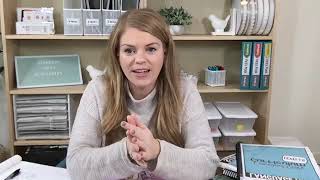
Angela Kulcsar walks through the Autism Helper literacy curriculum suite: Language Arts, Reading Comprehension, and Functional Literacy. Each line has six levels and nine units with daily activities for year-long use. The materials fit into guided-reading groups and can be used in centers or with paraprofessionals.
Chapters
¡Hola a todos! Happy Monday. So today I'm doing a quick live. I'm pulling this up on my computer so I can see your questions. Today I'm gonna do a quick live to kind of piggyback off of the live 2 weeks ago that was talking about how to run guided reading groups. So if you missed that live, that is still in the videos. You can rewatch that anytime. It's also on YouTube that has captions. And I went through how to run a guided reading group in a special ed classroom because I think the guided reading group framework works so well for literacy instruction. And as I shared in that video 2 weeks ago, it was something that I was hesitant to do when I was in the classroom, and then when I started doing it, there were a bunch of things that I soon realized I could be doing better. So if you missed that one 2 weeks ago, definitely check it out. So this one is a little bit of an extension. So I've been getting a lot of questions about the different literacy curriculum that I have, how to run those lessons, what's in them, what's the difference between the three, and also then how that works in a guided reading group framework. So I wanted to first just kind of do a walkthrough of the different literacy-based curriculums that I have, answer any questions if you have any as they— as I go through, drop them in here, I'll make sure to answer them. And then I also wanted to talk about how you can run a lesson with these, and I really Tried to allow for a lot of flexibility. I've seen this run in a lot of different ways. I've utilized it in a lot of different ways. So give some ideas and then how that would fit in to that guided reading group setup. So let's jump in. Everything, by the way, is going to be reversed because I'm in a selfie frame. So if I show you stuff from the pages, it's mostly just to give you an idea of like how much text and how much writing is included. So let me give you an overview. So The first thing that I have is the language arts curriculum, and this was actually the first— besides like the daily work and the homework— this was the first year-long curriculum that I made, and it took about a year, and it was quite the labor of love. And it really came from me feeling scatterbrained as a teacher. I felt like I did a little bit of everything. Like, I had these kids that had these great skills all of a sudden, and I wanted to catch them up with everything they needed to learn. And I'm like reading the standards and trying to figure out what to teach next. And there's holes in their learning of— they didn't— no one's taught them adverbs. And well, what about part— you know, what about point of view and what about opinion writing? So I just kind of jumped in with all of these little things and I felt very scattered. Like, I felt like we were doing a little bit of a lot, but we weren't really mastering anything. And I felt like I didn't have a plan, and that was hard for me because I— you guys know me, I like having a plan. So that's really where this came from and then obviously snowballed into other, other subjects. So in the language arts, there's now 5 levels. The bundle has levels 1, 2, 3, um, and there are— there's level 0.5, level 4, and actually I lied, there's 6 levels brand new out is Language Arts Level 1.5. So if you're new to some of these and you're really confused by what all these levels mean, I'm going to add a matrix, um, in the links here when I'm done that kind of goes through the different levels and says what prerequisite skills a student needs in each one. I wanted to not specifically align these or assign them a grade because some of our kids need to work on foundational skills to build them up to where their grade level peers are at. So definitely check out that matrix. Also, just a disclaimer, every single product, especially these big ones, has a video preview. These all have a curriculum map. You'll know exactly what skills are included and what the pages look like. But if you are familiar, Level 1.5 really bridges the gap between 1 and 2. 1 has very little writing and 2 has quite a bit of writing. And I know a lot of us have students that you know, maybe are ready for harder skills but don't have those writing skills yet, or just aren't quite ready for number 2. Is anyone in that position? Is anyone using Language Arts right now, um, and felt like there was a big jump between 1 and 2? Um, drop a line in here if you have, because I've gotten a lot of feedback on that. And even in the last few weeks, people have been like, are you gonna make the 1.5 Language Arts? I was like, you read my mind. So this is out. It is not part of the bundle. Because it wasn't something I was originally planning on making, so it is separate. So language arts is, I would say, mostly focused on grammar and writing. The, the earlier levels like 0.5 and 1 obviously have a very big vocabulary component, um, a lot of language-based activities. There's a little bit— we're getting into some reading comprehension, but it's mostly language vocabulary grammar for the language arts series. Speaking of reading comprehension, there is Reading Comprehension. So I made this to supplement language arts because I know a lot of us struggle with reading comprehension with our learners. That's something that I've seen with a lot of kids on the spectrum and really kids, you know, just struggling readers kids really, really struggle with understanding what they read. And I've seen teachers— and I've been guilty of this too— giving kids way harder texts than they can read because they can read it. I'm like, "Oh my gosh, this is so impressive! You can read a level M book, this is amazing!" And they can't answer any comprehension questions. Like, none. And I finally got to the point as a teacher where I was like, "Why am I having them read all of these harder books if they can't understand them. Like, what is the point of that? So I really wanted— wish there was more reading comprehension in language arts, but there were so many other concepts to include in here that it really— there was enough to work on to have its own whole like line and workbook. Um, so I had like seriously so much fun making this because I love reading comprehension. I did a ton of research. There's a page in this when you buy that is all the research— that is a lot— that I included. And kind of pulled from when creating this. And I pulled from a lot of different disciplines— ABA, psychology, special ed research, literacy research, of course. So, um, it's, it's, it's really fun. This is— you guys, I'm so lame. This is what I think is fun. But Level 1 and 1.5 are going to really focus on listening comprehension and building up those skills before you really get to applying to the text. Level 2 and 3 in the comp— in the curriculum maps will say what Lexile and Fountas and Pinell level the text passages that are included for each unit are aligned to. So then you can be pulling supplementary texts to work along with this, which is why this will work really well in a guided reading group. Um, so Patricia just asked, you give a list of books to purchase or go get these with curriculum? So I don't. I, I really want you to use what you have. Um, I think that these could stand alone, but of course you need— will be a lot better when you have the extension opportunity to apply to actual books. Um, especially Level 1, there's always like, there's a book skill focus for each unit and starts real basic, like holding a book, turning the page, following along in the text. So I want you to buy— use the books that you have and buy the books that are best suited for your kids, that are age appropriate for your kids. Like I said, in Levels 2 and 3 of reading comprehension, there is— it is specifically noted which reading levels for Fountas and Pinnell and Lexile are in each passages, so then you can know to pull books from those levels. And it builds in difficulty very purposefully. Some of the passages, um, in the start especially of Level 2 are real simple because we're only pulling from the previously mastered sight words and the previously mastered phonics concepts. So there's a sight word component and a phonemic component to these so we can kind of give our kids a bigger bag of tools. I really saw, even with kids I work with now, that some kids do tend to gravitate more towards a phonics approach, and phonics is rule-governed, and some of our kids love rules, and other kids really struggle with it. So, you know, as Skinner said, the learner's always right. I go with what works best for a kid, but I always want to give them as many tools as they can to figure out an unknown word. So that's why these include both concepts. So these are definitely designed to be used together because it's not going to be overlapping concepts, it's going to be things that work really well, you know, collaboratively. So the third piece to this literacy line is Functional Literacy, and this came out last summer. And this is also a really fun one because this— I spent a lot of time that year doing presentations and PDs on functional literacy, functional skills, what all that meant, and kind of kept hearing this misconception that, you know, when do you choose to go more towards functional skills and not academics? I'm like, never. You know, you always, always work on academics. You just work on it in a functional way, like with a functional twist. Like, that's what I always say. Academics are part of your and I's life every day. Like, even scrolling Instagram, we're reading. Like, we're You know, we have all these kinds of skills that are included just to scroll through Instagram, like listening comprehension, and we are using context clues, and we're inferencing, and we're decoding weird words, and all kinds of stuff. So we're always going to be working on academics. So I wanted a way to give people access to something that was still very, very academic but also was functional, that really started looking at what words are we teaching our kids and why. So if anyone uses this right now, drop in because I'd like to hear what you think of it because I love this guy. So all of the texts in here are real-world-based texts. So there's like, I went through and made lists and lists and lists of every— I started like doing this while I'd walk around the world, like where do we see text? We see text on hot dog buns, we see text on ads, on caution signs, on our tags. So really pulling from everywhere that we see words in our world and kind of adding that, those concepts in here and having lots and lots and lots of examples, um, lots of functional sight words and ways to work on listening comprehension, reading comprehension, inferencing, sequencing, all these great things in a way that would look like how it would look like in the real world. So I think for older kids this can be really valuable and again can be used all together with all three. So if you've never utilized any of these Um, these are all set up the same way. They all have 9 units. They have 8 units with new concepts, and the 9th unit is a review unit. There's a pre-test and a post-test, and each unit has 20 activities. So the idea is you could do 1 activity a day, 1 worksheet a day, and it could last the whole year. So I've gotten a lot of questions on what that looks like, where you would set this up in your classroom, what this looks like on a day-to-day basis. And I've seen it used a lot of different ways with a lot of success. I think this is a great direct instruction center, doing one activity as a group with your— in your small group instruction with students at the same level, doing the one page. You can have students do it independently if they can, and then you guys check it together, get your data right there. Um, or you could have them do it on their own and then— or do it together and kind of do pieces of that. However you're kind of going to set it up I think it gives a lot of flexibility. I think because of how straightforward this is too, this also can be a really nice paraprofessional-run center, especially science and social studies. You know, it's, it's the same structure. There's an anchor chart, there's the pre-test/post-test. You're going to get your data and see what's going on. Um, for your younger guys and your kids with less writing, this again, I think if you had a small group you could still do it one-on-one with students, and they're not very long. I mean, it's one page So I like to do the page and then have whatever activities or concepts are on this page really build out the rest of my 15 or 20 minute center I have. So this is right here, reading comprehension level 2. So the first activity is writing words under with two word families for en and an. So you're gonna list the words and then sort them under the two word families. Then there's a reading passage with what and who questions, and then filling in the missing letter for sight words. So if I were to be sitting down and doing this with 3 kids, I'd probably have them do this by themselves, then check it and collect data on what they did by themselves. Then I'd pick a new word family and put it on the board and do it as a group. So we do like the same concepts that are in here but extend it. And okay, we read this story about pigs. Now I'm gonna find a book in my library about pigs and and we're gonna read another book together and we have sight words here. Now let's write sentences with our sight words and let's write a paragraph with our sight words. So you can really use this as like the bones of your lesson and then extend whatever activities you're doing here to something more group-based and incorporate social skills and turn-taking. So let me kind of go through the same thing with a simpler one. Maybe let's try level 1. So this is level 1 language arts. So an activity here, so this one, let's find a good one. So this one is sight words are coloring items green and yellow, big and little items green and yellow, and then naming sports vocabulary. So we might do this together as a group so we can make sure everyone's getting everything correct. And then I would go through and be like, okay, we're working on clothing vocabulary, so let's go around and name all of our clothing vocabulary. Let's pull out a magazine and find clothing vocabulary in the magazine. Let's pull out my PECS pictures and pull out, you know, clothing pictures and sort all the pants versus all the shirts. And then we have sports vocabulary. Let's go online and print pictures of other footballs so we can incorporate multiple exemplars. Let's look for other soccer balls. Let's sort soccer balls versus footballs. So really just taking whatever's on this page and then building out your whole 15-20 minute lesson by extending it and having kind of more of a group activity there. So now let's talk about how this would look in a guided reading setup, especially for our reading comprehension and language arts, um, setup. So in the curriculum map of reading comprehension there, um, it's noted exactly what reading level the passages are on. So 2 weeks ago, if you didn't watch the Facebook Live, it was How to Run a Guided Reading Group in Your Special Ed Classroom, and I talked about the 9 steps for running a guided reading group. And I think this curriculum would fit really well in step 2 or step 7. So step 2 was introing a topic or some type of focus, um, strategy that you're working on. So a great example here would be, okay, let's, I'm just gonna pull a random page here. Okay, so here on this page, oh, we already did a word family one, let's find something different. Okay, let's go to Okay, so this page has a passage where the comprehension questions are the problem, the setting. So we're looking at some story elements. Then we have some sight word activity with the word "into," and then some— the phonics concepts here are some blends. So we would do this page together in our step 2, in our introing the topic. And the topic that I might wanna pull depending on what book we're reading as a group maybe is blends or maybe is the problem in this setting. So we would then go back to this page and be like, okay, remember we read this paragraph here about the barn and the problem Will and Rose had with their barn was. So, okay, we're gonna read our books now by ourselves. We have to find the problem there in our books. And you could apply the same thing with your kind of phonemic concepts. Like let's see what— when we're reading, if we can find any blends, if we can find any -ing words, if we can use context clues, if we can do sequencing. So whatever the concepts are in here, this is how you'll intro it because you'll be doing this together as kind of guided practice. And then when each— your kids go to read their books by themselves, because remember, in your guided reading groups they're going to read by themselves at first, they're going to know, have some experience with whatever concept you just taught them. Another place where this would work really well is step 7, which is the word work stage, um, because there's a lot of phonemic practice in both of these. After you go through the whole guided reading process and students, you know, apply their, uh, I mean, work on their books and you do your discussion, you do your reading comprehension, then you can kind of end out your lesson with some kind of word work. So this would be a nice time to do this activity. And again, these aren't long, so it would fall really nicely into the structure of that guided reading group. So I think those are some ways to kind of incorporate— the best ways to utilize some of these things in that guided reading structure. If you have different ways that you're using it, I would love to hear. I love hearing how people use this. I use this right now in in-home therapy in like kind of totally different ways. We do a few pages a day. I've seen it, like I said, done with paraprofessionals or in that direct instruction station. So I wanted to give it a lot of flexibility because I know all of our classrooms can be so different that, you know, the way that works for one teacher might not work for you. If you have other questions about any of these curriculum levels, um, you know, feel free to drop the questions in here later. I'm happy to answer and kind of show you what's in here. But remember, there's video previews for everything. I get that these are pricier because They're big, they last the whole year, they come with data sheets, they come with rubrics, they come with anchor charts, they come with all the stuff. But I wanna make sure it's a good fit for your student. So that's why I wanted to give you lots of previews in those product descriptions of the video previews and all that good stuff. Let me answer, oh Brittany, what is on my, these binders are my Level Daily Work. I'll drop those links in there. Level Daily Work is the one that has like the one different page a day and the students have the same worksheets. Again, one of my favorite— I say everything's my favorite product, but I'll drop the link in here if you haven't seen that one. Um, what other questions do I have, guys? Oh, the other thing I was gonna note, um, so I'm gonna announce this tomorrow, but I wanted to drop this in here really quick and add the link. I am gonna send out a Google survey tomorrow, a Google Form. I am looking for some teachers that already utilize any subject of the Autism Helper curriculum, I'm looking for some people to participate in a data share. And the data share is gonna take all year. You have to just do a little bit of— I'm gonna set up a system for you to share some student data, and if you share the data the whole year, you're gonna get a $200 credit to my store, meaning you can shop and pick out $200 worth of stuff, and I will send it to you for free. So if you're already using the curriculum and you love it, I'm gonna drop the link in here just to kind of get your information and I'll get back in contact with you. I'm going to try to find a few people that'll be a good fit. So if you sound— that sounds like something you might be interested in, click on the Google Form. If you have questions about the new, um, the new level, Level 1.5, also feel free to drop that in here and I will come back to answer some other questions later tonight as well. So have a nice night everyone. I'm doing another Another live 2 Mondays from now. I don't know the topic off the top of my head, but it's actually unrelated to literacy, so I will see you in 2 Mondays for that.










