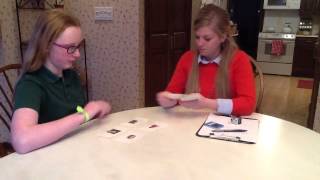
Sasha demonstrates a timed categorization activity for autistic students: mix flashcards from several categories, have the student sort them in 20 to 30 seconds, then count correct and incorrect placements. The method works for verbal and non-verbal learners and builds fluency with any category set.
Chapters
Hi, this is Sasha from TheAutismHelper.com, and today's video tutorial is about categorizing fluency timing. So categorizing is a really important skill to work on. It takes away from just the matching and sorting, but to really work teaching kids to organize their thoughts. So this is a great thing to work on in general, but we also want to make sure that this is a fast skill. Fluency is important because it means it's functional, so if we can work on increasing the speed speed at which our students can categorize, it'll make that skill even more functional for them. So today I'm gonna share how to do this. So I have a big set of all different flashcards. I have both Boardmaker images and real images, and the 4 categories I'm using today are animals, food, vehicles, and plants. So when I usually teach this, I usually start with 2 or 3 and then add in more categories as we go. Other categories you could do are clothing, school supplies, people. So you just want to be having different things that students have to identify the similar similarities in certain items and group them together on their own. So to start with, I put one of each category out first. So I have one animal, one food, one vehicle, and one plant, and I have the whole set of different ones. So nothing's identical. They're gonna have to categorize, not match. So it's great to work on with kids that have mastered matching with very fine discrimination, this is a great next step to work on, and this can be done with students that are nonverbal. So this is really a great skill for everyone. So again, I have one of each, and I'm going to do a 20-second timing. You can do 20, 30, depends how many cards you have too. You want to make sure that you're not running out of cards because you want to give the students the whole timing length to get going. So I'm going to start my timer. So we're going to categorize the cards today. We're going to put all the vehicles here, all the animals, all the food, and all the plants. Alright, ready?
Go! Awesome!
Okay, so the way you're gonna take data on this, this is awesome because you don't have to do anything. During the timing. You're just passing the cards because you now have a permanent product. So you're going to want to take every card but that bottom one off and add them up. So you can see this skill is obviously very fluently mastered for her because she was very fast. So I'll just add them all up, count them all up. So she did 15 in 20 seconds, so I'll mark that on my data sheet. Now would be a great time to pass over that reinforcer. Maybe they're working for some type of sensory toy, an iPad. It's a great time to keep the student occupied while you take your data, count your cards, fill in the information, things like that. So you're gonna ask, "What if they get one wrong?" If they get one wrong, you don't want to leave it here because if they put a piece of food over the animal, they've now lost that animal category. So that's gonna be the only time that you interact in this exchange. So I'll try to show an example of her getting it wrong. So why don't you get a few right and then one wrong.
Angela Kulcsar.
So I see she put the chicken on the animal. So right before I pass to the next one, I'm going to take that out of there and put it on the side because I don't want her to lose that animal category because then it will make the rest of them be wrong as well. So if they do get them wrong, take one off to the side. And again, it's an easy way to take data because you'll have all of your corrects and you'll have your incorrects over here. So this was a fluency timing of categorizing for students who are both verbal or nonverbal from theautismhelper.com.