0:51
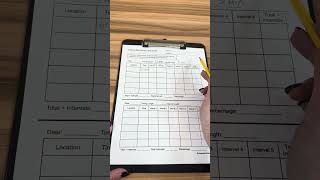
Angela Kulcsar shows how to track student behavior with minimal effort. Divide your observation time into equal intervals, mark whether a behavior happened in each one, then calculate the percentage. It works when you're stretched thin.
Angela Kulcsar shows how to track student behavior with minimal effort. Divide your observation time into equal intervals, mark whether a behavior happened in each one, then calculate the percentage. It works when you're stretched thin.
Alright, we are not using enough interval data in the classroom. This is super easy to do and something that you can do when you are short-staffed, have a high caseload. So what you want to do is pick a timing length. So let's say I'm gonna take data for 15 minutes, and I'm gonna break my intervals into, let's say, 5 minutes. So we're gonna do 3 intervals. So I'm gonna have from 10 to 10:15, and then my intervals are each 5 minutes, right? So I got these 3 5-minute intervals. This is how we do it. Now we're gonna put a plus if the behavior occurred at some point, a minus if it didn't occur at all. So all I'm gonna do is at the end of 10:05, 10:10, I'm just gonna do plus or minus, and I'm gonna get an idea of how many intervals I have of that behavior. And you're gonna end up with this percentage at the end of how often the behavior is happening.










