Sasha from theautismhelper.com shows the Functional Literacy Level 2 curriculum, which has eight thematic units with about 20 activities each. Students work with real community texts like menus, schedules, and ID cards to practice WH-questions, inferencing, and describing similarities and differences. The 236-page package includes rubrics, pre- and post-tests, and error-analysis sheets for tracking progress.
Chapters
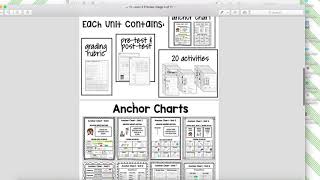
Hi, this is Sasha from theautismhelper.com, and this is a product preview of my Functional Literacy Level Daily Curriculum Level 2. So I'm gonna give you an in-depth kind of tour and go through all the pages so you can see exactly what's included, what skills are worked on, and what level those skills are worked on. If you've used any of my other Level Daily Curriculum in any of the other subjects, this is set up in exactly the same structure, so you'll be familiar with the layout, with the anchor charts, rubric, same thing. The functional literacy curriculum focuses on utilizing language strategies, grammar concepts, different writing activities, different language arts strategies and skills, but with functional text. So text that you see in the community, in the household, in school. We, we read and respond to text on, you know, an almost hourly basis all the time throughout our days, and we don't always realize we're even doing that. So it's just just taking these same language arts skills but applying them to a functional text. So this, this resource in the series isn't necessarily designed for older kids. It's designed for any kids that need literacy instruction and need to work on that generalization piece, which so many of our kids struggle with. How are we applying these skills to the real world? This would work really well along the language arts curriculum. You could definitely do both at the same time. They're gonna complement each other really well. Level 2 in this curriculum is gonna be similar to level 2 in any of the other curriculum sets as well. So this kind of skill set level will be similar across, um, especially within this curriculum. I try to keep some of the skills consistent among the levels. It's not exact because there's a lot of variety in things we're working on, but amongst levels 1, 2, and 3, unit 4 will have some similar, um, themes throughout. So if you have kids that are in different levels but you're keeping at the same pace, you will have your kids still working on similar concepts even though they're at different levels. So let's jump in and kind of go through what's included in Level 2 and then show you some examples. So there are 8 different units. There's a curriculum map with the focus topics and some details. And each— so if you did 1 unit a month, it would last the whole year. Obviously, you can make it take less time, more time, whatever works for your students. So this series focuses a lot on those basic concrete wh-questions, which so many of our learners need practice on. Even our readers, I see really struggling with those who, what, where, when questions. So it looks at applying those who, what, where, when questions to personal, to functional texts. Then we look at feature, function, class, using, describing using details, inferencing, and then comprehending and using prepositions. So some basic language arts concepts here, and then each unit has a section of vocabulary as well. And the vocabulary is very real-world based, things like calendar, self-care, community travel, money management, things like that. So like I said, there's 8 units. Each unit has a grading rubric, a pre and post test, an anchor chart, and 20 activities. And then there's a 9th review unit that it reviews all everything. So here's an example of the anchor charts and some of the skills that are included. I love the personal info section, a lot of great skills there. Calendar vocabulary, we get into different like kind of thematic vocabulary in the other units. And the describing similarity and differences, those are some really kind of challenging language topics, especially when applying to a text. So these anchor charts are great to reference there as well. The grading rubrics are some of my favorite components of the curriculum. It's gonna make showing progress really easy. You give the pre-test and post-test and score it using the rubric. And then you wanna, you wanna see growth. You wanna see the post-test score going up. And the best part about this is this bottom section, the analyzing the errors. When students have things that they're getting wrong, we want to use that information, not just be like, "Oh, okay, they didn't do that," but we want to use that information to plan future instruction. That's called database decision-making. We want to be doing that all the time, not just taking data because we need to take data, but taking it and using it. Here, this section shows and highlights what types of errors the students have and what they need to work on next. "Okay, you have a lot of errors on 2. We need to work on answering questions in relation to a schedule." We need to work on answering questions in relation to a visual. So it's gonna tell you specifically what to work on and also give some suggested activities. Here's an example of the pre and post test and then the 20 activities. So I'm gonna jump over to the actual unit, this is just the preview, and go through and show you and let you see some of exactly the level of the activities, how much writing is required, how much reading. There's some grading and data sheets and lesson plans included. And then here we're into the units right away. So a lot of these, like I said, it's all based on functional text. So things that you'll see on a daily basis: name tags, bus schedules, work schedules, credit cards, IDs. I spent a lot of time researching, a lot of time observing my own behavior of things I was reading, and a lot of time creating and taking pictures of images and creating different texts for this that looked very specific to what we'd see in the community. Things like weather charts, Post-its, recipes. There's just so much variety in each unit, and I did that on purpose because I wanted it— these skills to really generalize, not just memorize one type of activity but be able to apply it to all types of text. So a lot of real photos, a lot of real items, and applying it to things that we would see in their community, in our house, in our school. Things like directories and recipes and parts of appliances, even thinking about like a dryer. When you do laundry, you have to read the labels if you come to a new laundry machine. So looking at applying the text, the skills we learn in language arts to real-world text is really the goal of this. 236 pages, tons and tons of content. It builds in levels of difficulty. There's review within every unit. So within level Unit 4, there'll be activities from Units 1, 2, and 3. So we're kind of always working on that skill of maintenance and maintaining the things we've learned. Unit 9 is my favorite with a review of everything 1 through 8. That's great for ESY, great to send home, great to start the next school year with if you're using this year after year. Um, it's just kind of a really great setup. So yeah, if you have any other questions, please let me know. I'm so, so, so excited about this, and I hope your students love it as much as I do.