How to Set Up an Independent Work Task System in a Special Ed Classroom
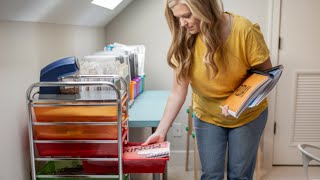
Sasha from TheAutismHelper.com shows how to build a table-time station with 50+ task bins organized by Velcro-numbered schedules. Students match their schedule number to a bin, complete the task, and return it. Tasks range from assembly and sorting to fine-motor work and vocational skills, all adaptable for different ability levels.
Chapters
Hi, this is Sasha from TheAutismHelper.com, and this is a video tutorial of my independent workstation. So in my classroom, we call this table time, and it consists of these two shelves of tasks. And I talk a lot about this on my blog and tend to brag about it because I'm really proud of the fact that all of my students, from the highest to the lowest, all use the same work task system. And there are over 50 tasks stored on two shelves, and this is all it takes up. We don't use 3-bin drawers, we don't have to have a separate center for each kid, it's all right here. So my highest kids and my lowest kids can all use the same center. So what they do is there's a schedule with a box for each kid and each child has 3 tasks they do. And these are Velcroed letters and numbers. So this child will take one of his num— his tasks, so he has number 13, and then he will come over here and match it, find box number 13, match the number on, and then come to the table and do the work. When he's done, the work goes back in the bin, the bin goes right back here, and he leaves the number on. And then goes to his next one. Um, I have the kids leave the numbers on because that way my aides and I know which tasks need to be redone at the end of the day by which ones have Velcro letters or numbers still on here. And then you can see he has 2 more, does the next one, does the next one. So it's a nice visual way to show when they're finished. Um, this has really been a big, not only space saver, but time saver because we have all the tasks in one area. There's no going back and forth and pulling all the— and I'm going to go through and show you a bunch of my different tasks. So I have a lot of assembly tasks, which I really like because these work on fine motor skills. So I have a few different levels of this. This one is a basic, um, nut, bolt, and washer type assembly task, and it all comes in here. They're already separated. Now this task goes both ways. Kids put them together and separate them. So part of the task is setting it up the right way. So you'll put the task in order of how the screws go, and then they'll take each part. Screw them together, and then put it in a finished bag. And then when they're done, it all goes back in the bin. Um, these next two are the same concept, but kind of with hardware. So a little bit less babyish and a little bit more difficult. So now this one is a little bit the easier one because it's bigger sizes. So that goes right back in there. And then this is the hardest one with the small sets of screws. Now this one's already finished. So the student that would get this would have to undo it and then put each piece back into the 3 bins. The next one is kind of changing gears a little bit, is sorting coins. So I had a ton of plastic money, which I don't love to do teaching with, but it's a great thing to sort with. So sorting the different coins. This one is sorting the different bills. So I just got this at the dollar store, taped in one of each, laminated them, have the box of the extra ones, sorting bills. And this one is working on patterns. So we have the visual, one little, one big, one little, one big, the little and the big balls stored, and the two strings to get it started. So we used actually pipe cleaners, 'cause I think our strings kept wearing out. Next, these next set over here are all different alphabetizing and filing ones. So there's all, I use both bins and note card holders in my table time system. So these are all, I have 8 different note card holders. With ranging from alphabetizing by first name, alphabetizing by letter, sorting by color, number. I have a post on these on my blog as well, specifically showing pictures. Over here are two other alphabetizing and sorting. One is sorting coupons by type, and then here and here are two, um, two more office tasks. This one is putting envelopes and paper in envelopes, so there's the visual directions and the paper and envelopes. And this one is collating. So there are directions to make the stacks of page number 1, page number 2, 3, 4, 5, and then paperclip. So these actually, I just wrote the numbers on there so the kids will make the piles and then collate. So here's some more tasks. So this one is loading pencil cases. So each one has a list of office supplies with a visual, so the numbers. So some of my kids that are non-readers could do this as well. So each one is a little bit different and then here is a basket of all the office supplies. So they load those. Next is collating note cards and I laminated these so these would last longer. So I laminated a bunch that say page 1 and a bunch that say page 2 and I did a yellow visual so that's where the paper clip goes. So the kids will take 1, 2, sorry I'm having a hard time with one hand, I'm having a hard time, and then put a paper clip on there. So and then it goes into finished. Next up is putting lids on bottles. So these are— this task goes both ways too. So these are where all the open ones are, so bottles with the lids, and then once you close it up, great for fine motor, put it in the closed baggie. This one is to work on one-to-one correspondence and fine motor. So I got all of these containers, these 4-part containers, somewhere, I have no idea where, and then you put just one of each of these. And this task also goes both ways, so if a kid gets it when it's finished They'll open it up, take each of the screws out, and put them back in the baggie. This task is another great one for fine motor. Again, I don't know where I got these metal pieces. I've become a little bit of a hoarder, just grabbing all kinds of stuff. But students load the yellow beads onto here until they're full, and then it goes in the finished baggie. Over here, this one is a loading envelope task. So here's the guide. So you'll place one of each item on here. And then load all of this into an envelope and keep going until they are all finished. Next, this one, also great for fine motor. So I obviously have a lot of tasks to work on fine motor in this set as well. So a lot of my lower functioning students can do these too. So this is to work on grip and matching the plastic clothespins, which I got at the dollar store, onto just these laminated pieces of cardboard. This one works on color and fine motor, so laminated note cards with a color cue, and pick the coordinating paper clip, put it on, and then put it in the finished baggie. Over here, this is a more simple sorting task, so sorting quarters and pennies. Here's a much more difficult sorting task, sorting different hardware, so, you know, the nails with the flat head versus without, the different size washers, all of that. This one is a little bit like the clothespin task but makes it a little bit harder. So there's different color cues on each of the clothespins and students have to match to the note card. And then a finished bag and another sorting task. So this is kind of just random stuff I found around. Some plastic coins, some colored pins, some shapes. And this one is a little bit harder because even though there's just a blue one in here, all of the colored discs go in this one. So it's kind of sorting similar items as well. Here's some more tasks. This one is really great. It's pretty difficult. It's a wooden board that I actually got from eNasco, and you can put the different bolts through here, and then you need to screw in the appropriate size nut. So that's a pretty difficult task. Um, also I have over here is another assembly task of putting together flashlights. So here are all the bottoms of the flashlights and all the tops, so there's two different sizes. So you have to figure out which one goes with which and then put them together. Over here I have sorting healthy and junk food, pictures of food. Over here they're sorting food by food group, so grains, meats, fruits and vegetables, and dairy. This task is to work on measuring, so I taped a bunch of items to file folder, I think, and then you can measure how big it is, and then you can match the corresponding length with Velcro and then finished. Over here is— this is an assembly task, so this is great for also students that need a visual prompt. I put like a little one on the top, get 5 spoons, then rubber band, put in finish. So there's a visual for the 5 spoons, so you place all the 5 spoons there, then you'll pick them all up, wrap them in rubber bands, and put them in finish. And all the spoons go in this bin. This one, I took a bunch of Styrofoam lunch trays from my Cafeteria, and each spot is what goes there. So snack food, main dish, milk, and then there's a baggie with all the pictures for each. So you have to put one of each in the corresponding spot and then put in finished. This one is to work on measuring also, so there's different half cup, full cup visuals on here, and then the students can measure out the beans on here. So I did do a half cup visual, and we'll fill it up to the half cup, pour it in the baggie, and then put it in finished. This is a great task to work on math, so I laminated two different fast food menus, and then there are different cards, and student only picks one because this can take a long time, with different items on here. So they'll have to find how much small chicken tenders cost, put in the calculator, press add, a 10-wing dinner. So figure out how many, how much each thing costs, add it all up, press equal, and write in the amount. This one is to work on following directions, so it says put put one of each color dice and one of each color block in the baggie. And then there's a range of different colored dice and blocks, so they'll have to really pay attention to following the directions on this one. This task one of my students calls the mailbox. There's all these different baggies labeled with zip code and then a ton of different envelopes that I labeled. So this is a very time-consuming task, but it's really great to work on life skills. So it has an address, and they'll have to find 60613 and put it in that corresponding baggie. This task has different pictures of clothing that are all laminated and then different labels with the color. So match the words "red shirt" to the red shirt, "orange sweater," "black pants," and match the corresponding label. And here's another sorting task for hardware. So this task I made by using an old, um, Crayola Crayon marker box, and this task has probably seen its better days, but I just love that it's all stored in the same spot. So I just cut out one side, put a bunch of big items, batteries, Screws, nuts, and bolts, these are all pieces of my other task, and this is a simple sorting task. Over here is an assembly task. There's visual directions. Put on one pencil grip, one eraser, put and finish. So you'll take a pencil, put on a pencil grip, put on an eraser, put and finished. This one is sort— just sorting pens and pencils, so I taped one of each into one of these containers, and then sort pens and pencils. Over here is working on counting by 10. So there's tons of different baggies. With labeled amounts by the quantity of 10, and you will use the tens cubes to fill up the right amount. So 20, 100, and then put in the finished bin. This task is to work on counting, just an ice cube tray with a different number written on the bottom and pennies. This task has a bunch of clothespins with the letters on it, so you will just match the letter of the clothespin to the letter on the card. Great for working on sight words and fine motor at the same time. And here's another counting task. So we just took a bunch of big baggies, wrote the number on, and students will fill the baggie up with the appropriate amount of straws. So as you can see, I have such a wide range of tasks in this that my highest functioning student and my lowest functioning student can all do this. Most of the tasks in here have a bit of a life skill vocational focus, but that's only because I'm an intermediate level. If I had this in a primary room, I might have more of it focused on sight words, colors, and other basic skills like that. So you can really gear it however you want. You want and have more academic, more fine motor, whatever tasks you want can go in here. I hope you've enjoyed this video tutorial of my independent work task system. This is Sasha from theautismhelper.com.










