In this product‑preview video Sasha from TheAutismHelper.com introduces the Math Level Daily Curriculum Level 3, an individualized math program designed for students with autism and other special needs. The curriculum is the most advanced of three levels, targeting complex, functional math skills for middle‑childhood and early‑elementary learners with solid verbal abilities. Sasha outlines the eight instructional units (plus a review unit), detailing the specific content of each – from single‑digit addition and subtraction to double‑digit operations, time, money, fractions, word problems, and concepts like heavy/light. Each unit includes a pre‑test, post‑test, grading rubric with error‑analysis guidance, an anchor chart, and twenty printable activities. Additional resources comprise a daily and weekly lesson‑plan template, a grading data sheet for tracking student performance, and a database‑driven decision‑making approach that uses assessment data to inform instructional planning. Sasha emphasizes the curriculum’s visual supports, step‑by‑step mastery model, continuous review, and flexibility for teachers to adapt pacing, bundle units, or individualize materials to meet diverse learner needs. The video concludes with a call to explore the related language‑arts curriculum and contact information for further questions.
Chapters
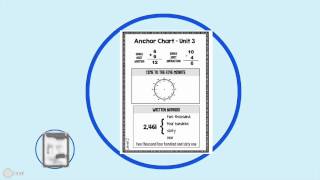
Hi, this is Sasha from TheAutismHelper.com, and this is a product preview of my math Level Daily Curriculum Level 3. So the Level Daily Curriculum is an individualized curriculum created specifically for students with autism and special needs. So the student is great for any learner, but the structure and visuals and routine are going to really help some of our more challenged learners succeed and excel. There's 3 different levels of this curriculum. Level 1 focuses on those early foundational skills. It's great for students who are nonverbal or have limited verbal skills. Level 2 starts to introduce basic academic concepts in a slow, in a slow and meticulous way. Level 3 focuses on more complex math skills. So that's what we're going to talk about today. You can buy the units separately if you have just one type of student or one type of students in your classroom, or Or like many of us, you might have a multi-level classroom and you might wanna buy this as a bundle. Having the bundle is a great way to know that you have curricular resources in math for all types of learners in your classroom. So today we're gonna talk about Level 3, which is our highest level. It's gonna really take a lot of these more advanced math skills and look at them in a functional way and how students can apply these math skills to their real life. The Level Daily Curriculum is structured. So some of the concepts we're gonna be working on in this level are very challenging, but we're gonna break down these skills into small and manageable parts. We're gonna make sure that each little baby step is fully mastered before we work at those big complex skills. Even though our learners are cognitively higher in this level, we still utilize visuals, cuz that's really gonna help our students learn more effectively. This curriculum embeds assessments and utilizes database decision-making. So all that data that you take is going to go to good use to make future curricular decisions, and you're going to ensure that you're planning the most efficient instruction for your students. They're going to only work on what they need to work on. So Level 3, there's 8 different units plus a review unit. The different concepts in Level 3 are going to be much more complex than our other units, and it's going to move much more quickly because these learners are— might be able to learn things a little bit more quickly than our other groups. So in Unit 1, we're gonna work on single-digit addition. Some of your kids may be very far past this, but this is great to start the year with something basic, something that they can build on. And we also want to review that those skills are fully mastered. This is a big problem that teachers run into. They're struggling teaching double-digit with regrouping addition, and they're not understanding why their students not mastering it. Well, they haven't mastered single-digit addition, so we want to first make sure that that's fully mastered. Again, we'll work on time to the quarter hour, more than and less than, really those foundational topics that we're gonna build on throughout this curriculum. Unit 2 works on single-digit subtraction, basic coin combinations, and writing 3-digit numbers. Unit 3 works on single-digit addition and subtraction, another skill students really struggle with that we often forget to specifically teach. Can our students discriminate between when they need to add and when they need to subtract? Subtract. We'll also work on time to the 5 minutes plus writing 4-digit numbers. Unit 4 works on double-digit addition with and without regrouping. So again, making it more challenging quickly. And we're gonna work on some easy fractions. Next, we'll work on double-digit subtraction with and without regrouping and starting some dollar-up rounding. So we're gonna work on a lot of great foundational and functional skills with money that our students really need to be independent adults. Unit 6 is going to work on double-digit addition and subtraction without regrouping. So we're going to make sure that their students have, again, that skill of addition and subtraction. Even when we have those complex double-digit operations, they can tell what to do. So there's a lot of steps required in those. We're also going to work on enough and not enough with money. Unit 7 works on addition and subtraction word problems, which can be really challenging for some of our learners when we can combine some of those tricky literacy skills with math concepts. We're also gonna work on missing numbers and making change. Unit 8 works on time and money word problems, which again can be very challenging, and the concepts of heavy and light. Each unit contains a pretest and a posttest, a grading rubric, an anchor chart, and 20 activities. The pretest and the posttest is gonna give you a great idea of where your student is before any instruction, so you're gonna get that great baseline data. And the post-test will show you how much growth they've had throughout after you've done all of your teaching. The grading rubric is one of my favorite components of this curriculum. So the first part of the grading rubric is going to show you exactly how to score the pre-test and the post-test. So it's going to give really specific detailed directions on how to score the test to get a numerical value. So you'll get total correct and total incorrect, which means you'll be able to figure out a percentage. So if your grading scale at your school or your IEP goal is based on percent correct, this will align perfectly. Next is the cool part. You get to analyze your errors. So not all students will have all the concepts fully mastered at that post-test. Well, you don't want to just keep working on concepts that they've previously mastered. Also, we want to make sure that we're not moving ahead too quickly. If we don't have single-digit subtraction mastered, they're going to really struggle on single— on double-digit subtraction with regrouping. So this is going to show you exactly, based on student data, based on your student errors, what they still need to work on, which is critical for their future performance and their future success. It's gonna also give you suggested activities on what you should work on, which means you're gonna be very efficient with your curricular planning. You're gonna only be adding in extra activities for the areas where they really need extra help. Anchor charts— there's 8 different anchor charts, one for each unit. These are the only things in the unit, in the curriculum, that's color. Everything else is black and white, so your printers can thank me. This would be great to put in the front of the room or in your student binder during the work time. So this is going to highlight the 2 or 3 concepts from each unit that are new. This is going to really teach our students to be problem solvers. We don't want them always asking for our help. We will go insane and they're never going to be independent. We want them to go reference these anchor charts to figure out their own answers to their problems. And these will really help teach your students how to do that. The anchor charts highlight the different concepts of each unit. Things like double-digit, when to regroup, when to not regroup. These types of anchor charts really, really help my students and are great teaching tools also. Each activity has 20 different— each unit has 20 different activities. The activities, like I said, are all black and white so they'll be easy to print and set up for your students. And there's all different types of activities within each, within each page. So each, each unit focuses mostly on those, those topics that we talked about, the main 2 or 3 topics, but it will also bring up some review topics from previous units. This is so important to me. I feel like so often I'm teaching my kids something in October and by February we haven't talked about it in 4 months and they've totally forgotten. So this is going to make sure that you're continuously reviewing and reiterating those previously learned concepts to make sure none of our kids forget anything. So here's some examples of the different activities included. So this unit is great for students who need to work on more complex academic skills. It's great for students with solid verbal skills and more advanced writing skills. These skills are more middle childhood and very late early elementary, so this would be also great for students in those grades. So you might be looking at this unit and thinking like, okay, great, a lot of these skills are perfect for my student, but I still might need to adapt this a little. All of our learners are so different that you can really individualize this curriculum so it's perfect for your students. You can add in different writing prompts or response options for your students that struggle to write. I would also really rely on that anchor chart for matching tasks. Maybe this moves very quickly, We want to use our students to really match and reference on the anchor charts as opposed to always asking us. And again, you can work on this skill more slowly. This curriculum can be designed to use one unit each month, but you could have one unit last 2 or 3 months and really work on this curriculum over a longer period of time to ensure that your students are really mastering those skills. So also included in this curriculum is a grading data sheet. This will help organize your pretest and your posttest data. For each student. You'll have a data sheet to be used each day where you can keep track of the activities you're doing, how many correct and incorrect, how many prompts. So this will give you a really good idea of where your student's at at any given day of using the curriculum. And there's also two different lesson plan templates. Many schools require lesson plans and many teachers, you know, utilize lesson plans to ease their organization throughout the week. So there's a daily lesson plan and a weekly lesson plan and aligns perfectly with this curriculum so you can know exactly what each student is working on every single day. So again, this was a review of our Math Level Daily Curriculum Level 3. I am beyond excited to have my math planning done for the entire school year. This curriculum's dynamic and engaging and going to really make sure that my kids have each skill fully mastered, and I cannot wait to use it. If you haven't checked out our language arts curriculum yet, please do so. It's very similarly designed. If you have any questions, please contact me at theautismhelper.com.