Mini Video Training Series Ep 14 Executive Functioning
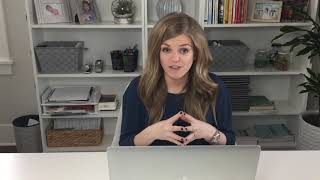
Sasha from The Autism Helper explains executive functioning and why kids labeled lazy often have skill gaps instead. She outlines how to identify each child's strengths, pinpoint specific struggles, then use visual supports, modeling, and prompt-fading to teach multi-step tasks directly.
Chapters
Hi, I'm Sasha from The Autism Helper. In this episode of the mini video training series, I'm going to talk about executive functions. I'm gonna talk about what they are and what strategies you should be using on a daily basis in your classroom to help your students who struggle with executive functions. And I bet you, you have some students that are, because many students with or without disabilities and many adults struggle with executive skills. So executive functions are sets of skills and processes in order to achieve a goal. So it's determining what you need to do and then what behaviors you need to do to get there. So if you think about it, there's so many areas of our lives where we need those skills. Even if it's just something as simple as getting a glass of water, you have to think about where the glass is, you have to make sure to not get distracted by a cereal bowl because maybe you want cereal, you have to open the cabinet, get the glass, fill it up with water, remember to close the cabinet, turn the water off, not— again, not get distracted, have that sustained attention, and then drink the water. So even in something as simple as that, it's multi-steps, it's involving sequencing, planning, and eliminating those distractions and ignoring things that potentially could derail you from that goal. So I bet as we're starting to think about these executive functions, students or kids might pop in your mind that you're like, "Yes, that is something that they are struggling with." So it has implications in a lot of areas of our kids' lives. So not only can this affect academic progress, this can also affect social skills and making and maintaining friends. It affects independence. It's hard to have a job if you don't have very strong executive skills. It's hard to complete household tasks and chores. It also has implications related to independence around the school and community, things like transitioning between classrooms or completing tasks on your own. So some executive skill functions that we're going to talk about today are things like sustained attention, initiating a task, completing a task, eliminating distractors, ignoring those distracting items, getting organized, making inferences. So there's a lot that goes into this set of skills, and it's important to think about what things we can be adding into our classroom to help our kids that struggle in these areas. I think a lot of times that kids with low executive functioning skills are misunderstood. They're misunderstood as being messy and naughty and not wanting to do what's right and not being helpful and being distracted all the time, and they might get a negative reputation in the mind of a teacher or even a parent. And we want to approach a lot of these types of issues and situations with a can't do or won't do mentality. This is something I talk a lot about on my website. So when you approach a problem behavior, you want to consider, is it a can't do or a won't do? If it's a won't do, you have an issue with motivation. The child or individual can accomplish the task. They have the skills in their repertoire. They just don't want to, which is legit. There's plenty of things that I don't have the motivation to do. I don't have the motivation to run a mile right now. That reinforcer is not there for me. It's a won't do. I can do it, I just don't want to. Well, for a lot of these skills that we're talking about today where you might think it's an issue of motivation, you might think, man, Johnny's lazy, or Johnny doesn't care, or Johnny isn't smart, but really it's a can't do. Johnny can't. Johnny doesn't have the skills to keep his desk organized. Johnny doesn't have the ability to initiate and maintain attention for a task for a prolonged period of time. Johnny isn't there yet with those executive skills. So we might be misinterpreting it as a reinforcer issue, but really it's a skill deficit issue. So that's our job then. Our job as the teacher and parent to teach those skills that our kids are missing. So reevaluate some of your preconceived notions. Do you have a kid in your head that you're like, "Eh, he's lazy," or "He just doesn't want to do it"? it might be an issue of skill deficit, and that student might be struggling because they don't have a strong set of executive skills. So let's start with the good. I like starting with the positive. So first things first, identify your student or child's strengths in relation to executive skills, because they might not struggle with all of them. So think of the things they're good at. Maybe your student is really flexible. His desk might be messy, he might be pretty disorganized, but he's pretty go with the flow. He's able to bounce with the changes and switch up activities and switch up who he works with. So think about what things or skills your child or student is really good at and then set them up for success. People feel good when they're successful. Match them with activities that you know they will excel at. If you have a student that struggles with maintaining attention in social activities, then don't Set them up for failure by having them do some type of long interview activity where they have to interview peers and teachers. That might not be something they're successful at yet. That's what you wanna work on. But take the skills that your kid is already really strong in and pair them with activities that match up to that skill. Provide specific praise for the things that they're good at related to executive skills. Hey Johnny, I love how you got started on that activity right away. You are great at getting started. Because he might have strong task initiation skills. Maybe you have another good kid that has really good short-term memory. They remember exactly what everyone in the classroom ate for lunch yesterday. Praise them. Call on them a lot. Like, "Hey, you know what? I totally forgot what yesterday's weather was. Do you remember, Sarah?" She probably does because she has great short-term memory. So pull on those strengths and give kids regular opportunities to show you the strong sets of skills that they might have in different areas of executive skills. So now let's talk about the skills that some of your students might be struggling with. So first up is identifying what executive functions your students might have a hard time with and what skills they're still learning. Remember, just because they don't have them now doesn't mean they'll never have those skills. They just need to be taught and given opportunities to practice those skills. So first up is identify those skills, then identify which common daily activities that your student needs those skills. I bet those activities are going to pop in your head real quick because those are probably areas that are challenging for you and your student. Is transitioning between centers really hard? Is getting packed up for lunch a big struggle? Is finding materials when you need it very hard? So then you'll be able to easily identify where those skills are missing and when your child is going to need extra help learning and practicing those skills. Remember, not all kids learn through osmosis and observation. Just because other kids around them are doing things the right way or you've showed them once or twice how to do something doesn't mean that's enough instruction. So a lot of kids might need some specific direct instruction on how to accomplish these tasks and perform these skills accurately. They're going to need specific reinforcement and error correction. You need to approach building up executive functions with the same rigor and consistency that you approach teaching language arts and teaching addition and math, other math skills. It's part of your curriculum because these are life skills. These are the skills that will make or break your child's level of functional independence, and these are the skills that will allow them to be successful in so many settings. If you have sustained attention in a task, you can complete your homework, you can complete the chores mom gave you, you can complete a job at a work site for more than a few minutes and be successful. So these skills are going to carry over into a lot of important settings. So let's think about your classroom now. What are some things that you can set up to help these students on a regular basis? The first one is consistency and routines. I cannot preach this enough. Our kids are more successful when things follow a familiar pattern. And when I say our kids, I mean actually all kids. All kids are more successful with a consistent routine. Kids thrive off of knowing what is going to happen. There's no questions. There's no anxiety about surprises or unknown transitions because kids will know what is going to happen next. You don't have to tell them. They don't have to think about a lot of these skills that they're combining and using in multi-step direction following because they know what's coming next. The consistency in routines is paramount. So think about how that applies to your classrooms. As a special ed teacher, we are great at setting up consistent routines. It's our jam. But guess what? Our kids aren't in our room all day. What happens at music class? What happens in inclusion? For my resource room teachers, when kids are in the gen ed part of the day and your room part of the day, how are you making sure that routines are consistent every day in both of those places? Those two rooms don't have to look the same way, but you want to make sure that what's happening on a daily basis is the same each day so our kids know what's expected of them. There's less opportunity for misunderstandings and not knowing which behaviors to show at which times. Another thing that we can add in our classroom is visuals. Visuals help our students that have low receptive language. I talk about the use of visuals a lot on the blog. I have another mini video training series on the importance of visuals. Visuals are key. We rely too much on our verbal language. We end up sounding like mini boot camp instructors when we're giving them our multi-step directions. We think maybe we're giving 2 or 3 step directions, but all of a sudden it's march, march, march. And we're on step number 9. We're like, "Hey Johnny, sit down, get out your paper, open up page number 16, get your pencil, turn in your homework, get started." Our kids can't keep up. It's too much language. They're trying to process the first step and then initiate that first step. They've missed the other 7 things you've told them to do. So think about that, how visuals can support all of the verbal language that you're doing. Another form of visuals that I think we forget about is modeling. You wanna show your kids exactly what they should be doing. You going through the action of, "Hey everyone, we're gonna take out our book, we're gonna open to page 16, and then we're gonna get started over here on number 1." That's a visual. You're showing your child what's expected of them. So if your student has low receptive language and is struggling with sustained attention, they're able to utilize that prompt of you physically showing them what to do to have more success in that activity. Another strategy that's going to be really helpful is being really clear with the verbal language that you do use. So say what you mean. No rhetorical questions. Rhetorical questions help no one. Like, "Hey, do you want to go clean your room?" Guess what your kid's going to say? No. And can you blame them? No, they don't want to clean your room. Like, "Hey everyone, you ready to get started on your math test?" No, they're not. They don't want to take their math test. You're phrasing something as a question that's not a question. So be specific with your verbal language. Give short, direct verbal prompts and make sure that you have your child's attention when you give those. Don't tell them what you're doing next while they're playing on the iPad or computer. Because guess what? They're not listening to you. So think about all of these skills needed to redirect your attention from a preferred activity to a non-preferred activity— listening to your teacher or mom. That's a lot of skills. And again, we've said that already, that our kids are struggling with some of those executive functions. So again, plan for that. Take away the iPad or turn the computer off. Let's be done. Now I'm going to tell you what we're doing next. So make sure to really think about that. So in these daily scenarios where your kids are struggling with executive functions, whether it be getting organized, whether it be short-term memory, give prompts and cues. Talk them through what to do next. Go through the process with them. Give them the opportunity to get that step correct. Fade your prompts. As you start giving help, that's great. You're gonna make them successful. And then start fading your prompts away. I really like using time delay here. So instead of always jumping in and giving that prompt, you're gonna wait a few seconds. So when you say like, "Hey Johnny, we're gonna get your book out and we're gonna get to page 16." Well, we know Johnny's desk is a mess. We know he's gonna have a hard time finding his book. We know he might forget what page we're on. So before you go grab his book and get it for him, which is tempting, don't do that. Be like, "Hey Johnny, let's think about— remember, we're looking for a math book. We're looking for a math book." When you open up your desk, think, "I'm looking for my math book." As he opens up his desk, don't right away point where it is. Give him a few seconds and make sure he can do that on his own. So give him that time. Too often we're jumping in too quickly with our prompts that our kids aren't able to show what they can do and develop those executive skills on their own. So overall, be careful with your wrong assumptions. Do not assume that each of your kids has really strong skills in these executive skill functions because they might not be really fluent and strong in these areas yet. That doesn't mean they never will be. It just means that they need— it means that they need more instruction in these areas. They need direct teaching on how to improve these processes and complete these multi-step skills. In all areas of our lives, we are asked to select a goal and then plan out how we will achieve that goal. From something as complex as writing a master's thesis to as simple as pouring a bowl of cereal, we need to develop in our head the skill sequence that we have to complete in order to achieve that goal. This is a skill that is the most important life skill. Identifying and planning out and following through to achieve the goal. If you can do that, you will be successful in a multitude of settings. So consider which executive functions your kids are struggling with and then make a plan to help them improve those skills. Don't assume that it's because they don't care or the reinforcers are wrong. It really could be a skill deficit that needs direct teaching. Thank you for watching this episode of the mini video training series. To see our other episodes, please go to our YouTube channel and let us know what future topics you'd like, like us to touch on.










