In this product preview, Sasha from theautismhelper.com introduces a three‑book adapted series designed to teach noun concepts to students, especially those on the autism spectrum. The series includes: (1) a basic matching‑nouns book that begins with a visual cue of what a noun is, uses wh‑questions, and provides removable noun pieces stored on a built‑in storage page; (2) a person/place/thing categorization book where each page presents three nouns and students move a star to indicate the correct category, reinforcing categorizing skills alongside grammar; and (3) a singular‑and‑plural nouns book that offers two versions of each page—one matching words to quantities (e.g., “1 bird” vs. “3 birds”) and another matching pictures to quantities—allowing assessment in both formats. Sasha highlights practical classroom uses such as anchor charts, literacy centers, and the convenience of the integrated storage pages, recommending printing extra copies for display. The preview emphasizes the scaffolded approach to noun instruction, the interactive movable pieces, and the alignment with broader language‑development goals.
Chapters
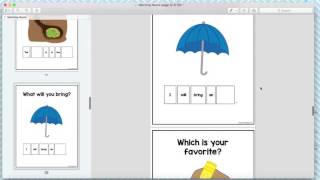
Hi, this is Sasha from theautismhelper.com, and this is a product preview of my Noun Adapted book series. So 3 books are included, and they're each set up individually so you can print them once, one book at a time, or all together, however you prefer. The first book is the basic one, which is matching nouns. We want to start to develop this category of concepts and words that are nouns. So there's instructions for setup which are included with each book, and then this kind of visual cue of what a noun is. I've mentioned in the other videos that these would be great anchor charts for your classroom, so I would definitely recommend printing another copy of this page and posting this in your room or by students' desks or by your literacy centers. Um, this first page, students will select the person, place, or thing to kind of reiterate this concept of these three major categories, and then we'll go through and students will match the nouns, the people, places, and things. So each page starts with a wh- question, which ties in some of that very important skill that a lot of our kids are working on. And then the answer will include those missing noun pieces. Some of the sentences have 2 nouns missing, some have 1. And here are all the pieces at the end and the storage page that students will be pulling from. So this storage page is stored on the right side, attached to the last page, so you don't have to worry about a Ziploc bag with all the pieces. This is really, really nice, especially when you're dealing with a lot of little pieces like this, to store all the pieces on that storage page. So this is to introduce the concept of a noun. Um, the next one looks at, um, identifying if it's a person, place, or thing, because again, this is a good categorizing skill to work on even for your students that maybe aren't yet grasping what a noun is. We're still working on categorizing, so it's really nice to tie in academics and more grammar-based skills into those foundational concepts. So this is perfect. So each page has 3 nouns, and the student will move a star to person, place, or thing. And kind of this little mini multiple choice, select the right answer. So this is really actually one of my favorite ones. I really like this one. It's all the movable pieces and then the storage page. The last one is singular and plural nouns. Actually, I really like this one too. I forgot how cute this one is. So this one has kind of two different versions of the pages, which I really, really love. Um, here's the instructions for setup. So this is going to look at singular and plural nouns. So the first 5 pages the students will match the word. So they'll match 1 bird, 3 birds, 7 blocks, 1 block, 1 cat, 3 cats. So after these ones, then they will match the picture. So kind of get— doing the inverse. Now they'll match a picture of 1 dog and 3 dogs, um, 5 pencils, 1 pencil. So matching either the word or the picture which shows the singular or plural form of the noun. So I really like assessing this and working on this in both formats. So this is the noun adapted book series, including 3— in 3 different books and the different ways to start to teach these concepts to your students.