Gina from theautismhelper.com shows how to build a precision teaching program for noun labeling with minimally verbal learners. She breaks it into scaffolded steps: matching objects to pictures, matching pictures to pictures, touching the right picture, then saying the word. She covers prompts, expected responses, practical tweaks like covering distractors, and ways to keep kids engaged with sensory materials.
Chapters
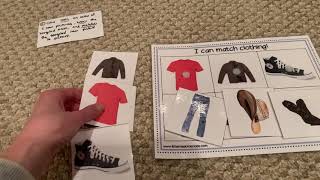
Hi everyone, this is Gina from theautismhelper.com. I just wanted to show you a really neat way to target precision teaching with the See, Hear, Match, or Touch programs that I talked about in my latest blog, Creating Efficient Goal Programs for Your Students. So this is just a little example of an annual goal and then ways you can scaffold up to that goal. A lot of my kiddos come in with not a lot of functional language, or they might possibly be nonverbal at the time, and so this is a great goal to target nouns and word meanings. So this would be your annual goal. Just an example, um, Gina will see a picture of a noun and say the correct label. So maybe a teacher is flashing them picture cards and they're able to say apple, ice cream, shoe, turtle, and so on. And so here's how I would scaffold it for, you know, maybe a typical student. So first they will see an array of 3 noun pictures, or your field might be higher, depends on the kiddo. They'll hear the targeted noun from the teacher and then they'll match the noun object to a picture because first we want to make sure that they can match objects to pictures first. So you might cover some of these up with Post-its or you might have a bigger field, it depends on your kid. And then so the teacher will show the pictures obviously and say, um, "Match crab," and then the student will take the crab and match it to crab. They might say it, they may not be good there quite yet, that's okay. And same thing with turtle, turtle, and then they match turtle. And you might have to show your student how to do this at first because they've, you know, maybe never done this type of goal program. So giving them a couple examples before you take data. The next way you would want to scaffold it, or you could scaffold it, is that they will see an array of 3 pictures, hear the targeted noun, and then match a noun picture to picture. So for example, in this one, teacher would say, "Match shirt," and the student would pick the shirt and match the picture to picture. And then again, you might have to modify this if a student doesn't have these codes yet and actually hand them the picture first and just practice matching. Another way, you know, you'll say, "Match shoe," and then they'll match the shoe. And again, you could cover up other pictures on here. You don't have to have a big array. "Match jacket," and then they match jacket. And then the next scaffolding is that they'll see an array of 3 noun pictures or your array, hear the targeted noun, and touch the targeted noun picture. So now I have these 3 pictures out. The teacher will I'll say, "Touch fish," and they'll touch fish. "Touch french fries," touch french fries. And again, you might have to teach your student how to do this a few times and show them and then do it with different pictures. And then last was our annual goal. They'll see a picture of a noun and they'll say the noun, or maybe it's a sound approximation at this point depending on your kiddo. So a teacher is flashing the cards to the student And they're just flashing them and the student's saying, "Fish, french fries, ice cream." Okay, and then a step way, way, way, way back, if you wanted to practice matching objects to objects, obviously you'd have these removed and just have on there cow, dog, chicken, and then have your student match chicken to chicken, dog to dog, cow to cow. And then you could put these into sensory sand and make it a little bit more fun of a game, because a lot of my kiddos are very, very young, so they need to be engaged, highly motivated. So I'd maybe put these into a fun sensory box or sand or a mystery box and have them pull them out and practice matching. So this is just a little tutorial on the See Touch Matching Noun programs that you can create for your students, and good luck, and let me know if you have any questions.