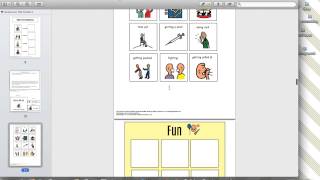
Sasha from TheAutismHelper shows six printable behavior file folders for autism classrooms. Each folder teaches sorting skills: good vs. bad behavior, matching behaviors to consequences, and rating problem severity. Practicing these during calm moments helps students generalize skills and make better choices independently.
Chapters
Hi, this is Sasha from theautismhelper.com, and this is a product preview of Behavior File Folder activities. I'm super excited about these. I've already printed and laminated out my own for my class, and I can't wait to start using them. This is going to be a great way to work on preventing problem behavior and to incorporate behavior management strategies into all parts of my classroom, even independent work time and structured teaching time. So these 6 different file folders work on identifying good behavior, bad behavior, as well as identifying consequences and and, um, other types of behavioral interventions. So I'm gonna scroll through the different file folders included. All my file folders include 3 types of labels for each set: a main title, a tab title, and a baggie title, so it makes it really easy to stay organized. The first one is sorting good behavior vs. bad behavior. Again, this is so critical to work on. Which things are good, which are bad? We so often are saying, "Be good!" or "Don't be bad!" But really our kids don't always know what that means. So having repeated practice of sorting out the good and the bad behaviors in a structured way that's familiar for our students is going to be so effective on preventing problem behavior and being able to identify what actually is good and what actually is bad. Next is matching the behavior with the consequence. So there's 4 different behaviors and then you have to match the coordinating consequence. So if you raise your hand, what will happen? Versus if you hit, So again, just that practice of matching the consequence with the behavior outside of when the behavior is occurring is so effective because your kid is able to attend. So often during meltdown time when we're trying to work on explaining these consequences and things like that, our kids are not able to attend to that because they're too upset. But working on it when they're not upset in structured teaching time is gonna really be effective when the problem behavior does occur. Next is sorting fun versus not fun activities. So again, just more examples of trying to discriminate and generalize which things are fun and which things aren't fun related to different activities and behaviors. The next one is a big problem versus a little problem. So often our students tend to overreact about everything, and not everything is an emergency. Sometimes there's a little problem. So sorting different things— yes, choking is a big problem, but breaking a toy is a little problem. Putting all the big problems on one side and the little problems on the other side. These activities all will lead into great discussions and kind of being able to explain and generalize together which things are similar about the little problems and what are similar about the big problems. These really are great teaching tools. Next is selecting a good choice or bad choice for each set of behaviors. There's a set of behaviors, related behaviors, and then the student's going to match either the good choice or the bad choice picture on here. This is one of my favorites. I really like the way this one turned out. So an example would be like, "I start working right away and I finish my work." Well, that's a good choice versus "I shout out and I talk out of turn." It's a bad choice. These kind of align with my behavior contingency maps, which I really like kind of using that same language of good choice and bad choice. So again, we're getting that practice of identifying the good choices and bad choices away from the problem behavior within a structured time. And the last one is sorting good consequences versus bad consequences. So again, what are the good things I want to happen versus what are the bad things that could happen? So just the repeated practice of identifying these things and sorting these things in multiple ways will help our learners be able to organize their own mind, organize within themselves what these good choices are, what these bad consequences are. There's a lot going on, so being able to work on this repeatedly through these file folder tasks will help them organize their own thoughts and feelings on this. So again, there's 6 different file folders included in this set, all ready to go with the labels and everything. So this was a product preview of Behavior File Folder Activities from TheAutismHelper.com.