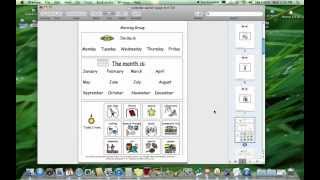
Sasha walks through the Calendar Time teaching packet, which includes laminated morning schedules, dry-erase calendar pages, weather tracking, and a reusable Velcro system for teaching date, time, and daily routines. The materials scale from basic matching activities to journal prompts and word sorts, with setup tips for laminating and organizing with Velcro.
Chapters
Hi, this is Sasha from TheAutismHelper.com, and this is a product preview of my Calendar Time packet. So I'm going to take you through all the different things included in this calendar set. I give a pretty long description of each item included. So starting off, there's— here's a morning schedule. So these are different pieces that you can laminate this and put hard Velcro here and soft Velcro on the pieces. And these are file tab dividers, so you could just tape this right on the file tab And then as you are finished with each section, you can take off the schedule piece so children know what's coming next and what you still have to work on. And here are the different divider pages as well, so one for each of the 4 sections if you want to divide your binders up like that. Um, next up is a page that I laminate and use with a dry erase marker each day so kids can circle what the day is, what the month is, and what we have today. This is great for kids with low writing skills. And here's a little bit of a harder one that includes the month and the date and tomorrow and yesterday. So kind of taking this one just one step farther. Next is a weather page. So the same thing, I use this a lot with dry laminating and dry erase markers, but you could also print this and use it with a pencil each day. Circle what the temperature, the season, the weather, and what I should wear. And next, things I did. So last night I, today I feel, how I slept, and what I eat for breakfast. Next up is the calendar. So I give a description how to set this up. I use on the opposite page strips of hard Velcro, if you can see right here, to store the numbers. This is super easy and I highly recommend this system because you don't really lose numbers as much. So here's the blank calendar and here are the numbers and the months and here's the last 3 months. And next is the Velcro calendar day. So I really like this for some of my kids that are a little bit lower functioning. You can put hard Velcro in all of these boxes, and then here are the pieces. So the days will get stored here, and the months will get stored here, and each day they pull up what day it is. So today is Monday, the month is September. Next are two different, are some matching binder pages. I put these in my circle time binders. This is matching the months, and again, here are the pieces. This one is to match the days, and it's color-coded, which makes it a little bit easier. And then this is matching days and months. So a little bit harder. So here's the page, and then there are the pieces again. And here is a binder page for yesterday, today, and tomorrow, and then here are the pieces. So each day you could laminate this and put in with the Velcro piece: yesterday was, today is, tomorrow will be. And here's a big wall-sized version of that as well, the tomorrow, yesterday, and today is. My kids really struggle with this, so I like having one for the wall and for their binder. And here are the wall pieces right here. Coming up is another calendar page. You could laminate this or use it with a pencil. I kind of like to laminate it because I don't like to make a million copies, and then they can write in with a dry erase marker the month, the day, the month, the year, and the holidays. Here's again a little bit harder version and then room for a daily sentence to be corrected or to be written. And one step farther, just a little bit more difficult. Date, weather forecast, so using a little bit higher language. Daily sentence, if you have daily questions to answer, and a journal page and word sort. So that's it on my calendar packet. It's, it's good for a lot of different levels. There's things for lower functioning students and higher functioning students in here because I know a lot of classrooms have a big range. This was from theautismhelper.com. For more tips, resources, and materials, come to my website.