In this product preview, Sasha from theautismhelper.com introduces a new set of Communication Skills Social Story Adapted Books designed to teach key communication behaviors through an interactive, multiple‑choice, laminated format. The collection includes four titles—"Asking Politely," "Having a Great Conversation," "I Don't Interrupt," and "How to Be a Good Listener"—each featuring age‑appropriate clipart and visual options that students can select to identify appropriate versus inappropriate responses. Sasha explains how the books complement existing social stories, are suitable for students ranging from early elementary to junior high/high school, and benefit both autistic and non‑autistic learners. She highlights the hands‑on nature of the materials, the ability to practice skills repeatedly, and the positive classroom experiences she’s observed. Sasha also teases upcoming behavior‑focused adapted books, emphasizing ongoing development of the product line.
Chapters
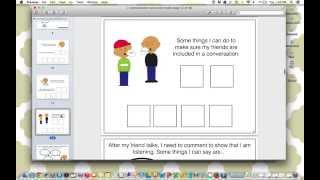
Hi, this is Sasha from theautismhelper.com, and this is a product preview of my Communication Skills Social Story Adapted Books. I'm hugely, hugely excited about this set of resources, and I have many more in the works that I'm really, really excited about. Because to me, this is just a great way to expand beyond just social stories. The social stories in my store are some of my best sellers. I know they work really well for a lot of teachers and a lot of students on working on different behavior issues, communication issues, classroom routines, things like that. They're really effective both for kids with autism and kids without autism. But this is kind of taking it a step farther and working on these skills in an interactive way. Our kids love adapted books. They're structured, they're visual, but we can work on these same skills we're attending to in social stories and work on them in the format of an adapted book. So it's really targeting this skill all the time and giving that extra practice in a way that's gonna pair up so nicely with the social stories we already have. So I'm gonna go through the structure of these, and again, there's many more to come, so I'm really, really excited. So there's 3— a few different ones included in this resource. The first one is Asking Politely. This is gonna go over the skill on how to politely ask things for people. So each page is kind of in a multiple choice format. So here's the pieces below, which are labeled with the page number. So these 5 options will go right here when you laminate them. So students will identify the rude things they say. My kids have been loving practicing this because they love pretending to be bad, but it's great to highlight and discrimination these inappropriate responses that we want our kids to get away from. Um, so again, it's going to have this different multiple choice format on each page, so there's going to be different options that they pull up and respond to the prompt on the page. So here's all the different pages, and then here's the different pieces that go in. So just really, we've— like I said, I can't say enough that we've really been utilizing these all the time, and it's been great to model the appropriate skills and to give kind of that little almost discussion, if you will, on these different kind of social communication issues. Next is Having a Great Conversation. So working on commenting, turn-taking, and body language. So again, the same type of format, this multiple choice. So here are the different picture options that will go, and they'll identify how their friends feel when they talk too much. You know, do your friends feel like this, or do they feel like this, or do they look bored? So really practicing identifying these issues. So the different kind of components included in these conversation skills— here we go. And I love that the clipart is a little bit more age-appropriate. It's not so babyish. This is really appropriate for junior high and high school students, just as it's appropriate for our early elementary learners. So it's a little bit more neutral. This is one we have a lot of issues with in my class. I don't interrupt. So how do we get someone's attention and how do we avoid interrupting? So again, this same multiple choice format with the different response options and pulling them up to the top. Even, even how to sequence these good choices you can make. What do you do first, next, and last? And when you act respectfully and don't interrupt, how do your friends feel? So here's all the visual options here that you can pull up as this multiple choice format consists. And the last one is how to be a good listener. Again, these skills of attending to a teacher, attending to appear, that we might really need to talk about a lot and get our kids pretty fluent with. So again, the same multiple choice component, which is really helpful for our kids. And once you have a few of these, they really get the structure nicely, which is really awesome. And then here's all the picture options. So again, I really— I just can't say enough of this. We've been using these so much in my room. I cannot wait to make the next sets because I think the behavior ones are going to be even more helpful than the communication ones. So this has been really great, and if you like the social stories, you will love these because they're a perfect complement to that. So again, this was a product preview of my Communication Skills Social Story Adapted Books by theautismhelper.com.