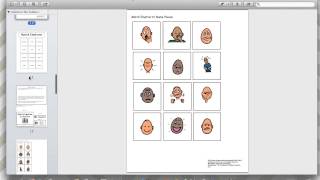
Sasha from TheAutismHelper.com shows six file folder activities that teach autistic children to identify and match emotions. The activities progress from matching emotion faces to sorting real photos, and use structured practice to help kids recognize when they feel happy, sad, scared, or other emotions.
Chapters
Hi, this is Sasha from TheAutismHelper.com, and this is a product preview of Emotion File Folder Activities. So this set includes 6 different file folder activities to work on identifying the emotions and matching emotions with coordinating activities. I think it's really critical to make this a major component of your curriculum because children with autism really struggle with identifying emotions, and they need repeated practice on seeing what each type of emotion looks like and practice on identifying those. So this is a great way to work on teaching the emotions in a structured way that they're familiar with. These types of activities are something that they're comfortable with, they know what's expected of them, but you can yet challenge them by incorporating these emotion concepts within these activities. So with each set of my file folders, there's included instructions on how to set these up. Each file folder includes a main title, a tab title, and a baggie title so you can stay really organized. The first one is matching emotions, so this is basic matching. But again, this matching is a little bit hard because yet they're all faces, but you do have to attend to the differences. So this is great for kids that have mastered easy matching things to kind of make this a little bit more difficult. Next is matching the emotion to the photo. So, you know, Boardmaker pictures are great, but let's work on matching those to real photo images and kind of generalizing what's similar about each face and matching them together. Next is Matching Emotion to Name. So can kids identify these based on the name? Again, that's very tricky because some of these are similar. Like, is this frustrated or is this worried? And what's different about the— what makes this frustrated instead of worried? So this is a great one to work on just basic emotion identification. This is my favorite one, Matching Emotion to Activity. So there's different emotion pieces and there's 8 different activities, and you're gonna want to match the emotion that would be. So maybe at a party you'll be happy, or When you're fighting with a friend, you could be frustrated. At a haunted house, you could be scared. So kind of working beyond just identifying the emotions, but being able to coordinate it with different things that happen in your life. Um, next is Things That Make You Happy vs. Things That Make You Sad. So kind of an advanced sorting activity that's gonna work on discriminating between different activities and how they make you feel. So on one page you'll put all the activities that make you happy, and the other all the activities that make you sad. Next is sorting photos of emotions. Again, I really do like using real photos whenever I can because obviously this is what our students' faces look like. So looking at the differences, they're not all exactly the same, but what makes this one sad versus this one happy? So putting all the sad pictures on one page and the happy pictures on the other page. So these are the 6 different emotion file folders. It's a really great antecedent intervention to work on preventing problem behavior by helping students learn to identify their own emotions. These are quick to set up and would be great to use within the classroom of a self-contained room, an inclusion room, or even with typical early childhood students. This is a struggle for most kids sometimes. Again, this was a product preview of Emotion File Folder Activities by TheAutismHelper.com.