Sasha from theautismhelper.com walks through the Fluency Mega Pack, a kit with 500+ flashcards and a 100-page guide for teaching fluency (accuracy plus speed) to students with autism. It covers letter and number ID, sight words, addition, subtraction, and coin recognition, with timed baseline assessments and customizable data sheets to track progress.
Chapters
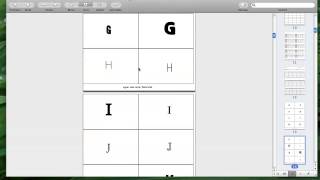
Hi, this is Sasha from theautismhelper.com, and this is a product preview of my Fluency Mega Pack. I've been really, really excited about this set. I've been working on it for a while, and a lot of people have asked me for it. So I really— on my blog, I talk a lot about fluency. Fluency is really important. Fluency is defined as accuracy plus speed, and it really is essential to making sure that the skills we're teaching our students are functional, because we want the skills to be almost second nature. Fluent, that are on the tip of their tongue. So I think a great way to teach fluency is through direct instruction and fluency training. So in this set, I provide links to video tutorials of how I organize fluency instruction and how I run a fluency program. This set will have every single thing you need from A to Z to run a fluency station. So I kind of go through how to set up your fluency materials, how to organize, how to run the programs, where to start, and how to set goals. Um, this packet is massive. It's over 100 pages, over 500 flashcards. So make sure you're referencing the table of contents when you're printing so you are printing the right thing. So I did go through and have all the page numbers so you can print exactly what you want. Um, so the thing I get asked on a lot is how to do that baseline assessment. How do you know where to start? So this Mega Pack kind of has more of the more foundational skills. So it has, um, letter identification, number identification, quantity, time, coins, sight words, addition, subtraction, categorizing, things like that. So the baseline assessment will have you— this is a baseline assessment form, it's 2 sides. So you go through and conduct 30-second timings on each of the skills, get your baseline, and then the guidelines here show you whether you want to include that skill for fluency instruction or not. So this is a great way to track the date and what fluency programs and what baseline rate you start with, because this will be a good thing for you to go back on to show growth. That yes, we started with coin combinations at only 3 per minute, and when we finished, we were at 10 per minute. To really show that growth is really essential. The next thing that's really critical with fluency programs are that you have data sheets that are very efficient. If you have a great data sheet, this program will run so quickly and so smoothly. So data sheets can be tricky to select the best one, so I give 4 different options of data sheets. I also provide editable options for this as well because I know a lot of people like to type in the specific information. So this guides you on how to select the data sheet. So here are the 4 different data sheet options, and again, this questionnaire guides you to show which data sheet to select, and the editable options are included in this zip drive, so you can type in the student names and the skills and things like that. So on to the resources. So the major chunk of this fluency pack are the flashcards. So I suggest printing these on cardstock. That would be a very easy way. Then all you have to do is cut out. It's very simple, and I put them, the flashcards, right next to each other so you could use a You could easily use scissors, just cut through, or use a— you cut them pretty quickly. So you could do these on cardstock, or you can print and laminate them, whatever you prefer, whatever wear and tear you need. So I'm just going to scroll through these real quickly. So there's uppercase and lowercase letters. The different fonts are on purpose. We want kids to be responding to multiple types of Rs, multiple fonts, not only the same type of font, really including that multiple exemplar training right here in the fluency instruction. So there's digits, quantity, and then we're on to time. So as you'll notice, each page has the type of flashcard it is on the bottom. It will get confusing, especially on some of the ones like time to the hour versus time to the half hour, to be able to glance quickly when you're printing these out and know which set you're working on, which ones you're cutting out. So we have time to half hour, quarter hour, hour. Then there's coin identification. Again, the purposeful multiple coins, multiple sides. So we want kids to be responding to both the front and back of a quarter. Coin combinations. So we want kids to be able to see this really easy, like identify this really quickly and easily. This is a really, really important skill to work on. Next, we're going into our Dolch set. So we have Dolch Pre-Primer, Primer, 1st grade, 2nd grade, and 3rd grade. So this is just a huge time saver. Everything's right here. You don't need to look it up and make your own flashcards. You can just print these out and cut them out really fast. They'd be ready in a few minutes. Next up is addition, single digits 1 through 5, and then 6 through 10, and then subtraction 1 through 5 and 6 through 10. So to really divide that up to make sure you're working on a skill that is individualized for each student. Next are the picture flashcards. Now these can be used for a bunch of different things. They can be used for receptive and expressive picture identification. So you can just scroll through these with kids with lower verbal skills and be identifying the names of animals, school supplies, or food. These can also be used for categorizing. I also added some people flashcards so you can have students be categorizing all of the food into one pile, all of the school supplies, people, and doing that as a fluency, which is a really critical skill and a great one to do with kids that are nonverbal. These flashcards, like I said, can be used for receptive fluency timings, so laying them all out and saying, "Touch bird, touch turkey, touch monkey." things like that. Um, so yeah, like I said, there's over 500 flashcards. There's a complete guide on how to determine baseline assessments and select data sheets. The data sheets are also editable, like I said. So this is going to really guide every part of your fluency instruction from start to finish and show you how to do it in a really efficient and beneficial way. This was a product preview of My Fluency Mega Pack by theautismhelper.com.