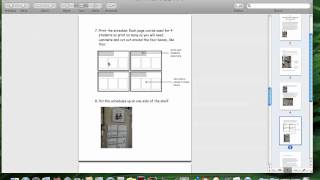
Angela Kulcsar's classroom system replaces traditional task bins with labeled boxes holding over 50 distinct tasks. Each student gets a laminated schedule with three tasks marked by letter and number, like A-21-20, then matches the letter to find their box. The whole setup fits in minimal space and supports differentiation, giving lower-functioning students easier tasks and higher-functioning students academic work.
Chapters
I'm Angela Kulcsar, and this is a product preview of my Most Space Efficient Organized and Work Task System Ever. So this is a lofty name, but this is one of the— my favorite things that I organize in my classroom is how I do my work task system. I used to do the 3-bin drawer, but I don't anymore, and I've replaced it with this system, which I really love because all of my kids can access the same sets of tasks in the same area for a variety of types of learners. So in this packet, I have some pretty detailed explanations of why I like this system and what it does. I also have some pictures of what it looks like in my class and how I set things up. I have some examples of how I store the labels and where I label the boxes and then some examples of what the student's schedule looks like. So basically the system will be each kid gets 3 tasks each day. So on this schedule, these will be laminated and then you put 3 different tasks. So like this kid right here has A, 21, and 20, so they'll take off the letter A, match it to the box, and then do the next 2 tasks, and then they are finished. So it's a visual way to see when they are done. Um, so here are some more descriptions. So in this set you get the labels. So on a PDF you could just add a text box over here and write in the— type in the child's name, or you could just handwrite it for 3 different tasks. And then here are the letters and numbers. So you need to print 2 copies of each of these, and one will go on the boxes like here, and then the other will be for the schedule. So this way, like on these shelves, I have over 50 tasks and all of my students use these. So I have, like, for example, in some of these tasks, they're easy, much easy ones, much more easy ones, and over here they're a lot harder and more academic-based ones. So my lower functioning students will get maybe an A, a C, and an F, where my higher functioning student will get Y, V, and W. So they're just using different tasks in the same area, and it takes up so little room. It just really is a great way to organize it. And this task, this setup lets you know how to do it and gives you all of the materials to do so in your classroom. This was a product preview of the most space-efficient organized work task system ever from theautismhelper.com.