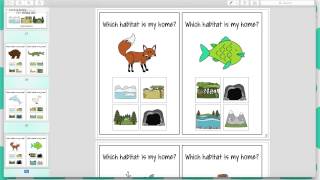
Sasha from theautismhelper.com shows five interactive science books with movable pieces like stars and lift-up cards. They cover living or nonliving, landforms, habitats, body parts, and plant growth, turning grade-level concepts into matching, inference, and sequencing activities for lower-level learners.
Chapters
Hi, this is Sasha from theautismhelper.com, and this is a product preview of my science adapted books. I love these books to target some tricky science themes. There's a big push to teach more gen ed curriculum and stay on grade level, and it's really hard with some of our lower level learners. So these books are basic and interactive, so even your lower level learners will be able to access these kind of more complex science topics. So there's a few different books included in here, so I'm going to show you all the different books that are included. So the first one is Living or Nonliving. There's directions for setup. This book is really fun because it's kind of like a little multiple choice. So there will be a star on each page and students will place the item— the star on living or nonliving for each item. So it gives you a little description of what living and nonliving is, does a little quick comprehension check, and then each— and then identifying some living and nonliving items, what they need. The rest of the book goes through living or nonliving. So like I said, there will be a star that you'll attach here and and students will move it to identify living or non-living for each item. So it's pretty fun that they kind of a little different format of this type of book. So here's the Pick Pieces. So there'll be stars for the pages 3 through 8. Um, the next book is based on landforms. So this is going to be matching, some non-identical matching based on photos and different clipart pictures. So matching the clipart picture to the real photo of the landform. So what landform is it? And the students are going to match the landform picture. So there's some tricky ones in here. To kind of make it a little more complex for some of your higher-level learners. And here are all the different pieces and the storage system. So the whole— the whole system of how to set this up is included, so you'll include all these pieces on the side so you won't need any baggies or you won't ever have to worry about losing pieces. The next one is based on habitats, so a similar setup to that first option, that first book option. It's going to be kind of that multiple choice, so students are going to place the star on the correct habitat for each animal. So there'll be a star that you'll Velcro around here, and they'll move the star for the correct habitat for each animal. And the options change, so they do have to really pay attention and attend to the different multiple choice options. And the stars for the pieces. The next one is Guess the Body Part. So this is gonna be great to work on inferences and body parts. Um, so the format of this book is there's gonna be 4 options you place at the bottom, and the student will move the correct answer up. So it's gonna give a hint of a body part and then there'll be 4 options and students will move the correct answer up here just like the example in the directions. So there's gonna be a range of different body parts included and students will have to use the inference to correct— guess the correct body part. And here are all the pieces that go on the bottom of the pages. And the next book is based on plants and growing which is really fun to work on and this is an awesome sequencing book. It's really, really tricky and it's really great for all of your kids. My kids really, really like this book. So basically there's gonna be 4 multiple choice options on the bottom, just like the body part book, and it's gonna go through the sequence of getting those plants growing. So what happens first? So identifying the first picture. And then as each page progresses, the step— the prior steps are included, but they have to find the next step. So what happens second? What happens third, fourth, fifth, and sixth? And then kind of at the end, this little comprehension check, they'll have to put all the pieces in order. So again, those were our different science-adapted books. This is a really fun series that your kids will enjoy, but you'll— you are also targeting some important academic and functional skills. And this is a product preview of my science-adapted books by theautismhelper.com.