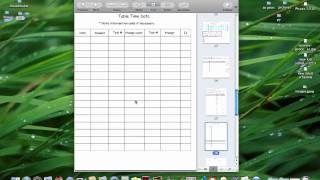
Sasha from theautismhelper.com shows 20 data sheets for special education classrooms: fluency trackers, discrete trial forms, work-task logs, behavior incident sheets, and more. Each captures specific data like prompts, intervals, and correct/incorrect counts. The sheets work for individual students or multiple skill sets, helping teachers and paraprofessionals track progress and share information with families.
Chapters
Hi, this is Sasha from theautismhelper.com, and this is a product preview of 20 Special Education Datasheets. Um, so to start out, I give a list of all the different datasheets included in this set, and as long as a little brief description of what I use it for and what the sheet looks like. So there are fluency datasheets, discrete trial datasheets, work task datasheets, and then some other most miscellaneous ones. Um, so I'll kind of briefly go through each one real quick so you can get a preview. These are, these are a bunch of different fluency data sheets that you can use to do the date, how long the timing is, what slice you're working on. So set 1 might be letters A through F, how many correct, how many incorrect. Here's a little bit of variation on that. So this might be for a fluency timing where you do 3 different trial sets. This fluency data sheet is for 5 sets of data that you can take at the same time. So if one child is working on 5 different timings, You could do the date, how many correct, how many incorrect, the total, and the percentage correct for 5 different sets for the same kid. Or you could use this for 5 different students so it's all on the same page, which is nice. Here's some flashcard goal visuals. Another discrete— this is a discrete trial one— the date, field of, and then correct and incorrect with a total at the bottom. Another discrete trial with less, with less, with a smaller field, and then to put how many trials you're doing each day. So in this box you could put, you know, I have my Aids right in, you know, up to 5. So like you could put the pluses and minuses right in the little box. Another frequency data sheet, maybe for something that you're doing very frequently because there's a lot of rows on this one. Same thing, just doubled up. This one is kind of for a combo of discrete trial and fluency. So here you could be doing your discrete, discrete trial data, maybe if you're doing vocabulary or certain letters or math facts or something, you could put that right here. Like, we do this for our vocabulary, so maybe whatever vocabulary words they're working on right here, and the date, and then correct or incorrect. And I write in up to, you know, 5 trials or whatever in this box. And then my kids are doing timings on their known words, so they're previously mastered. So this is all in the same data sheet for them, which I really like. So date, how many correct, how many incorrect, the total number of cards, and the frequency goes down here. So they can have their data on their new words and their mastery their mastered words down here. This is for 3-bin work tasks, which are pretty common in autism classrooms, the kind of TEACCH methodology, and this is to keep track of what types of prompts you're using. So the date, and then it breaks down each and every little skill of using the 3-bin work task and what kind of prompt you needed, and here's the code. This is a pretty easy one to fill out because it's just circling and it has a time component, which is nice. Next up is another work time, uh, data sheet. So date, student, what task it was, and what type of prompts they need. Again, here's the key. This is a great one for a paraprofessional to fill out. You could easily post this in your work system. Another work task data sheet, similar, just a different little bit of a— little bit different setup. Another same kind of thing, workstation. Really just depends on which type of data sheet is going to work for you, so that's why there's a few different options. This is for bus aides. I know sometimes there's incidents on the bus, so this is a quick and simple one for bus aides to fill out. So the date, what happened, what you did. So kind of a little bit of an ABC-type data sheet. Collaboration log— I know I have to keep track of who I'm talking to, which therapist, with which parents, whichever. So a little simple sheet for that. Here's a hygiene data sheet for brushing teeth and deodorant. My kids sometimes brush teeth twice in a day for working on it, so that's why it's twice. Here's the key, and just circle what type of prompt each step of the hygiene task took. Here's a partial interval recording data sheet, so picking time intervals and a plus if the behavior occurred during the minute and a minus if it didn't. This is an easy way to take data if you have a big classroom, especially because it can go pretty easily. You could just do 5-minute increments throughout the day. I use this one a lot. Picture schedule data, so if you're using that PECS picture schedule, how are the students doing on it? Are they really that independent? So can they, you know, putting tallies next to independent or prompted. If they pick it up, put it in envelope, go to the location, and match the picture location, and then and totaling for each week. Next up is an ABC data sheet for a lot of several, you know, types— some kids have a lot of behaviors that kind of go together, so you can write in your own behaviors up here. So the date, and then, you know, pretty often kicking sometimes comes with hitting and scratching, so recording all these things separately along with the antecedent and the consequence. And then here is a graphing data sheet that a lot of my students actually use to fill out their data. So they can write in the date here, and then make a bar graph for their data. So this is great for self-charting. I really like this. Um, this was a product preview of 20 Special Education Datasheets. For more tips, resources, and materials, please visit me at theautismhelper.com.