Product Preview Ultimate Guided Reading Resource
An 83-page guided reading resource for special education, especially autism. Includes planning tools, curriculum maps, assessment sheets, over 30 differentiated worksheets, question cards, and visual schedules. Everything is pre-formatted and structured to reduce processing barriers for students with low receptive language.
Chapters
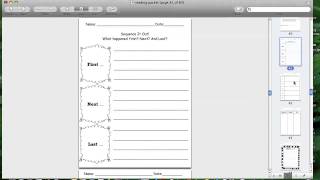
and this is a product preview of the Ultimate Guiding Reading Resource for Special Education. I'm super, super excited about this packet. I've been working on it for a long time and I know it's going to make my life way easier next year, so I'm really excited to share with you all because I think it's going to be so nice to have absolutely everything in one place. So this is pretty much everything you need to plan and run your guided reading groups in a special ed classroom. The reason these resources are going to be a little bit different than regular ed resources or guided reading materials is that these are all very visual and very structured. Which we know our kids with autism and our kids with special needs really benefit from. So I tried to make everything very straightforward and adding a lot of visuals to really make this as accessible as possible for all types of kids. So basically this is broken down to a few different areas. There are guided reading group organization and planning tools, reading activities, and visuals. So I'm gonna scroll through and kind of go explain everything that's in here real briefly. So in the organization and planning, there's a few different formats for organizing your reading groups and your reading schedule. And there's a sample reading schedule for how to, um, organize your reading block. So to have teacher-directed guiding group time, independent reading centers, quiet reading activities like that. So how to run different rotations. And then there's the form for you. And there's also a list of different independent reading center ideas. I get a lot of emails about this— what do the other kids do while you're running guided reading centers? Here's a ton of ideas, the brief synopsis, and then when you go on there's pictures and printables for each thing. So kind of the prompts to make it more accessible for our regular ed— for our special ed students. And also worksheets to kind of tie in a writing and assessment aspect to each thing, so you know your kids are actually doing these things. So there's a bunch of different ideas, and like I said, instru— there's instruction cards, there's worksheets, there's printables. So there's a bunch in here to make a wide range of different independent reading centers. Then there's a few lesson planning forms. This is guided reading group monthly plans, weekly plans, and guided reading group accommodations for students. So this would be great for an inclusion or resource room setting— what specific accommodations is each student entitled to based on what group. Next is their curriculum map, so kind of the big concepts and curriculum comprehension, fluency, grammar, and decoding that each group is working on and by what quarter you want those skills met. So you can fill out one of these for each group. Next is kind of a thematic unit plan. This is really gonna help me because I had a hard time keeping track of what plans I wanted to incorporate into my reading groups, so this is a nice way to track that. And then a yearly planning calendar. Next is assessment schedule, so when you want to do— if you do some type of fluency assessment, if you're doing Words Their Way, what dates you want those done, and then dates completed. So to kind of make a schedule for yourself on giving those assessments. Next is, um, there's 4 different data sheets. This one's for reading a book, reading activity, writing activity, and anecdotal notes. So there's a lot of ways to take data in a guided reading group, so this is going to kind of give the format for a few different types of assessments. Um, next is pre-post test data, so this would be great for comprehension quizzes, vocabulary quizzes, things like that. And here's a guided reading progress report that you could send home to parents. And then kind of starts into the student forms. So this is comprehension quiz. So this would be you're reading the questions and the students are writing down the answer. So such simple things as having the number and the paper already organized is so helpful for our kids with those processing issues. They don't have to have the trouble of numbering their paper and or making sure they have enough space for each question. It's already done. So little things like this are really critical interventions to make guided reading accessible. Next is vocabulary quiz format. So you can write in the words and they can write the definition or vice versa. A fluency quiz, and then now comes into the worksheets. So there's really over 30 worksheets for your kids to work on a lot of different reading skills in a visual instruction way: sequencing, inferences, comprehension, vocabulary. There's 3 different levels of book report for— I'm sorry, 4 different levels of book report forms. There's 3 different levels of journal forms. I'm sorry, 4. And then character identifying story elements. Making inferences, a few different versions, connecting the story with things in your life, which is kind of a higher-level thinking skill, working on main idea, identifying details, identifying character traits, kind of describing characters, things like that. So there's a wide range of different types of worksheets. Next are the question prompts. So I'm going to laminate these and keep them— cut each one out and then keep it on a keyring by my reading center. So So then when we are done with the story, we can ask questions. And having these visuals are so essential for our kids because sometimes they might just get lost in the question, and just having a little visual is gonna make it a little bit easier and more understandable there to them. So there's a bunch of different question prompts that you can make into kind of this question ring that's gonna be really helpful. Next is a visual schedule for guided reading groups. This is a really easy intervention to have for, especially for kids that have behaviors to try to get out of work. It's helpful to know what they're gonna do. They sit down and guided reading, but maybe you do different different things every day, you do them in a different order. We need to show our kids this. A lot of kids have low receptive language, so we want to really show this. Here's a picture of what the end product looks like. Here's the base for kind of a bunch of activities or 4 activities, and here are all the cards. So laminate these, put hard— soft Velcro on the back and hard Velcro on here, and then you can just each day be like, okay, we're gonna read a book, then we're gonna take a test, then we're gonna listen to a book, and then you have a special treat. And then they know exactly what's happening and the order it's coming. Next is a visual calendar. This also kind of helps with that same thing— planning, showing when a test is, showing when they're changing books, kind of preparing kids for those big transitions. Next are reading behavior visuals. These are also going to be laminated and kept out in a ring in my room, kept nearby. So different behavior things that you often are going to have to be saying in reading, kind of having the visual for is really helpful for those kids with low receptive language that might not understand your prompts. And for the same thing, these are academic visuals. We might talk about some of these harder terms: fiction, nonfiction, resolution, um, WH questions are really tricky, setting, character. So having the visuals to go with it to remind our kids and give them that extra cue on what we're asking of them. So that's it! This is 83 pages, it's jam-packed, it has everything and anything you wanna need to make your guided reading groups run smoothly from planning to completion. This was a product preview of the Ultimate Guided Reading Resource for Special Education by TheAutismHelper.com.










