Sasha from TheAutismHelper.com presents Visual Rubrics, laminated dry-erase tools that combine academic and functional criteria with clear icons so non-readers understand expectations. The packet covers reading, writing, behavior, drawing, and independent work, letting teachers score nuanced performance beyond right or wrong.
Chapters
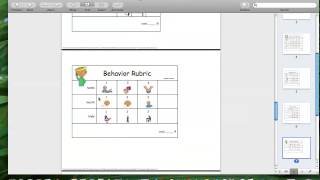
Hi, this is Sasha from TheAutismHelper.com, and this is a product preview of my Visual Rubrics packet. I've been using rubrics more and more with my class, and I wanted to make a set that had a visual aspect so I can ensure that they understand what they're being scored on. I think show— using a rubric really helps clarify the expectations of an assignment or an activity, and using visuals will really show our kids exactly what we want for them to get that 100% score, to get to do the activity to its completeness. So there's descriptions of how to use these. I'm, I'm going to laminate these and use dry erase markers so I can use them in a variety of settings, but I'll go through the different options that are included here. There's both academic and functional rubrics included in this set. So first up is a reading one, so this would be for reading a book. Students are scored based on fluency, decoding, and comprehension, and then putting the score in the bottom and seeing the total out of 9. Next is a narrative writing rubric Works on deep looking at details, sequencing, grammar, and spelling. Next is just a basic paragraph, so this is for my guys that are just starting to write a paragraph, just getting those very basic components included. Here's a sentence rubric, so even looking at that smallest piece of writing, just getting a complete sentence. I love this behavior one, and I'm really excited to use it with some of my kids because it has very little words. It's all visual. So let's look at what your hands are doing, your mouth is doing, what your body is doing. So your hand, to get a 3, needs— your hands need to be down, Your mouth needs to be closed and you need to be sitting in your chair. So really having— relying completely on visuals so even your kids that don't read are able to use this rubric in a successful way. I'm also loving this Draw a Picture one. I have a lot of kids that we really work on drawing to work on fine motor skills, color identification, counting, following directions, things like that. But I really want to build those skills in a real way, so this will show them completely in a concrete way my expectations Sorry, sorry. My expectations for what their drawing should look like. Next is independent work. Again, this is something that I often need to assess my kids on, but I need a concrete way to do that. Is your work finished? Have you worked quietly? Have you stayed in your seat? So again, using those visuals to show that. I love these rubrics because sometimes it's so black or white— either you didn't or you didn't— but I want to show my kids that in-between. Yes, maybe you did finish your work, but you were talking while you were doing it and you were walking around. Or when you were writing your narrative, you didn't get 100% because you didn't have enough details or your spelling wasn't correct. So kind of looking at that gray area and really targeting the spaces that they need to improve to have that perfect score, have that completed that activity in, in the most complete way. So this will show both you and the students the areas that they need to strengthen. So these rubrics are really powerful and and have been really helpful for me. Again, this is a product preview of Visual Rubrics by TheAutismHelper.com.