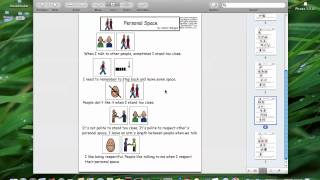
Sasha from TheAutismHelper.com shows six visual social stories for children with autism. They cover transitions, frustration, keeping hands to oneself, loud noises, personal space, and timeout behavior. Each story shows what to do instead of what not to do.
Chapters
Hey, this is Sasha from TheAutismHelper.com, and this is a product preview of my Social Story Packet for Children with Autism Behavior Set. This is actually one of my best sellers, and I think is one of— is a really effective way to deal with common behaviors that occur with children with autism. Social stories are really effective because it tells what to do in the situation instead of what not to do. So this set is a set of 6 different social stories, all with common behavior problems. The first one is dealing with transitions, which we all know can be really hard for our students with autism. How to deal with these changes in our schedule appropriately. Next is what to do when you're frustrated. Our kids get frustrated for a lot of different reasons, and sometimes we don't even know why, but this is just a pretty basic story on what to— different ways to deal with that frustration. Next is keeping your hands to ourselves. Some of our kids sometimes have too much touching and maybe sometimes it's inappropriate. So how to keep your hands to yourself during the school day. Next is loud noises. Loud noises can be very upsetting to some of my students, so instead of getting mad and hitting people, how can I appropriately ask people to be quiet or put my hands over my head? So something that's more appropriate when there are loud noises. Next is personal space. So some of the social cues can be difficult for our kids to pick up on, so this is a little social story to focus on how to appropriately stand I'm getting near someone, and how do I know when it's too close, and how can I ask someone to back up from me? And lastly is timeout. So sometimes we use timeout as a behavior management strategy, and how do we act in the timeout? That's something that sometimes isn't focused on. Are you allowed to sit in timeout and yell and cry? How do you behave in timeout? So how do you get out of timeout? How can you prevent that from happening again? These ones could be used in the home as well as in the school. Easily. So that was my social story packet for children with autism behavior set. For more tips, resources, and materials, please come to theautismhelper.com.