Sasha from TheAutismHelper.com walks through the WH Question Mega Pack, a teaching toolkit for kids with autism. It includes visual posters, worksheets, mini books, flashcards, and fluency drills designed to build skills answering who, what, where, when, and why questions. Each component has data sheets to track progress.
Chapters
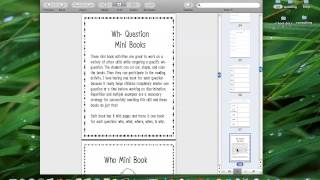
Hi, this is Sasha from TheAutismHelper.com, and this is a product preview of my WH Question Mega Pack. So this packet is jam-packed with all types of materials, activities, and resources to teach children how to respond appropriately to who, what, where, when, and why questions. This is a big passion of mine, and really learning how to best teach our kids to answer these questions. I see with my students with autism that this is such a struggle for them, and it really affects their academic functioning in all areas because it's very difficult to assess them. When they can't answer basic questions, we can't really see what they know in different content areas. So this is really a big focus, uh, in my classroom is making sure my kids are really fluent with this skill. Um, there's a lot of different ways to do this. There's a lot of different activities included in here, like I said. So first up are, um, visual posters that you can post in your classroom for who, what, where, when, and why. So these are great to give that visual cue to our kids that when is a time, or who is a person, or where is a location. There's also some mini ones included to to post in your reading area or on a desk. Next up are some visual WH question worksheets. I've gotten a lot of requests for these, so I spent some time making a big array of them for who, what, and where questions. There's 5 for each, so 15 total. Each— they ask a question and then there's 3 visual choices. So this is great for your kids with limited reading and limited writing skills because your lower-level learners could be using a bingo stamp or just marking quickly. You could be reading these questions to your kids. So there's a lot of ways to adapt these to use them with all types of learners to really assess what they know. So there's 5 different for who, what, and where. So I'm gonna scroll through those really quick. Next up are 10 different answering WH question worksheets. So again, this is great to assess where they're at. Can they— are they struggling with the when questions or the why? Which ones are they better at? These worksheets are great for downtime. They're great for a morning routine or homework because they're easy enough, but they're still working on something meaningful. Here are a few other ones. So writing in the type of information each question is working for, or vice versa, writing the type of question that matches to the type of information. Next are some mini books. There's one for each, each question type: who, what, where, when, and why. So there's 5 mini books, each one has 8 pages. I love these. I have only used one so far, but it went so well, I can't wait to use the next ones. So this is really great to have a multi-step activity. We can color them, put them together, and then read them at the end. And I really like teaching each skill in isolation because it allows my kids to really notice that repetition, that who is always a person or where is always a place. So it allows them to really truly master one. So each book follows the same pattern. There's a question and an answer. So, "Who keeps us safe?" "A police officer keeps us safe." So it goes through like that. Here's what, where, when, and why. The why is really tricky. I really like it. So this is a really great activity to do with all levels of learners. Next are picture flashcards. This is something that I actually did for my thesis in grad school, and it was so effective at teaching how to answer wh-questions. So I give a pretty thorough description on how to run this activity, a data sheet of course, and then there's 25 different pictures with correlating wh-questions for each picture. So this can be done in a discrete trial training session, and and go through and systematically work on one question at a time. So work on all of the whos and really try to get your kids successful with using multiple examples. We need to really make sure we're using a wide range of examples. So this is a big set right here. You could tape these onto note cards or glue them double-sided, whatever you want. Um, this is another idea to use the pictures for on creating a who, what, and where sentence strip, and here are the visuals for that as well, so there's some instructions on that. And last is a WH question fluency. I posted this video on YouTube a while back and I got a ton of requests for my stimuli set. So I provided the stimuli questions and the directions on how to run this activity, as well as a data sheet. Um, so that's it! So this set provides you with so many ways to work on WH questions in a meaningful way that your students are really gonna learn. Um, this can be, again, like I said, a really tricky skill, but it's really important. So this was a product preview of my WH question pack from theautismhelper.com.