Angela Kulcsar demonstrates a writing center packet designed for students with autism, featuring ten centers like "If I Were A," "Mystery Box," and "Roll the Dice." Each center uses visual supports, checklists, and clear labeling to guide students through creative writing, descriptive language, and sequencing tasks. The system works in binders, shoeboxes, or on shelves.
Chapters
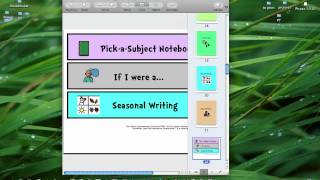
and this is a product preview of my Writing Center for Early Childhood or Special Education. So this packet includes 10 different centers for working on writing, and I use this in my autism classroom, so it all has kind of a visual basis, so it really works well with kids with autism. So I'll just take you through the packet and everything it includes. So here are the names of the 10 different centers, and I include pictures on how I set this up in my classroom and kind of tips on easy ways to store the different centers. And here are a list of the supplies that that you'll need when setting up these centers as well. And then for each center, I give a lengthy description on how exactly to set it up, what skills it's working on, and I usually give a picture of each center on how it kind of looks in my classroom. And there's a lot of ways you can set it up. You don't have to set it up, obviously, exactly how mine is. I just am a visual person, so I always kind of like to get some pictures as well. I included a title and a finished work label. These are the writing rules. I actually laminate this and put this in the front of each binder to kind of refer back to as needed. This is a "So you think you're done?" prompt. So to kind of, when you're done writing, go back through each point and make sure that you've done all of these things. So having the visual cue really helps kids with autism, and my students have found this really helpful. And then if you are able to check off all of these things, then you can turn it in. And then I have a binder cover if you are planning on doing binders for each of the centers. These could also be used on the top of bins if you wanted to put these in bins. So again, there's no set way to set this up, but here are the labels for each one, and then there are binder labels too for the edge. So if you are doing binders, like I said, and this— these labels would also work really well on shoebox bins and anything like that as well. And then I use a system where I laminate these and put them on the edge of a shelf, and then students can clip a clothespin to pick which center they are doing. Um, so if you want to do that, this label is in here. And then I have a direction and title page for each of the centers. So each of these has kind of a visual cue as well and is written pretty simply. So it'll tell you exactly what to do for each task and kind of give some prompts as well. So here's the one for "If I were a," and here are the flashcards for this set. I laminated these and put these in a pencil case that has holes in it and right in the binder. Here are the different prompts for this, and then this center, "5 words like," and then here's the worksheet that goes with this. I copy these double-sided so don't waste as much paper. Here's the letter center, so directions, letter prompt and a color-coded code on how to write a letter and kind of different prompts and ideas for what to write about. Pick a Subject Notebook. These are different notebooks that you'll include in a binder, and the students can write about the topic and respond to other people that have already written. Here are the labels for the notebooks. Seasonal Writing. There's 6 different worksheets that can go for any season to kind of work on have a different journal entry on different things to talk about related to the season. Super Sentences. There are a bunch of very simple sentences and the student needs to pick 3 of these and make them more complicated and use more descriptive words. I laminated these, cut them out, and put them in a baggie as well, or I put them in a pencil case that has holes in it. There's a label I used, this label on top of the pencil case. Mystery Box. This is putting an item in a I use a tissue box that's covered in duct tape. Put an item in there and they'll have to feel what it is and explain what it is and also make a guess. So this is working on descriptive writing and making inferences. I have pictures in the top of the duct tape box and how it looks. And then Pick a Stick. So these are different prompts that you can tape onto popsicle sticks. I've used double-sided just because I didn't have as much and The student can pick which prompt to write about. Next, Write a Recipe. So I give a few ideas on common things to write about. Obviously we're not getting specific, but just the basic steps on— for toast, you know, getting bread, putting in toaster, pushing down, waiting. So I think this is really great for my kids to work on sequencing. Here's the worksheet so they can write all the steps and draw a picture. And last is Roll the Dice. Um, so this is for making silly sentences and then drawing a picture. So the dice are actually from this website, so you can go there. I made a dice for people, verbs, places, and weather, so they can roll one of each and write the sentence and draw the picture. And this kind of works on comprehension as well, that picture piece to really show that they're knowing what they're write— that they've written. So yep, this was a product preview of my writing center. My kids so far have loved this, so I'm really excited about how well it's going. Thanks for watching. For more tips, resources, and materials, please come to theautismhelper.com.