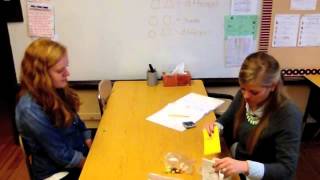
Sasha from TheAutismHelper.com shows how to run fluency stations for students with autism. Keep a data binder, timer, and high-powered reinforcers ready. Run 20-second timed trials where you stay silent, then quickly sort correct and incorrect cards while the student eats a reward.
Chapters
Hi, this is Sasha from TheAutismHelper.com, and this is a video tutorial of a fluency station. So I want to show kind of the basics on how to take data and run a fluency station in an effective way. So I have my student here ready to go. I have my data binder, a timer, my reinforcers, and my cards. So you're going to want to have everything ready to go before your student even gets to the table. That will ensure that you're not having any behavioral issues, the student's not getting up and running away while you're running to get your pencil. So I'm gonna get started. I'm only gonna do 20-second timings to show for today, but you can do 30 seconds, a minute, whatever works best for you and your student. So I have everything ready to go here, and I'm gonna show you how this is run. Alright, what would you like to work for, Skittles or marshmallows? Great. Alright, so we're gonna try to say everything as fast as we can and not stop till the timer goes off. Are you ready? First, we're gonna do our words. Say them as quickly as you can, and if you don't know, you can say, "I don't know." Ready? Go!
Ready. Who, brown, black, be, for, I don't know, there, must, are, I don't know, do, want, saw, white, well, went, will. Great job!
Here you go. So while your student is eating their reinforcer or engaging in whatever treat you offer them, count up your cards. So as you see, I sorted the stacks as she was working, so these are the incorrects and these are the corrects. So while she's eating her reinforcer, I quickly count the cards and then I jot down how many. For the incorrects, we're going to review these right away, so we give a little chance to have some error correction in there. Okay, Olivia, let's try this again. Which one is this? Saw. Saw, good. Can you show me where saw is? Great. Get. Get.
Cane.
Cane. Must.
Must.
Where's cane? Good. Where's get? Must. Alright, let's scroll through these again. Must, good. Cane, good.
"Soft." "Get." Awesome.
So you want to take the opportunity to go through the error correction immediately so it'll provide some feedback on the incorrect answers. So as you can see, during the fluency timing, there was no praise, no redirection given. The adult is silent during the fluency. Alright, we have 2 more to go. Now we're gonna be doing math facts. So the student will see the math fact and just say the answer. This might be something you initially need to teach because some students do want to say "4 5." This This is really going to slow down their fluency, and you want them to be going as fast as they can. And you also don't want them in the habit of having to say the answer each time. You want the answer to be immediate. Alright, are you ready to work? Yes. What would you like to work for? Skittles. Great. Alright, so we're going to say the answers to the math facts as fast as we can without stopping. Are you ready?
Great job! So again, take that opportunity while they're hitting the reinforcer to quickly go over the answers. Jot it down and review the incorrects. So 3 4 is 7. Good. What's this one?
1 4 is 5.
Okay, let's try it again. Alright, what's this one? 5.
7.
Great. For this example, I'm not doing a lot of error correction, but when we typically do it, I like to see them get the answer independent a few times in a row. So if a traditional error correction during fluency, I will do more than just those examples. I'm going to show a different way I also like to do instead of just the traditional flipping. That can even sometimes slow down our kids. I also like to do what I call "see, point, say." So we're gonna lay all the cards out, and this can really help increase some kids' fluency. So these are time to the hour, so they're all different clocks. So we're gonna lay them all out. This is just a little bit of a different method. Whatever works best for you and your students. Maybe if the adult has some trouble flipping, this is a nice alternative as well.
As well.
All right, are you ready? I'm going to point to the clock and I want you to say the time as fast as you can.
Uh, 9:45. 12. 12. 2.
8.
2. 7:30. 4. 12. 8. Great job!
1, 2, 3, 4, 5, 6, 7, 8. So you can quickly count down how many. I remove the incorrects as we go. This is just another alternative to running a fluency station that's a little bit different. So if for some reason the flipping is slowing you down, you or your student, this is a nice way to kind of switch it up. Okay, so that's kind of how I run my traditional fluency, but again, I like to use some high-powered reinforcers because the student is engaging in so many responses and not getting any feedback for 30 seconds or the minute. You do want to give either a token or whatever high-powered reinforcer that is for that student. Computer or iPad time might not be ideal because you don't want them to leave the table, but if it can be something short done at the table, that's ideal. And you really want to take the opportunity while the student is engaging in their reinforcer to take down your data. Because they'll be engaged, they're not going to be engaging in a problem behavior, and you have your chance to jot down the numbers. This is a really easy way to take data because you have that permanent product. You don't need to count while you're flipping the cards. You'll have 2 stacks right at the end, so you can easily count them and mark it down. At the end, you can figure out your per minute. If you're doing 30 seconds, just double it, and then you can compare per minute fluencies on all of your students. Again, this was a video tutorial of a fluency station from theautismhelper.com.