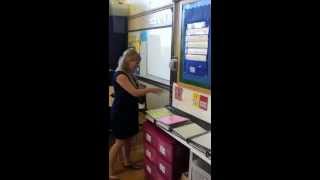
Sasha from theautismhelper.com walks through her autism classroom's schedule area, showing how to organize student schedules near the entry, use color-coded visual prompts, position finish bins for easy access, and set up behavior-data clipboards with Velcro pencils. She also covers weekly calendars, reinforcer lists for staff, and mailboxes that let students manage homework independently.
Chapters
Hi, I'm Sasha from theautismhelper.com, and I want to give you a video tour of my classroom. It's about 90% set up, so I'll kind of go through and show you all the areas, what I do with my students there, and what visuals we use and why they're important. So I thought this would be a good place to start. This is where our closet is, which is where our kids put our backpacks, and their schedules are right next to it. I think that's really important to think about when you're setting up your classroom, is that the schedules should be right near where they're either putting their coats, walking in for the day. Every school is a little bit different, but we have a coat room because super old building. So the kids typically put their coats down and backpacks, and then they have their schedules here. And I use binder schedules. I have actually 2 wall schedules, and then the rest of my kids are on binders. I like the binders because I think that it's more generalized. This is easy to take to inclusion. This looks a little bit more typical than the wall schedule. I know a lot of autism classrooms use the PECS wall schedule, so I have 2 of them for 2 of my kids, and I use the color coding to give kind of a little bit of an extra visual prompt. So the way these work is when the child walks in, they would pick this up, go match it to the location, come back, put it in finished, and then go to the next one. So say they're going to morning group, they'll pick it up, walk right over here, match it to morning group, and then they come sit here and do the work here. So it's a very structured way to show exactly what they're doing in their day when they walk in. So I have 2 students that are on the wall color-coded schedules, and I have 1 student that's on a binder color-coded schedule. So he has the exact same thing, but it's just in a binder. So again, this is a nice way to even take a student that still needs this many prompts but make it a little more typical and generalized looking. So the Finish Fin is right on the other side of the binder, and this works the same way. If you're planning on using binders for schedules, I recommend having enough space so they can all lay out like this. If you put them all on a shelf— I tried this and it went really badly— the kids are going to have to pull them out every time they want to use them and check them, and it's kind of a pain when you have a lot of kids going on. So that way they can just come over here, check their schedule, close it, and be done. So the types of schedules I have that are not PECS schedules, I have these visual picture schedules that they write on. So they'll take a pencil— typically there'll be a pencil here— check off what they do, go to the next station. And then again, this is— they know exactly what's expected of them in the day. They know what specials they have. Do they have gym or music? What order are their activities? This is so essential for kids with autism. The next kind of higher level one, which the rest of my kids use, is this weekly one. And this— I mean, I make things like this for myself, like what workouts I'm doing. This is such a typical thing that everyone does and easy to make, and this saves so many problems, makes their lives so much easier, and I can make these pretty much for the whole year, put 5 in for a month, put them all in for the year, and this is really easy to keep up. This is great for inclusion too. So just every day's on here, they check off what they do. Um, the next important thing about this station is I have all of my behavior clipboards for taking data up here. So for behaviors that we're taking very frequent data on, like every day, every other day, I want this to be in a really central location that anywhere we are in the room I can grab this binder and I can easily take down the data. My aides make fun of me, I Velcro pencils everywhere because you are not going to take data if you don't have a pencil or pen. While everything's getting so busy in the middle of the day, you want to make sure that you have everything ready to go when you have 10, 12 kids in a classroom. The other things I keep up over here, I got this dry erase contact paper and this is where I write down all the interventions that we're using and what things are changing. If we're changing a 2 2-minute interval to a 4-minute interval, I write it here. There's a lot of people in and out, a lot of aides, therapists, so that everyone knows exactly what kids' interventions are at that time. That's all here. A calendar, kind of special field trips. And then I also keep a laminated visual here. I haven't filled it in yet with common preferred items. That way we can write in exactly, you know, Alex likes beads, candy, donuts, whatever exact reinforcers he typically works for. That way everyone knows, a sub knows, the therapist knows that works with him. All the reinforcers are listed up here in a central location. Also here we have all of our mailboxes for when stuff to go home and my kids' homework packets. So they do this on their own. When they come in, they put their, they put their homework folder and they take a new homework packet, put their finished homework in here, and then they put it back in their mailbox. So we don't do anything with homework. We make the packets every month for work that's already mastered and they reset it on their own. So this totally takes all the work out of it for us and is a great way for them to be independent too. On our main board, I haven't made our schedules yet, but our schedules will go here, our monthly calendars here, and this is part of our AM routine that some of my higher kids do in the morning. And the rest of the board is in a different spot, so I'll kind of come back to that. But this is our, pretty much our central hub, keeping reading materials, puzzles, is all over