Science Leveled Daily Curriculum Video Preview Level 3
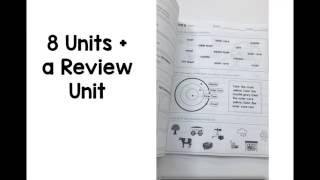
Sasha from The Autism Helper previews her Level 3 science curriculum with eight thematic units like States of Matter and Food Chains. Each unit includes 20 hands-on activities, rubrics, pre- and post-tests, and anchor charts. The program aligns across three levels so students work on the same concepts at different depths.
Chapters
Hi, this is Sasha from The Autism Helper, and I'm super excited to share an in-depth behind-the-scenes little tour of my science curriculum level 3. So if you've used my language arts or math curriculum, this is set up in a really similar manner. I got such great feedback on how easy it was to organize, and from using it myself when I was in the classroom, I loved having the whole year planned and ready to go before my kids even walked in the door. That was the most amazing and honestly life-changing feeling. 'Cause a lot of times I felt like I didn't know where I was going with my curricular structure. I was kind of pulling some of this, pulling some of that, but having this clear sequence was huge. And I knew that I eventually wanted to make science and social studies curriculum as well because science and social studies was something that I really struggled to fit in my day. Language arts and math becomes increasingly important. And with how busy our kids are and how complicated our schedules are, it can be hard to figure out how to fit science and social studies in. So this is going to be huge on having this as a secure part of your day, part of your week, part of your quarter, because it's all ready to go. So this is level 3, it's the highest level. And I'm gonna kind of go through the content that's involved as well as the structure. So unit 1, and again, a lot of these concepts are getting tricky and you might be put off like, "Oh my gosh, my kids cannot work on states of matter or photosynthesis, that's way too hard." But you'd be surprised. And I really, really always encourage everyone to challenge their students and this will be a challenge, but in a good way. The structure of these units really breaks down some of these more complex concepts in a way that is going to be understandable and doable for your kids. So don't let— if you're not a science person like me, don't let these kind of big words and scarier concepts scare you off. So Unit 1 is States of Matter, so looking at the definition of matter as well as the process from changing between states of matter. Unit 2 is Simple Machines. Unit 3 is the Plant Life Cycle and Photosynthesis. Unit 4 is food chain, predator and prey, and then herbivore, carnivore, and omnivore. Unit 5 looks at organs and systems in the body. Um, the systems are the skeletal system, the circulatory system, the muscular system, and the nervous system. Unit 6 looks at the Earth's layers as well as natural resources. Unit 7 looks at the water cycle, and Unit 8 looks at movement of the Earth. So if you've checked out the Level 1 and Level 2 videos, or you've looked at their curriculum map, you might notice that the concepts in the units really do align amongst the 3 levels. And I did that on purpose because in a multi-level class, it is nice when everyone's working on maybe the same concept or the same theme, but at their individual level. So Unit 1, or Level 1 in Unit 8, the concept was just identifying Sun, Moon, Earth, and Stars. Very, very basic solar system vocabulary. Level 2 was identifying the planets. So again, making it a little trickier but not too complex. Unit 8, we're looking at the movement of the Earth and how the Earth rotates and revolves and how that causes changes to our day. So within all levels, everyone at Unit 8 is looking at the solar system, but the, you know, the skill set of your kids will dictate how they're working on that. So I really like the idea of everyone in your class working on the same theme but at their level. So there's 8 levels included, 8 units included in this level, as well as a review unit. The review unit is going to pull a little bit of something something from all the other units, kind of tie it all together. So I just want to give you a peek. I went ahead and bound mine with a cover. The COVID is included if you want to do that. But give a little peek on everything that's included. Again, some of these concepts are harder, looking at photosynthesis, looking at omnivores and carnivores and things like that, but again, everything's broken down into really doable levels and, you know, kind of a structured way of looking at everything. So everything, as you can see by me flipping through the pages, all the pages are really different. Exact activities really aren't repeated until that 9th level, that 9th unit. So in each unit you're gonna have a grading rubric, a pretest and a posttest, an anchor chart which illustrates the concepts included in that unit, and then 20 activities. So here's an example of all the anchor charts. I love how people have used these for language arts and math in different ways, putting them on the smartboard, giving kids individual versions. Sending them home even so parents can kind of reinforce these concepts in the home setting. So again, some of these harder concepts like photosynthesis or movement of the earth or the water cycle, using visuals and using this concrete approach and having students learn to use these anchor charts are really going to make these hard concepts accessible to your kids. And people have asked me, you know, that, oh well, I think the anchor chart's making it too easy and things like that. We want our kids to be problem solvers. So if my kids are going to the anchor chart to find the answer and not coming to me, I am all about that. So that's what we should be using these anchor charts for, to teach that skill of problem solving. So the grading rubric's going to break down the pretest and the posttest and give you that numerical value for how they did. Again, there's a lot included in each, you know, in each unit, in each content area. So we can't say, you know, they mastered photosynthesis with 80% accuracy. That doesn't mean anything to me. But if we utilize this rubric to assess their, their pretest, we're going to be able to see exactly how they did. There's also a corresponding data sheet where you can put the pre and post-test date and score so you can see that growth. That's what we want to see. We want to see that after all this work that you and your student did throughout the unit, did their score improve? And if it didn't, or if they still had some errors, what are you going to do next? Because the point of taking data is to show us what we need to do. We want that data-driven instruction. We want to see that when we have errors, we're utilizing those errors to plan further instruction. So that's included right on this assessment. There's going to be suggested activities based on where your student answers are— students' errors are within this assessment, all included on this rubric. So that's really my favorite part of this whole thing. Here's an example of the pretest and posttest, and then those 20 activities. So you could set this up where a student's doing one activity a day and have this unit last one month. The 8 units will kind of last the whole school year. Or you can parse it out a little bit differently. Maybe every other day, if you get both science and social studies, maybe you have one section of your day that's science and social studies. So maybe you want to alternate days. There's a lot of options for how you can differentiate and set this up. So here's some different examples of some of the units, um, different ways of kind of breaking down these harder concepts like states of matter or simple machines, using a lot of visuals to illustrate, um, these concepts and a lot of multiple exemplars as well, because we don't want our students to memorize one food chain. We want them to be able to apply that knowledge to several types of activities. So here's some different examples of the types of activities included. So if you have absolutely any questions about science or any of the levels or even the social studies curriculum, please email me and let me know. I'd be happy to answer any questions or give you some more feedback based on the sound of your classroom before you purchase. Thanks for watching, and please go visit theautismhelper.com.










