Science Leveled Daily Curriculum Video Preview Level 2
A walkthrough of a ready-to-use Level 2 science curriculum with eight units covering topics like the five senses, motion, animal classification, and weather. Each unit includes 20 daily activities, anchor charts, pre- and post-tests, and grading rubrics designed for data-driven instruction in elementary classrooms.
Chapters
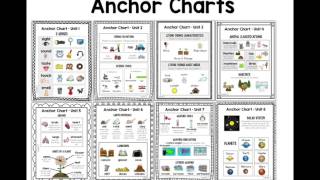
I'm super excited to share an in-depth behind-the-scenes tour of my Level 2 science curriculum. Spent a really long time working on this, and I'm really, really pleased with how it turns out. Science and social studies was something that I always struggled to fit in my classroom, so having this kind of preset, pre-structured curriculum is so invaluable because you'll be able to have it planned and ready to go before your kids even walk in the door in August, and it'll ensure that you actually work on these important content areas. So I'm going to kind of go through the structure of this unit, show some examples so you can see everything that's included. The curriculum map is really, really key to this unit because it'll kind of give you that overall sequence and plan of what you're working on. And there's a ton of different categories of science topics included in this unit, in this level, so this is going to really help you space out exactly what you're working on and when. So Unit 1 is 5 senses. Unit 2 is getting into kind of some basic physics, looking at motion and force, as well as some different science tools. Unit 3 is living things characteristics as well as living things basic needs. Unit 4 is getting into some more advanced animal topics, looking at animal classifications and habitats. Unit 5 is looking at basic organs unit as well as parts of the plant. Unit 6 is earth materials and landforms. Unit 7 is weather tools, weather forecasting, and extreme weathers. And Unit 8 is solar system. So if you've looked at my Level 1 curriculum map, I really like how this mirrors a lot of the same topics. But it takes it one level farther. So if you teach that multi-level class, kids are going to be working on similar concepts but at their level. So Unit 5 in Level 1 is going to be maybe more body parts or just initial, like, what is a plant, versus in Level 2 you're looking at the parts of a plant. Unit 8 in Level 1 is just looking at moon and star and sun as those basic solar system terms, and in Level 2 we're really getting into identifying and discriminating between the planets. So it's going to take it that one step farther. So there's 8 different levels included in this unit, as well as a review unit. I went ahead and bound mine here. This cover page is included in the unit as well. Um, but just to give you an idea of what the pages look like, um, for this type of learner that's at level 2, obviously they're doing some writing, they're doing drawing and matching and circling and a little introducing some true and false here. But this unit, the activities really change every day. But are all along those same concepts that we talked about. So there's 8 units included as well as that 9th review unit. I love, love that 9th review unit for summer school or homework, things like that. Actually, I've had some people that are using the 9th unit from the previous level as homework for a student, which is a really great idea. So each unit can, can include that grading rubric, which I'll talk more about in a minute, pre-test, post-test, an anchor chart, and 20 activities. The anchor charts all show and illustrate exactly the major concept of this unit. In the 5 senses, we're giving that visual representation of not only what those 5 senses— which body part we use for those 5 senses, but how we can apply those to common situations in our lives. Unit 2 looks at things in motion as well as science tools. We're gonna sort science tools into ones we observe and ones we measure, as well as naming those science tools. Unit 3 looks at living thing characteristics and basic needs. Unit 4 gets into kind of some more advanced animal classification. This one is a little tricky, but I really love this unit. You know, discriminating between mammals and reptiles and amphibians and fish and birds. Some of your learners might be great at the fish and birds, but it gets tricky when we look at reptiles versus amphibians. So that will be discussed in that unit. Unit 5 looks at 4 major organs: the brain, the heart, the lungs, and the stomach. And then 5 components to the parts of a plant: the seed, stem, flower, leaf and roots. Unit 6 looks at 4 types of earth materials: soil, rock, sand, and clay, as well as 6 landforms. And these are not the same landforms as in Unit Level 1. These are a little bit more advanced and trickier landforms. Unit 7 looks at 4 weather tools: the windsock, thermometer, rain gauge, and barometer. So looking not only at the definition and identification of those tools, but as well as how we're using them. So really generalizing that. And then getting into that weather forecasting. So what's a meteorologist? What does forecasting mean? And then again applying how we use use those forecasting tools. There'll be some comprehension activities included in that unit. And then 4 types of extreme weather: tornado, hurricane, flood, and earthquake. Unit 8 looks at introducing the solar system in a little more of an advanced way, the 8 planets, as well as kind of a general description of the solar system. So again, this is a really wide range of content included in this, in this curriculum. You know, we're going from 5 senses to animal habitats to solar system to landforms. We're getting so much great content in. And if you go through this whole unit, this whole level in one year, your student is going to learn so much. There's just a ton included. So the rubric is included in each unit. The rubric you're going to do twice, once for the pretest, once for the posttest. I like to photocopy this double-sided. So you get a score based on the students responding, and there's also a corresponding data sheet where you can track the pretest date, the pretest score, the posttest date, and the posttest score. So you're gonna see that growth. You're gonna be giving the pretest before you do any instruction and that posttest at the end of the unit. So again, you're gonna be really seeing how hard your student is working and how that translates to their numbers. After you do that posttest, this is where we incorporate that data-driven instruction. You're gonna analyze and look at what errors your students are still having, and at this bottom section here, it's going to show you and suggest activities on what to do based on their errors. So we're not just adding supplementary activities or adding additional activities just because. We're doing it because the data has shown that the student is still struggling on those concepts. Here's an example of a pre-test and post-test going to cover kind of the depth of everything included in that unit and the 20 activities that are included. So potentially you could do 1 activity a day and that this unit would then last about a month, or you can stretch it out, especially since science and social studies might not be something you get to every day. Maybe you want to do 2 pages every other day or something like that, but there's a lot of options of how you can organize this. So I'm going to go through a few different kind of close-up examples showing some of the different activities, some of my favorite ones. I love this one to determine if it's living or not, kind of going through this little checklist for different items, identifying activities as push or pull, looking at weather forecasting and how that applies to kind of what we're doing and where weather is in the country. I think our kids see these weather forecasting images a lot, but don't necessarily understand what they mean. Looking at extreme weather conditions, some basic comprehension questions related to weather. Identifying parts of the plant, the different levels of dirt, sand, and clay, looking at that anchor chart to find the correct type of earth material. Introducing some true and falses. Those animal classifications are real tricky, I really like those. And getting into kind of some of the fill-ins. So really applying some of our literacy knowledge here and filling in some of those appropriate words. Answering questions about the weather forecast. If you are in a country that uses Celsius, we do have a Celsius version of this as well. And looking at the different planets. So really looking at answering questions, finding the right planets, following directions related to the planets. Some of the 5 senses activities are some of my favorite as well because it's a really great way to apply that knowledge to kind of everyday life. Looking at fuel-powered objects versus people-powered objects, things you can taste, Finding the right habitat for each animal. So a ton included in this resource. If you have any questions, please contact me. I'd be happy to answer any questions you have before purchasing this. Um, and thanks for watching.










