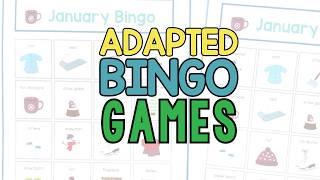
Jen, a K-12 autism teacher, shows how The Autism Helper's Bingo packs work for indoor learning. Students practice turn-taking, attention, and matching skills across two difficulty levels. The games fit into 20-minute slots and many students eventually play independently.
Chapters
When I was in the classroom, the winter months were the longest, and it's because we couldn't get outside, we couldn't get our energy out. And I always was looking for time fillers for those little pieces of time in between subjects to where, you know, we could maybe go take a walk outside quickly before we shifted gears, but we couldn't because we were stuck inside because of the weather. I want to share with you one of my favorite products from The Autism Helper. These bingos. Now you might be thinking, Jen, my kids can't read, they can't do bingo. My kids don't sit well, they can't do bingo. I'm telling you, I used this in my K-12 self-contained autism classroom and almost all of my kids were successful. And by the end of the school year, when we would play these things and play these games, my students were able to do it almost fully independently. We have so many different types. We have opposite, we have monthly bingo. I'm going to open up this January Bingo so you can see what is included. So you get different boards, of course, you know, that's how bingo works. I love these little Ziploc bags for holding everything, just keeps everything so well organized. So you can see it's a traditional bingo board. So if your students can match picture to picture, they can play bingo, right? So what are we learning here? We're learning taking turns, we're learning waiting, We are learning group attention. We are learning sustained attention because we're looking at a board or we're looking at cards. We are learning how to work in a group. There are so many skills that games teach. It's so important to play games in your classroom. There are two different levels. So you could very easily determine levels within your classroom. These are going to be much more difficult. Than level 1. So for our beginner bingo player, let's just do basic matching. Let's do level 1. So here you're going to see scarf, it's going to show the picture. So can your student match picture to picture? And they could even start practicing word to word if we wanted to, right? So very, very simple bingo. Level 2 is where real practice of, um, thinking really begins. Look at this, you can use this to move snow around. You can cover up that picture or you could show the picture. Now students are making associations. This is so cool. This is just one of those games that will grow with your students too. I love when products grow with my students. You know, in kindergarten we might just be doing picture matching. In first grade we might be doing word matching, and then maybe even in second grade when I have them, We can move up to level 2, and we could be working on the association or identifying, you know, based upon the clue. How cool is that? That this one single game gets to grow with your students, especially if you loop with your students. Like I said, we've got monthly packs, and we have theme packs as well. These are one of those products that you're going to be happy that you have prepped and in the back of the cabinet. If you need a quick, "Oh my gosh, we need to fill 20 minutes," this is what you're going to want to pick up this winter.