Social Studies Leveled Daily Curriculum Level 3
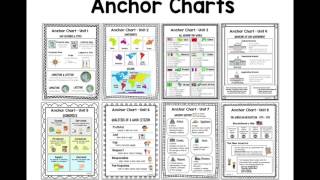
Sasha walks through a Level 3 social studies curriculum for students needing adapted instruction. Eight units cover maps, continents, world countries, government, economics, citizenship, and American history. Each unit has twenty activities, pre- and post-tests, and rubrics to track where individual students struggle.
Chapters
Hi, this is Sasha from theautismhelper.com, and I'm super excited to share an in-depth tour of my Level 3 social studies curriculum. Been working on this curriculum for a really long time, and I'm so excited to finally share this finished product. I'm so happy with how it turned out. There's such a broad range of concepts included in these curriculums that I'm just really thrilled that our kids will be able to learn about so many different concepts, still at their level. So if you've checked out the Level 1 or Level 2 videos, this will follow the same structure, just the content will be a little bit more advanced. And if you have students that you think are at this level but you're a little nervous about how difficult some of the concepts teach, I encourage you to try it. Similar to Science Level 3, I was a little intimidated at some of the concepts as well, but I really think we should be challenging our kids and giving them the opportunity to work on these harder concepts. And these more complex content areas I've really sparced out into doable piece-by-piece kind of process so our kids will be able to access these harder concepts. So here's the curriculum map, which is going to show how we go through all of these different concepts in this curriculum and still include everything, but we're doing it in a kind of processed way. We're not jumping around. We're going to really focus on one area at a time before we kind of advance on. So Unit 1 looks at physical and political maps, map features, and lines of longitude and latitude. Unit 2 looks at continents and oceans. Unit 3 is an in-depth exploration of 8 countries from around the world. Unit 4 looks at the 3 branches of government. Unit 5 looks at goods and services, producer and consumer, supply and demand. So getting, getting into these basic economic concepts. Unit 6 looks at the qualities of a good citizen. Unit 7 looks at ancient America, and Unit 8 looks at the American Revolution. If you are from a country that is not the US and you are still interested in using this curriculum, I'm in the process of creating an international version that will eliminate the American Revolution unit and the branches of government unit and replace it with other content. So be on the lookout for that. So this unit is— I went ahead and bound mine and it covered, but I want to give a little peek at everything that's included. The level of work. There's a little bit more writing in this unit, in this level, more reading, more comprehension. But that's kind of the— what our students at this level, I think, are really ready for. So there's 8 units. Each unit includes a grading rubric, a pretest and a posttest, an anchor chart to really illustrate the concepts learned in this unit, and then 20 activities. So here's the anchor charts. I love how these turned out, especially in this level, because a lot of these concepts are harder. And these might not even be things that you know. But we want to teach our kids to use these anchor charts to become problem solvers. And if they don't know the answer, they're gonna know where to go find it. You also might notice that if you've checked out Level 1 and 2 that a lot of these concepts are similar throughout the units. Like, so, yep, Unit 1 in Level 1 and 2 is also about the map, but it's getting harder and harder as you progress through the levels. So in Level 1, it was just basic map vocabulary, looking at the difference between a compass and a globe. In level 2, it was looking at compass directions and reading a map. Now in level 3, we're looking at a physical map and a political map and lines of longitude and latitude. So I love this idea that when you teach a multi-level class, all students are working on the same theme but at their level. Everyone in unit 1 is working on map feature— on a map in some way, but it's kind of at their level. So I really tried hard to align these units amongst the levels So all of your kids will be working on the same concept. So Level 1, like I said, or Unit 1 is map features. Unit 2 is identifying the continents and the oceans. Unit 3 is looking at 8 different countries, their capital, their climate, their continent, their language, their currency. So a lot of referencing will be needed for this anchor chart. Unit 4 is branches of government. Unit 5 is basic economics. Unit 6 is 6 qualities of a good citizen. Unit 7 is 6 major groups in ancient history. Unit 8 is the American Revolution. Here's an example of the grading rubric. This is really my favorite part of all of these curricular components because it gives us a way to track progress. It also gives us a way to have data-driven instruction. We're going to be utilizing the results of these assessments on this rubric to plan further instruction. Not every student is going to 100% master these concepts after going through one unit. They might still need additional practice. But you want to make sure that additional practice is focused just on the concepts they're struggling with. We want to be really efficient with our instruction. So these rubrics are going to help you do that and really set up your data-driven instruction in a way that's easy to follow for all of the different learners in your class. Here's an example of what one of the pre and post tests looks like, and then the 20 activities. So each unit has 20 activities. You could do one activity a day and have each unit last an entire month and then have the curriculum last one whole year. Or you could do it however you want, have a few pages a day or every other day depending how often you can fit social studies into your kind of daily schedule. Social studies is something that I used to really struggle with fitting into my daily schedule because I was very focused on fitting in all those math and language arts goals. So having this set and ready to go would really ensure that you're still getting all of that great and important and functional social studies concepts to your students as well. So here's what some of the pages look like, um, on all of the different concepts that we have, looking at different countries, different flags, parts of the government, goods and services. A lot of these have a really great functional twist, which I was really excited about, especially for this Level 3 curriculum set. When we look at the qualities of a good citizen, looking at different scenarios, kind of contrived scenarios, but also scenarios in their own life as well. Important landmarks from different ancient people, and concepts related to the American Revolution. So we're really getting into some higher-level concepts, but I think a lot of our kids would really surprise us with how well they'll do with some of these more complex areas. So if you have any questions or want any more feedback on this Level 3 or any of the levels of social studies to kind of see if it'd be a good fit for your class, I'd be happy to answer any questions and give you some more input on what it looks like. And please come visit theautismhelper.com.










