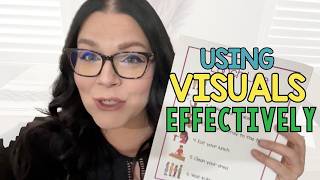
In this instructional video, experienced special education teacher Michelle (joined by two co‑speakers) explains how visual systems transform the daily functioning of an autism classroom. She shares personal insight from recovering after knee surgery, showing that well‑designed visuals—schedules, First‑Then boards, token systems, and boundary cues—allow the classroom to run smoothly even when the teacher is absent, with remote Zoom check‑ins confirming consistency. The speakers describe how visuals serve as concrete communication tools that provide structure, predictability, independence, and reduced anxiety for students, while also giving paraprofessionals clear prompts and expectations. Practical guidance is offered: start with a single visual element (e.g., daily schedule), ensure everyone uses it consistently, then layer additional visuals across routines, centers, and transitions. Consistency is emphasized as the key to success, leading to calmer days, fewer problem behaviors, and greater student independence.
Chapters
Have you ever noticed how much smoother your classroom runs when everything is visual?
When students can see what's next, what's expected, and what success looks like, everything changes.
Hi friends, I'm Michelle. I've been teaching autistic students for almost 20 years, first as a paraprofessional and now as a classroom teacher.
Right now I'm actually recovering from knee surgery, so I've had to be away from my students for a little while. And as hard as that's been, it's also reminded me why visual systems matter so much and how they keep my classroom thriving even when I'm not there in person.
In my classroom, visuals are everywhere: schedules, First Then Boards, token systems, classroom boundaries. But here's the thing: these are not just decorations, they're actual communication tools. Visuals give my students structure, predictability, and independence. They reduce anxiety and make transitions feel safe. They let students understand what's happening without needing constant verbal directions. And honestly, while I've been home healing, those same visuals are what's keeping my classroom running smoothly.
My students still know what to do, when to do it, and where to go. All because the visuals do the talking for me. When I check in over Zoom and see my students following their visual schedules or using their token boards and transitioning between centers, I can see that consistency works. The systems we build with visuals don't just support our students, they support our staff too.
My paraprofessionals always know what comes next, how to prompt, and what the expectations look like in each area.
That shared understanding helps keep the classroom calm, consistent, and predictable no matter who's leading. If you're thinking about strengthening your visual systems, start small. Pick one area, maybe your daily schedule, your classroom rules, or your reinforcement system, and make it visual. Once your students and staff get used to it, then you can add more. You can start layering your visuals across centers, routines, and transitions. And you'll start to notice smoother days, fewer behaviors, and so much more independence. And maybe you've tried visuals and they haven't worked yet.
The biggest secret to success is consistency.
A visual only works when everyone uses it the same way every single day. So while I'm still home recovering, it makes me so proud to know that my students are learning, growing, and thriving because the systems we built together are doing their job. If you'd like to learn more about creating visuals that really work, check out Sasha's video, "How to Set Up Your Visuals in Your Classroom." It's filled with practical ideas and examples you can start using right away.