Gina from The Autism Helper shares three no-cost activities for virtual sessions: a sensory bin with shredded wrapping paper for fine motor skills, a penguin craft with paper and markers for stamina, and tracing household objects to practice object identification and functional language.
Chapters
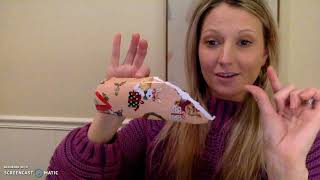
Hi everyone, this is Gina from The Autism Helper. I wanted to show you 3 quick, easy ideas for therapy or virtual sessions that you can implement probably today because most likely you have these items in your home. I'm always trying to think of things that parents have in their home already that they don't have to go out and buy in order to do some fun activities with language, coordination, work stamina, task completion, following directions, all the good stuff. So I have 3 ideas. My first one is to make a sensory bin with leftover Christmas paper. So what you'll need for this activity is a box, a basket, Food Lion grocery store bag, whatever you have that can hold some material. And then of course some old wrapping paper scraps. I saved these because I knew I would find something to do with them. And what you want to do is you want to show your child how to rip them. Okay? Fun! Following directions, ripping paper. You can rip them into big pieces, little pieces, work on that core language. Rip them up, that fine motor skill. Put them in your basket, so on. Have tons of fun ripping them up. Kids will love this activity. I've done this once already. Super fun. You have to prepare the adults beforehand, obviously. Mix it up. Maybe you can give them choices. Which one do you want? Do you want silver or red, avocado or reindeer, just like you normally would. Some choices. Rip, rip, rip. Put it in the basket. You can have your core language board and work on those core language words. Put it in the basket. You can really extend this any way you want. As big as you want, as little as you want, whichever. And then I suggest that you fill it with, I love using puzzles for different types of activities. So maybe if you're working on animal identification or just identification in general, putting the pieces in the basket and then allowing your client or your child to pull out a piece, identify it. Maybe they match it back onto the board. Maybe they just identify it. Maybe you practice animal sounds or vehicle sounds or whatever objects you have in here. Maybe you put in some more functional things such as like a cup. Or a fork or whatever they're working on. That's my first idea. The next idea is a little simple penguin activity. Usually in January I work on snow and winter type animals. So what you need is a couple pieces of maybe white paper, whatever you have. If you have some black, you can use that. Blue for a background if you want. You can do this different ways. You can take a marker or I have these Kwik Stix that are like paint. And what you can do is you can take your blue paper and just do like a little rough outline of a penguin, right? And you can either have them color it in themselves or you can have them take the black piece of paper and again rip off little sections and practice gluing them down. In school we do these little activities all the time. "Keep going." And you can do the same thing with— you can make a little orange nose. It doesn't have to be perfect. Maybe some arms. And they can fill it in depending on how their stamina is with work tasks. Sometimes we get into these projects and we think, "Oh, they're gonna sit the whole time," and then they don't. And then of course if you have your Quick Sticks, you can take them and just say, "Sit." circle, or dab, or on the paper. Maybe they're just learning how to just make marks. Make marks at this point. Or you can take your white piece of paper, strip off some pieces, and then glue them on. So that's a little activity you can do with a penguin. You can make a snowman, whatever you want. The last activity I have for you, just take an ordinary sheet of paper. And again, you can prep your clients, your families ahead of time for this one. You can target it based on what your client or child is working on, your student. And again, you're just gonna have that sheet of paper and you can trace objects on the paper. You can even involve the student or child in this. Okay. And then maybe you have a bone, or maybe you have some household items. Maybe the student is working on identifying cup or fork or spoon, and you trace those. Maybe you have a little notebook. So whatever you have in the house, obviously it only takes some objects that you already have, a pen and paper, and then you're going to have those available to the child, and you can show them, "Batshorse." Match bone. Match book. And then maybe you can say something like, touch horse, touch bone, touch book. Which one's purple? If you're advanced. So tons of different ways you can differentiate this, extend it, language, make it functional with what your child is learning, but just have fun with it ultimately. I hope that was helpful for you guys and it gives you some more ideas for some virtual learning and some coaching with your family. Families.