Sasha from TheAutismHelper.com previews ten printable visual tools for behavior management in autism classrooms: sensory choice boards, problem-solving cards, anger check-in systems, teacher-availability flip cards, escape-behavior strategies, anger scripts, reflection sheets, volume scales, and behavior mashup cards. Each tool includes setup instructions and real-photo examples.
Chapters
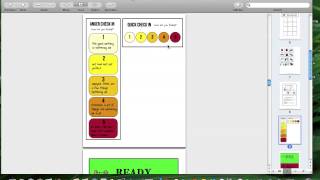
Hi, this is Sasha from TheAutismHelper.com, and this is a product preview of my Ultimate Behavior Set 2. So if you have my Set 1, or if you're un— or if you're familiar with my behavior management visuals, this package has 10 different behavior management interventions that can be used with a wide range of types of students in both special ed and gen ed settings. I've gotten such great feedback from the first set, and I've devised a bunch of new, um, interventions that can be used with a range of different behaviors. So I'll scroll you through the different things that are included in this packet and how you can use it exactly. So I wanted to make the setup and printing really easy of this because you might not need to use every piece at every point. So this is the way I organized my, my most recent data set series as well. So here's the table of contents. Each table for the table of contents, it'll show you the resource, the page, how to set it up, and how to utilize it. So you can see all of them are— it's very explicitly described how to set it up, how to use it. So there'll be really no questions on how to use all these things. Some real photos are included too. So Very detailed instructions are included to give you a lot of ideas on how to utilize these tools appropriately. So the first thing included is a sensory choice board. So these items will all be included to give students different sensory options. This can be really, really important for kids that have high sensory needs. You can use sensory breaks as a reinforcer or give them a way to engage in a communicative approach instead of a disruptive approach to get that sensory input. So this is a really effective intervention. Next are two different problem-solving cards, one with visuals and one without. This is great to post in a student binder or have in a on their desk in a nearby place to remind them how they can solve their problems on their own. Um, next is an anger check-in. So there's kind of two versions of this. Um, the first one has the words to kind of qualify each of the numbers. So when you're at a 4, what does that look like? When you're at a 2, what is that like? And then there's a mini check-in. So I use this with my students as once we've kind of learned this 1 through 5 system, I can put this quick check-in in their binders, on their desk. I actually put it on my necklace of visual behavior Visual Behavior Necklace, and I can really quick in the middle of the day or in the middle of the hallway, I can assess and have my students self-assess where their anger's at. So I'm constantly knowing where they are and they're constantly identifying where their anger's at as well. So this is a really, really effective one that I utilize all the time. Next up is a— for your teacher— for teachers, if they're ready to talk or busy right now. I'm sure we all have the problem of students interrupting our groups, coming to talk to us, and It's really hard for kids with autism and other special needs to pick up on those subtle social cues to know when they can talk to their teacher. So, you know, when their teacher is running a small group, you can't come talk to her, but when she's walking around the room, now is a good time. So I laminate these double-sided and you can flip them to show when's a good time for you— the students to approach you. The next intervention is for escape behaviors, so behaviors that students use to get out of work. Here's a great visual that clearly identifies a really successful strategy for this. The next 2 pages are anger scripts. So what the rules about being angry are, what you cannot do, and then here's what you should do. So kids with high-functioning autism or Asperger's often struggle what to do with their anger. What are some options I have? And explicitly writing it out can be really helpful. Next is for kids that are a little bit lower functioning, having visuals for the options. So, I feel angry, need a break, post these here, and they can request a specific type of break when they're feeling upset. Again, really powerful for kids with low language. Next are two different Reflect and Learn, so giving the opportunity to look back on inappropriate behaviors and learn from them. So, "What should I have done instead?" and having students even identify the antecedent consequences in their own behavior. This is one of my favorites. We use this all the time. This is a volume scale that shows different levels of volume with a visual and where you use those types of volume. Having the visuals really helps, and giving them a number also helps because we can be identifying all the time in classroom, okay, right now we're at a 2, and then we have to go back later. If we're at— if we're walking the hall, I should be saying, oh, everyone should be at a 2. We all know what that means. And the last up, I posted this about my blog and I got a ton of requests to post a product on this. So I really call this the behavior mashup because it really has everything. It's a little bit social story, it's a little bit behavior cues, and it's a little bit positive reinforcement incentive opportunity. So it's— there's a lot going on. Here's a— there's a photo in the top of how to set this up, but this is a great one. I've used this with some of my most challenging kids. It clearly identifies how their behavior is with one of the visual cards and what they're working for in the rules. So it combines a lot of different interventions in a really successful way. So again, there's 10 different interventions, and they're written out with even more detail than I shared here on how to properly implement this and set it up. With some real pictures. So again, this was a product preview of Ultimate Behavior Management Pack for Children with Autism Set 2.