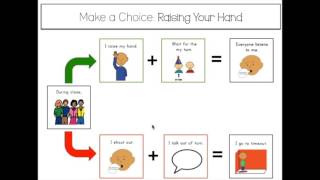
Learn to create behavior contingency maps that redirect what students want (attention, breaks) away from problem behaviors toward appropriate ones. Two examples: replace shouting out with hand-raising to get listened to, or replace work avoidance with task completion to earn break time. When students see the reward only comes through the right choice, they switch behaviors.
Chapters
When creating behavior contingency maps, it's important to consider what consequences you're selecting for both the positive and the negative behavior. So let's take this example of raising your hand vs. shouting out. This is a common problem in classrooms everywhere. So the antecedent, or the trigger, is just gonna be really anytime there's class. So during class, The negative decision that the student often might make is shouting out, talking out of turn. So let's consider what the consequence of that response is. The consequence of that response is everyone listens to me, right? You shout out, you talk, you have everyone's attention. That whole class is looking at you. So let's really look at the appropriate response. What do we want the student to do? We want the student to raise his hand. And to wait for his turn. So now when we're considering selecting a response here, we want to ensure that we're using this same consequence as the negative behavior for the positive behavior. So when he shouts out and everyone listens, we're gonna move this up here. When you raise your hand and wait for your turn, then everyone listens. So when you're looking at this contingency map with the child, they're like, "Ooh, whoa, this is what I want." I want everyone to listen to me, so I need to go this route. So now the appropriate response of raising your hand and waiting your turn will result in the desired consequence of everyone listening to me. The student will no longer get attention from shouting out. Attention will only be received when they raise their hand and wait their turn. So now what goes as the consequence for shouting out? So we want to think of something that is the opposite. Of this positive reinforcement they're getting. So, what is going to have an aversive effect on shouting out and talking out of turn? So, if you are looking for attention, what's a way that's going to remove attention? That's going to be timeout. In timeout, you don't get attention. You're by yourself. There's no chance of everyone listening to you. So, now when you shout out and talk out of turn, you go to timeout. But if you want everyone to listen to you, like how this behavior was responding— was resulting in before, you need to raise your hand and wait for your turn. So by selecting consequences based on the function of the original inappropriate behavior, you're gonna have a really successful contingency map. When you work with your student on this, they're going to immediately want to respond with these green choices, the raising your hand and waiting for your turn, because they want this consequence. And they don't want timeout because in timeout there's no chance of attention like they were receiving before. Let's look at another example for a behavior that's being done to get out of work. A lot of us have students or children that will do anything to get out of having to do a little bit of work. So the trigger, the antecedent here, is going to be the assignment. So for this one, I just kept it general: I have work to do. For some students, they might specifically dislike math work or certain work boxes, so you would put that in the trigger. So the inappropriate response is crying, yelling, and swearing as kind of how they're functioning to get out of work here. And the consequence of this in the old contingency would be, "I cry, I yell and swear, and I get break time," right? When a kid gets really upset, maybe they're— the teachers or the teacher aides are like, "Okay, take a break." So this is really functioning for the student. This is successful. When they cry and yell, they get a break. So now we're going to create a new contingency for the appropriate behaviors. So when you do your work and you hand your work in, then you get break time. So the only way you're getting that desired response, that desired consequence of break time, is through doing your work and handing your work in. So now we need to select a new consequence for the inappropriate responses of crying and swearing. Since they're looking to get out of, out of work, we want to make sure that they're getting their work done. These inappropriate responses will not result in a break. So the new consequence for the inappropriate behaviors is still needing to do your work. So whether you cry or yell, the consequence is that you're still engaging in that work task. It's not going to result in this desired consequence of break time. So now when the student looks at the new contingency, they're gonna immediately gravitate towards these green appropriate responses of doing your work, handing your work in, because they want it to result in this positive consequence of getting break time. That's what they were originally trying to get at, so we wanna make sure that they still are able to get that same result. The inappropriate responses of crying and yelling are gonna result in still needing to get that work done, which is not a desired consequence for the student.