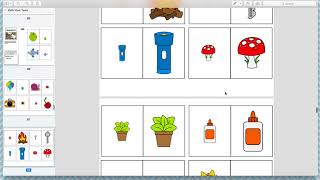
Sasha from theautismhelper.com walks through the Math Work Task Mega Pack, 25 hands-on math activities for autistic children. The tasks cover odd/even sorting, patterns, coin making change, clock reading, elapsed time, and more, each with clear photos and material lists. They're designed for fine-motor practice and real-world skills, not just busy-work.
Chapters
Hi, this is Sasha from theautismhelper.com, and this is a product preview of my Math Work Task Mega Pack. So I really loved hearing everyone's great feedback on the Communication Work Task Mega Pack, and I know a lot of people have the original version of this product and the advanced one, so I decided to make a 4th set that was focused on math skills. There are so many important math skills to work on, and this is such a great area for our kids to have extra practice. Because a lot of these skills can be really tricky and we want to give the opportunity to generalize. And it's important to think about, you know, focusing our independent work tasks on an academic area, so language arts and math and, you know, communication, so we can really make sure that it's not just busy work, but it's work that our students do need extra practice on and that will keep them thinking and keep them engaged, not just something they can fly through but they really have to focus on. So that was really the goal behind this set. There's 25 tasks included. If you have my other work task mega packs, it's set up in the same way. There's a photo of the finished task so you know exactly what, um, it looks like. There's a task description, details on how to set up, and materials needed. So it's very user-friendly as far as setup. So I'm going to scroll through the tasks really quick so you can see everything that's included. I am so excited with how these turned out. First one is sorting odd and even numbers. The next one is Easy Patterns with Connecting Blocks. So students will be matching the pattern to a connecting block pattern. This is a hard pattern, so looking at irregular patterns, not just A, B, A, B. So this might be A, B, B, B, A, C, B, things like that, and filling in with the appropriate items. Next is More and Less. So using either paper clip or clothespin, which I love having that fine motor component, which one has more and which one has less, and the cards are different, so you have to attend to the text. Sorting items by shape, so using some small Tupperwares to put the labels on and sorting the items by shape. Missing number on clothespins— I love this one. Again, putting that fine motor twist on it. And the missing number skill is a kind of tricky one that sometimes I think we forget about teaching, so that's a great one. Missing numbers with skip counting, so kind of taking that to the next level, so counting by 5s, 10s, 2s, 3s, um, I think 25s in here. So filling in the missing number with a dry erase marker. This one is matching quantity to the number, and the great part about this is a lot of our kids with file folder tasks or matching tasks like this memorize the order. So this one is really freestanding, so you're going to have all of these pieces and it's going to be like little mini puzzles and you're going to match them together on these storage cards. So students will find the 10 eggs Find the number 10, match them both here. So you can't just memorize the order of the numbers or the food or something like that. Um, this one's counting 10 through 20, again with the paper clip or clothespins. So counting up how many and putting the correct answer there. Again, this one's time-consuming. This one takes me a little bit because of the high quantity of numbers. So when we're looking at work endurance and building our kids' skill levels on how long they can work, this one is great. Sorting coins by the type of coin, and there are fronts and backs and clean and dirty and different variations of each coin included to work on generalization. This is one of my favorites. It's matching 3 sets of coins to the same amount, so it's going to be 3 different ways to make the same amount. Because again, we don't want our kids to memorize anything, we want them to generalize this skill, and there's a lot of different ways to make 22 cents or 43 cents or 71 cents. You have to find all 3 pieces and match them onto the circle. This is what the finished task looks like to see the finished product, to kind of complete that puzzle. More or Less Than with Coins, again a different spin on more and less. Finding the coin group that is larger and smaller and Velcroing the more or less sign. I also really love this Next Dollar Up. You'll use this with dry erase markers. There's the photo. Circle how many dollars you need to hand to the cashier for that amount, so rounding up to the next dollar. $1. Next is Equal Size Groups. Keep saying this, I really like this one too. This is a great prerequisite for multiplication, is separating items into equal size groups. So with this activity, you're going to want to laminate this and then put some strips or just extra dots of Velcro in each circle. Make sure that you're not just putting the right amount of dots in each one. So for the dogs, there's 2 that end up going in each group. Don't just put 2 dots of Velcro because then students are just responding to the dots of Velcro. We want them to learn to separate this group of dogs into equal-sized groups on their own. They're also having to follow that text clue. Greater than or less than with dry erase marker, again one that you're gonna have to really pay attention to. Picking big and little with clothespins, you're gonna write big and little or small and large on the clothespins and matching to each one. Using a number line, this one turns out really great. Can't see the photo too well here, but you're gonna store all of the pieces on the bottom and then list and then put strips of Velcro under under each number and then fill it in. So 4, 3, 2, 1. So this is great to kind of really learn sequencing in the process of utilizing a number line. Um, next is Sequencing Events, so putting items in order related to first, second, third, and fourth. So some puzzles here. Um, this one is awesome too, Sorting Clocks by Time. So time to the hour, half hour, 15 minutes, and 45 minutes. For your kids that are struggling with this This is a really great way to kind of develop this category in your head. You know, all of the clocks where the hand is pointing to the 3 are the 15-minute. All where the hand are pointing to the 12 are the 1-hour. Um, this elapsed time one is really tricky. There's 2 different versions. There's a text clue and a start time and end time, and students will fill in the elapsed time with how many hours and minutes have passed from each starting time to the end time. Great functional skill. Reading the thermometer, matching the thermometer, um, to the correct temperature. And if you are a Celsius user, I can email you a Celsius version of this as well. Sorting things that are hot versus things that are cold. I love, love this one, Lace Up Skip Counting. So you'll laminate this, put holes in each spot, and put some yarn, and then sort, and then tie the yarn based on the skip counting. So for 5s, you go 5, 10, 15, go across. So some great fine motor skills while still working on an important math skill. Matching the number to the number word with paper clips or clothespins, and sequencing number words. We often work on sequencing with numerals, with numerals, but looking at sequencing with those words as well, and not just always starting at 1, sometimes starting at 11 or starting at 8 or 15. And then there's that color cue for filling in the numbers. So the best part of these work task mega packs is the table of contents in the end, which has the page number and the supplies needed. This makes it super easy to set up because you can print this, head to the dollar store, head to Target, make sure you have all these little things, highlight which tasks you want to make and which ones you maybe don't need right now, and it makes the whole process of setup really easy. The biggest obstacle to setting up an independent work system can be, you know, the feeling of overwhelmingness of making all these tasks, but having these really helps it, you know, be streamlined and be easy for you. And going through these math tasks, I mean, as I'm talking about them right now, so many of these are so, so, so functional. So not only are you getting some great math-based skills, but you're really doing some great life skills instruction when working on these as well. So this was a product preview of my Math Work Tasks Mega Pack by theautismhelper.com.










