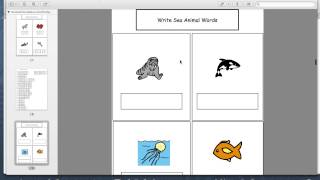
In this promotional video, Olivia from TheAutismHelper.com walks viewers through the Animal Vocabulary Unit, a structured language‑learning package designed for students on the autism spectrum. The unit follows the same format as the company's other vocabulary sets and is organized into six animal categories—farm, sea, wild, pets, bugs, and pet supplies. For each category the video details a consistent set of materials: a data sheet (with visual sidebars, options for receptive or expressive scoring, student name, date, and trial tallies), matching worksheets (word‑to‑word and word‑to‑picture), spelling worksheets (letter‑by‑letter pieces for even long animal names), writing worksheets (full animal words), and tracing worksheets (hand‑writing practice). Olivia highlights the flexibility of choosing receptive versus expressive tasks, the value of visual supports, and the systematic way teachers can track student performance across trials. The tone is upbeat and instructional, aimed at teachers or caregivers looking to adopt the unit.
Chapters
Hi, this is Olivia from TheAutismHelper.com. I'm here to do a video product preview for our Animal Vocabulary Unit. This unit is just the same as all of our other vocabulary units. It's a great format, just a change in content. So here, we'll start out with telling you about our— how this product works and just explains it to you. So how the data sheet, the spelling worksheets, writing, and tracing worksheets. Here's our first group of animals, is our farm animals. It goes here to our data sheet with a great visual on the side here. Everybody loves to work with these with the visuals on here, and it's choosing the receptive language data or expressive. So you get to decide whether you want this— are you looking for the student to point to the word or the student to say the word? Here you write the student's name, the date taken, and here is where you would tally up the total number of trials for each word. So here we start right into our matching. So here you would match the exact same— the word with the animal to the word with the animal. And then over here we do matching the word to the picture of the animal itself. Here we do spelling. Later we have all the spelling pieces to fill in here, like on this page. Here they are. Here we're doing writing the animal words and goes down now to tracing them. Now we're here at Sea Animals, and again the same data worksheet with the visuals on the side, receptive and expressive. Here's the matching, the word with the picture. Here's the spelling, and as you can see, some of these words are pretty long that students normally wouldn't typically be writing themselves, so it really is good to have these pieces to start getting the letters to make sense and spelling them correctly. Um, here's writing, and it's really good to get a view of all the different types of animals too in the different categories. So here's tracing, here's wild animals now, um, the same data sheet, very consistent. Matching, here again is the spelling. Here's the spelling pieces. Here's writing the animal words. Now tracing again. And here are pets. So these are also really good because people do have these in their home and it's good to get working on these animals. Here's the Pets vocabulary worksheet— er, sorry, data sheet. Again with receptive and expressive. Here's the vocabulary matching. Here's spelling the words. Here are the pieces to spell. Writing, and now down to tracing. And then we have Bugs. Here are our— here's the vocabulary data sheet. Matching, matching again. Here's the spelling, um, and here's writing the words and tracing again. Here's no animal supplies. Um, here's our data sheet, same as always. And here's matching. Here's spelling the pet supplies, and here's the pieces. Then we're going to be doing writing again, and straight into tracing. And again, this was a video product preview for our animal unit by theautismhelper.com. Thank you!