In this video, Olivia from TheAutismHelper.com walks viewers through the Community Vocabulary Unit, a teaching resource designed for autism therapy and special education. The unit follows the same format as the publisher’s other thematic units (Basic Skills, Animal, School, Fall, Household, Spring, Winter) and is organized into five content sections: Buildings, Transportation, Community Places, Community Things, and Community Signs. For each section the video details the consistent set of materials provided: a receptive‑language data sheet and an expressive‑language data sheet (both with visual cues), matching cards (picture↔word and word↔picture), spelling activities with cut‑out spelling pieces, writing worksheets, and tracing worksheets. Olivia explains how each component is used (e.g., circling or recording trial totals, matching, spelling, writing, tracing) and emphasizes the relevance of the vocabulary to everyday community environments. The preview serves as a concise overview for educators and therapists considering the unit for teaching sight‑word and functional community vocabulary.
Chapters
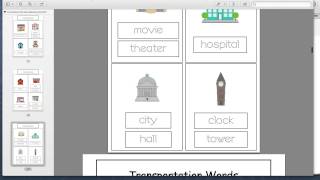
Hi, this is Olivia from TheAutismHelper.com. I'm here to give you a video product preview of our Community Vocabulary Unit. This unit is again structured just like our other units including our Basic Skills, Animal, School, Fall, Household, and our Spring and Winter units. It's great to keep the format consistent and just changing the content of each unit. So here, um, we go straight into our first section here is our buildings. So this The community unit is really based on what you see around the community: people, places, things, and importantly, signs as well. So this first part, we have our data sheet, which all the data sheets are just the same. We have a receptive language data and expressive language data, so it depends whether you're looking for the student to be pointing to the word or the student to be saying the word. Here you would circle, or you would write down, the total number of trials for each word. And here it's great and easy to use, we have a visual on each side for each word on the side of the data sheet. First we go into our matching, so we have our cards to match the picture and the word to the picture and the word, and then later we have the word to the picture. Here we have spelling the words, and we have spelling pieces that come at the last page after all these, just like this. Here they are, so this is what you would cut out. Here we have writing the building words. It's really good to get a good variety of buildings from around town. Here is where we trace the words, and here's the transportation words. So all the different types of vehicles you would see around town and, you know, their different structures and how they're spelled. So here we have our receptive, expressive, our visual here on the side. Here's our matching word to picture. Here's spelling. Spelling pieces. Here's writing the words. Here's tracing the words. And here are community places. So these might not all be in your community, but they're also really good words to get, um, accustomed to and to get into a good category here. Here's our data sheet with the receptive, expressive again. Here's our visuals on the side. Here are our matching cards again. Here's matching the word to the picture. Here's spelling. Here's writing the community words, or community places, excuse me. Here's tracing. Here's community things, so again, things that you do see around town: the mailbox, the stoplight, sidewalk, fence, grass, a fire hydrant, the street, and even the bench in the park. So it's really good. They're words that you see, that you use. Um, here's the data sheet again. It's just the same with the visuals. Receptive and expressive over here. Here's our matching cards, our matching the word to the picture, spelling, here are the spelling pieces, here's writing the words, writing again, here's tracing, and here lastly is our last group is the community signs. So these are also really important to use because you do see them all around the streets and you, you you know, some students need to work on understanding what they are. So here we have our yield, our no U-turn, our speed limit, our school zone sign— very important. Here's our stop sign, our do not enter sign, the street sign, and the railroad sign. So here's the vocabulary data sheet, again set up just as all the others— receptive, expressive, our visuals here on the side. Here is our matching. Matching the word to the picture. Our spelling, spelling pieces, writing, tracing. And that's about it for this product. So this was a video product preview for our community unit, vocabulary unit, by theautismhelper.com. Thanks so much for watching!