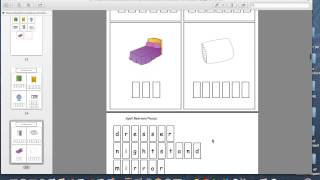
In this product preview, Olivia from theautismhelper.com walks viewers through the Household Vocabulary Unit, explaining that it follows the same consistent format as the provider's other thematic units (Spring, Winter, Basic Skills, Animal, School, Fall, Community). The unit is organized by rooms of a house—Bedroom, Bathroom, Living Room, Kitchen (utensils and appliances)—and each room includes a curated list of relevant words. For every word set, the unit provides a standardized data sheet that allows clinicians or educators to record either receptive (pointing) or expressive (verbal) language responses, tally correct answers, and note total trials. The instructional materials comprise matching cards (word‑picture pairs), spelling activities with detachable spelling pieces, writing worksheets, and tracing sheets, all designed to reinforce recognition, spelling, and fine‑motor skills. Olivia emphasizes the simplicity, consistency, and utility of the materials for professionals working with children on the autism spectrum, noting that the data sheet’s uniform layout across units helps children know what to expect and streamlines data collection.
Chapters
Hi, this is Olivia from theautismhelper.com. I'm about to do a video product preview for our Household Vocabulary Unit. This unit again is just like the same format as our Spring, Winter, and our new units including our Basic Skills, Animal, School, Fall, and Community units as well. So it starts out with our words. Here are cleaning and laundry words. Our data sheet again, it's just like the other ones. It has the visuals on the side over here next to the words, and then again you can choose to be recording for receptive language data or expressive. So whether or not you want the child to be saying the word or pointing out the word. It's great here, you just do the student name, who takes the data, and then you just tally up how many of each of them they get correct and total trials. So it's really a great data sheet to be using. Everybody who works with it really loves it. It's very simple and easy to use. Here we have our matching words, so our matching cards. Here we do— we match the words to the pictures themselves. Here's spelling the words. They have the spaces for the pieces over here, our spelling pieces. Then it goes right into writing the words themselves. And back now to tracing. Um, here we have our bedroom words. So dresser, nightstand, mirror, alarm clock, closet, blanket, bed, and pillow. Again, our same data sheet, so it's really easy, consistent throughout the whole unit. Um, matching again the pictures and words. Over here we have spelling the words again. The spelling pieces are over on this page, then writing the words themselves, tracing again, bathroom words now. So there's bathtub, sink, toilet, mirror, soap, toilet paper, towel, and shower. So again, these are all very useful words that people do talk about in the household. Here's our data sheet again. Matching— it's really great to keep the consistency throughout the unit so they know what to expect. Back to your spelling. And then this is really great as work for the kids to do and repeat and use different units with different content. So here's tracing living room words. So there's door, couch, lamp, window, phone, TV, clock, vase, bookshelf, fireplace, window, and rug. So here's the data sheet for that. Matching the words again. Your spelling. Here are the spelling pieces. Living room, again, here's their writing the words. Now on to tracing. Kitchen utensils, so we have fork, whisk, pot, bowl, mug, mixer, plate, knife, spoon, measuring spoon, spatula, and glass. So it's really good, again the data sheet, to keep with words that you do see around the house and maybe you don't use— talk about them all the time, but it's really good to be working and gaining those skills of writing and recognizing and matching all of those together. So here's the pieces again. Here's writing the words, um, tracing. Now here's kitchen words. So this is a little different than the utensils. So this is things you would see more as the furniture. So the dishwasher, table, stove, kettle, chair, refrigerator, toaster, microwave. So some of the, you know, electronics in there. Here's our kitchen vocabulary data sheet. Again, receptive and expressive language data you can choose to be recording. Here's the matching of the words, words with pictures, spelling, spelling pieces. Here's writing the words and tracing again. So overall, that was our unit. That was our household unit. So this is a video product preview for our household vocabulary unit by theautismhelper.com. Thanks so much!