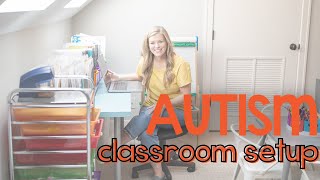
In this video, Sasha from theautismhelper.com gives a concise, first‑person walkthrough of her autism special‑education classroom, highlighting how the space is organized to support independent and small‑group learning. She explains that the room lacks a traditional teacher’s desk; instead, instruction occurs at a central hub where small‑group language‑arts sessions in the morning and math sessions in the afternoon take place. The hub also houses storage, assessments, supplies, a large board with anchor charts grouped by curriculum level, and each student’s binder containing their daily schedule and work. Due to a staffing reduction, Sasha added a new centers area that consolidates math, reading, and other activity stations to provide abundant independent work options. She describes the independent work system, daily work stations with rotating worksheets for each day of the week, a kitchen area for cooking, an aide‑run fluency station (morning language‑arts fluency, afternoon math), reorganized aide shelves, and a “Factory” station with larger hands‑on tasks for lower‑level students that rotate weekly. Additional areas include a computer station, a library, and a break/safe space for students needing downtime or aggression management. Sasha notes she will share more photos and videos later, and the tour ends with a brief thank‑you.
Chapters
Hi, this is Sasha from theautismhelper.com, and I'm here to show you a new tour of my room. I've done a few video tours of this classroom and a few little changes, so I thought I would give you a little updated tour, and everyone can see my pregnancy bump as well. So we'll keep this tour nice and quick. Um, so this area is really the main hub of my classroom. I don't have a teacher's desk. I have all my instruction done here. This year I really focused my morning direct instruction on language arts and my afternoon on math, which I'm really liking so far. So this is where I do all my small small groups with my kids. I have all of my storage data, everything, assessments all over there, as well as all our supplies. I really like that that's in the center of the room because all the kids can go come get supplies easily and they know where everything is. Also in this area is our big kind of board with all of our anchor charts. I separated our anchor charts into 3 groups based on the 3 groups I see. So all of their anchor charts for their leveled curriculum, their vocabulary words, everything they have to do is right here. Um, also in this section are their schedules. So every kid has a binder that has their daily schedule on it as well as their work for the day. So this is kind of the main hub of the classroom. One area that we changed this year is this new centers area. So I got cut a staff member, so with one less staff, that means a lot more independent work. So in order to give them a ton of independent work options, I added this center where I put all my math centers, all my reading centers, Word Boggle, different activities. There's a lot of different things they can do in here, and I'm gonna be doing an in-depth tour and photos on this section because because this is really going to keep my kids busy for a lot of the day, and I think could be useful in your classroom. Um, in the center of the room we have our independent work system. So this is right here, all of the different tasks they do. There's a lot of videos and photos about this on my website. This station over here is for our daily work. Um, if you checked out our daily work pages, it's a different page for every day of the week— of the year. So students do different worksheets responding to the daily work. So this is where they do their daily work every day. Our little back section is our kitchen. So we got all our kitchen stuff over there when we do cooking, and This back table is the station my aide runs fluency. So in the morning she does fluency and in the afternoon she's doing math instruction. So I reorganized her shelves, which turned out really awesome. All of her fluency stuff goes here. I put all of the data sheets in one binder. Here's all her language arts work, work that she does with them in the morning, and all the math work that she does with them in the afternoon. So I kind of like this idea of math in the morning, or math in the afternoon and language arts in the morning, just to get myself organized. Over here we have some different independent workstations. People ask me a lot what the difference between these independent tasks are. It's really just that they're bigger and that I need more independent work for some of my lower kids. So we call this station Factory. There's 4 different tasks out here. Again, it's just for kids that need more hands-on activities to give them different options, and I rotate these out every week. We have our computer station, we have our library, and then last we have our break area. So break area is great for for downtime, kids that need to relax, and any kids that need kind of that time away. So if we have any kids that have any issues with aggression, this is kind of where we can go as a safe space. So I'll be doing some more photos and videos in the next month. I don't have much time to show you the new parts of my classroom in depth. So thanks for watching. This was a video tour from theautismhelper.com.