Video Tutorial for a Morning Group Area in an Autism Classroom
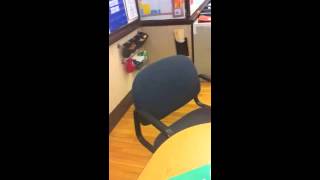
Sasha from theautismhelper.com shows how to set up a morning group area for autism classrooms, using two separate groups based on student needs. She walks through her wall-mounted IKEA storage system, visual supports like Velcro greeting cards and weather boards, and a central data binder that keeps lesson plans and IEP goals within reach for quick data collection.
Chapters
Hi, this is Sasha from theautismhelper.com and this is a video tutorial of setting up your morning group area. So a lot of people call this something differently, morning circle, morning time. Basically this is a time of the day where you start your day and go over calendar, weather, things like that. So we call ours morning group in my classroom and I do 2 different morning groups. I do a big group one with my higher functioning students. Students and I do small group morning groups with my students who are a little bit lower functioning. I really like doing it that way because I can really target the skills with those kids that need the extra help on an individual basis. They don't get lost in the shuffle of the big group. Also, as you can see, this table is not very big so I can't fit the May kids on it, but if you're doing it in a circle or you have kids that can manage, you could easily do this whole group too. So in this area I don't have a lot of storage, so I think the key to to running a successful morning group is having everything at your fingertips. So I've gone through a lot of trouble of finding wall storage things so I have everything I need right here. So basically I don't have to go get up, everything is arm's length. The problems you're gonna have is when you stand up and walk away to go get a pencil, go get a dry erase marker, then your kid's gonna be gone. So you need everything right here. Also a lot of the stuff we do is based on the board. So we do a lot of social visuals are up here, journals, and our calendar weather visuals. So I'll go into those in more detail. So like I said, I've gone through a lot of trouble of making sure that I have adequate storage for everything I need at Morning Group. I found these really awesome, um, hanging storage system at IKEA. So I have pencils, pens, highlighters, you know, random little necessities, dry erase markers, hand sanitizer, everything. I also keep extra copies of my visuals. This is probably the most important thing that's being kept over here. So everything is right accessible by the chair where I'm sitting. I also got these at IKEA that are really, really awesome because I used to just tape file folders and they tended to fall down a lot, um, that hold all my materials. So paper, whatever books we're reading, um, pointers, adapted books, folders, anything extra, dry erase markers. So that's all held in those big pockets. So again, it's all right off the table, I can easily grab it. Some of the visuals that are up here I've gone through in some of my other videos, but I'm gonna go through them one more time. So with my lower functioning group, we do a lot of focus on visual social skills. So working on greeting our peers using these visual, visual greeting things. So with a picture of the student and saying, "Hi, Leon," and handing him the picture. So we have greetings, we have the visual questions, and personal information. So these are all Velcroed so I can grab them and use them at the table. I really recommend this because it's not so much back and forth. You can just have it all here. You're not going back up to the board for every question. Also, by the way, um, this was a chalkboard that I put contact paper on. Again, I really recommended that. I spent a lot of years putting bulletin board paper under it, and that was a huge waste of time. And then you can just leave your Velcro up and it's no big deal. So these envelopes are all laminated and put up here, so they're all in one spot, easy to go. This Lakeshore resource I love. It has all these different questions. Which animal would you like to be? And students can pick their name and put it under which animal they like. So this is a really great one. I also have— these are for my higher group. So you can see I have kind of things intermixed, some stuff I use with the first group and some I use with the second. So this I use with my less verbal students to work on feelings, and then this I work with my higher students to work on kind of higher-level thinking skills, fill-in questions. My higher-level students also, two of them do an adapted journal to make things a little easier and work on sentence structure. So I put a picture up each day and they answer a who, a what, and a where. Check out my video tutorial for my AIM routine to see the whole routine that my higher-functioning guys do, 'cause they have a pretty elaborate independent morning work that they do and it works really well and they work on their own for about an hour. So this is kind of a component of what they're doing here. Um, some of the other visuals I have over here are more geared towards calendar and weather, and these are for my students that are a little bit lower functioning that need to really focus on these skills. So this is the exact same binder sheet that they have in their binder. I like making the exact same one because for those kids that need that help of just matching, that is essential. So I might put Monday up here, but they might not understand that. They might need to see Monday in the exact same structure that it is on their page. So they can identify today is Monday, January. Um, we have a visual calendar and our vocabulary words. Vocabulary words are obviously for the higher kids, as is the poem. So it's a little bit of everything all mixed on the same wall because I'm using this with different groups. Um, our weather visuals are all over here. Um, again, this is the same structure as it is in their binder page, so they can literally match this from what I'm doing. So with each kid, it's a little different. Sometimes I'll work on them doing it first, or some of the kids are just working on matching what I have. We also have, are we going outside today, a temperature key, and one of my higher functioning students looks up, looks up the temperature each day and puts the numbers here. And then there is the temperature chart, which I have a blog post on how to make this if you're interested. This is a great way to target charting and graphing for your nonverbal students. The most important thing I have by my morning group area is my data binder. I store this just on the little side pocket there so I can again easily grab it, and in here I have all the data and materials and lesson plans for everything that goes on at this table, so I don't have to go far to get anything. So I keep my lesson plans for my higher group, which change every day, right in here. So as you can see, each day we do something different, and I have it written down. I always write in pencil because, you know, things change a lot. Um, so that's what I'm doing with my higher group, and I keep any extra visuals we're going to use right behind. Any extra worksheets I keep in the front. And then I have a tab for each student. So like I said, I do my morning group with my students who are a little bit lower functioning individually or in small groups. So after we go through the calendar and the weather and that kind of stuff, we take data on some of their IEP goals. So this kind of works right into teacher time. They're already sitting with me and focused, might as well get some more work done. So I have a little note to remind myself of which goals I'm working on, and then I have all their data sheets right here. And I do take data on their calendar and weather as well. So everything's right here. The different sets we're doing is all available available right here for each student. So if I have any materials for them, they're in a Ziploc bag. They're doing adult flashcards, naming teachers. So everything's all available. So that's all in this set. If I have any writing worksheets for some downtime, I like to keep these in here too, because sometimes you just need a little bit extra work for transitions. So this is all in one spot, and this is such a lifesaver to know what my higher group is doing, to know which data I'm working on with my lower kids. It's all in one spot. Ready to go. I'm not running around looking for data sheets. So yeah, that's about it. Um, the most important things I really think are supplies and having your binder with all your data and work in one spot. So I'm really pushing organization all the time, but I think that's the key to preventing behavior problems. You don't have to run around and look for things. Everything's ready to go. So when you've got your kids sitting here, you can just get to work and you don't have to wait till you get organized too. So this was a video tutorial of my morning group area. If you have any questions, please feel free to shoot me an email. Um, and this is Sasha from theautismhelper.com.










